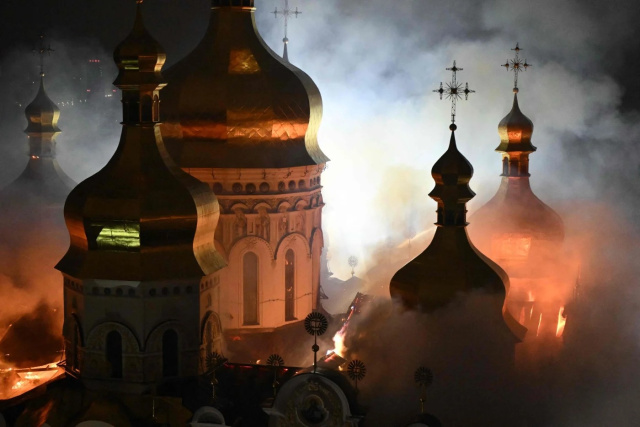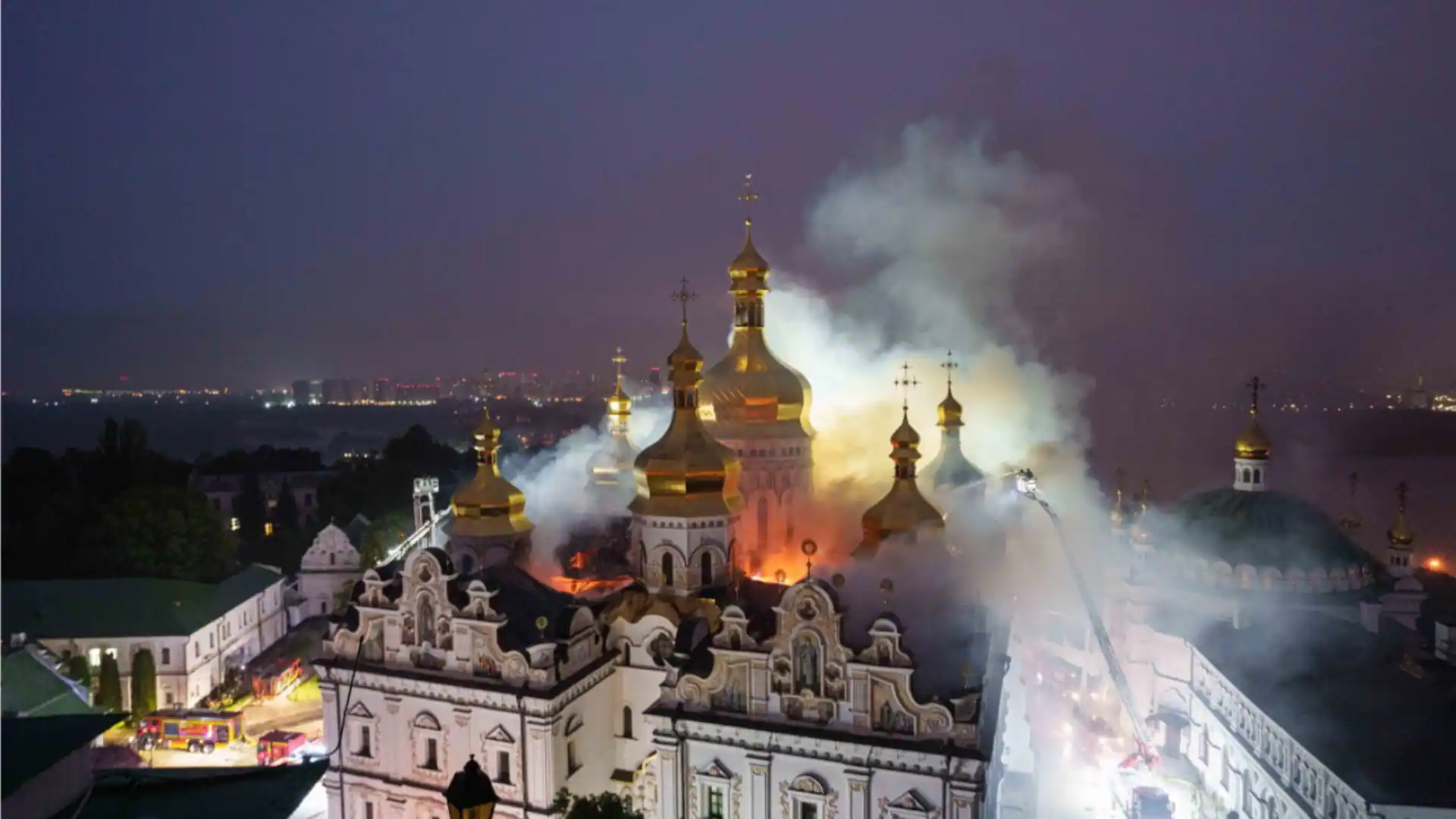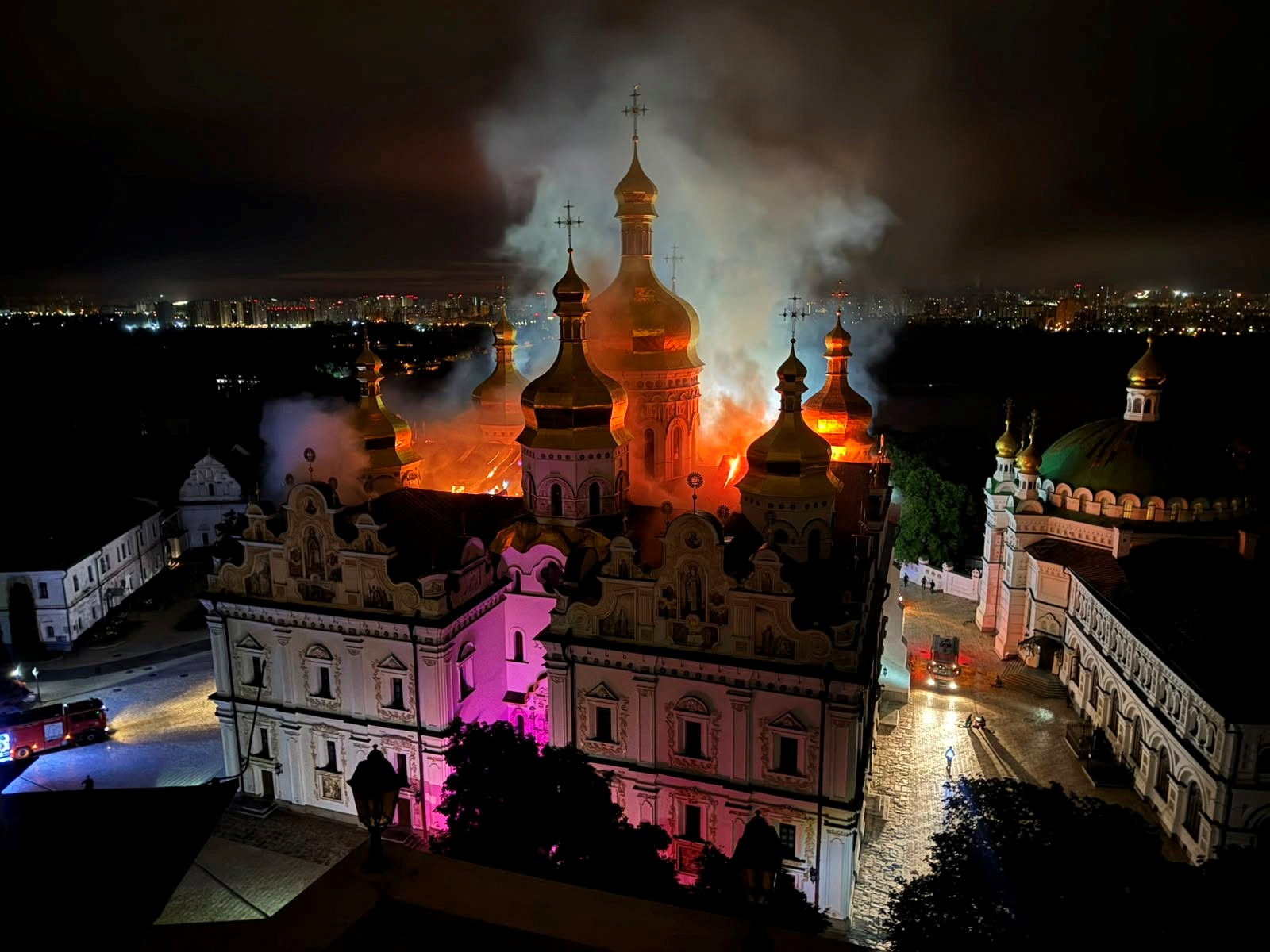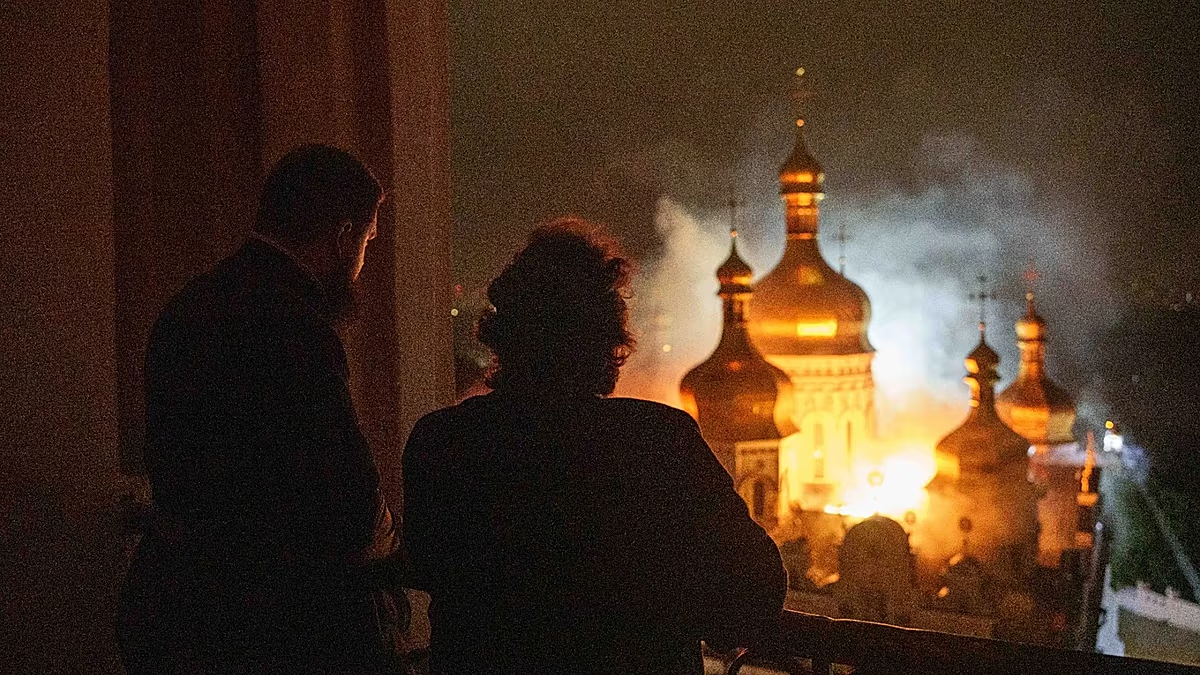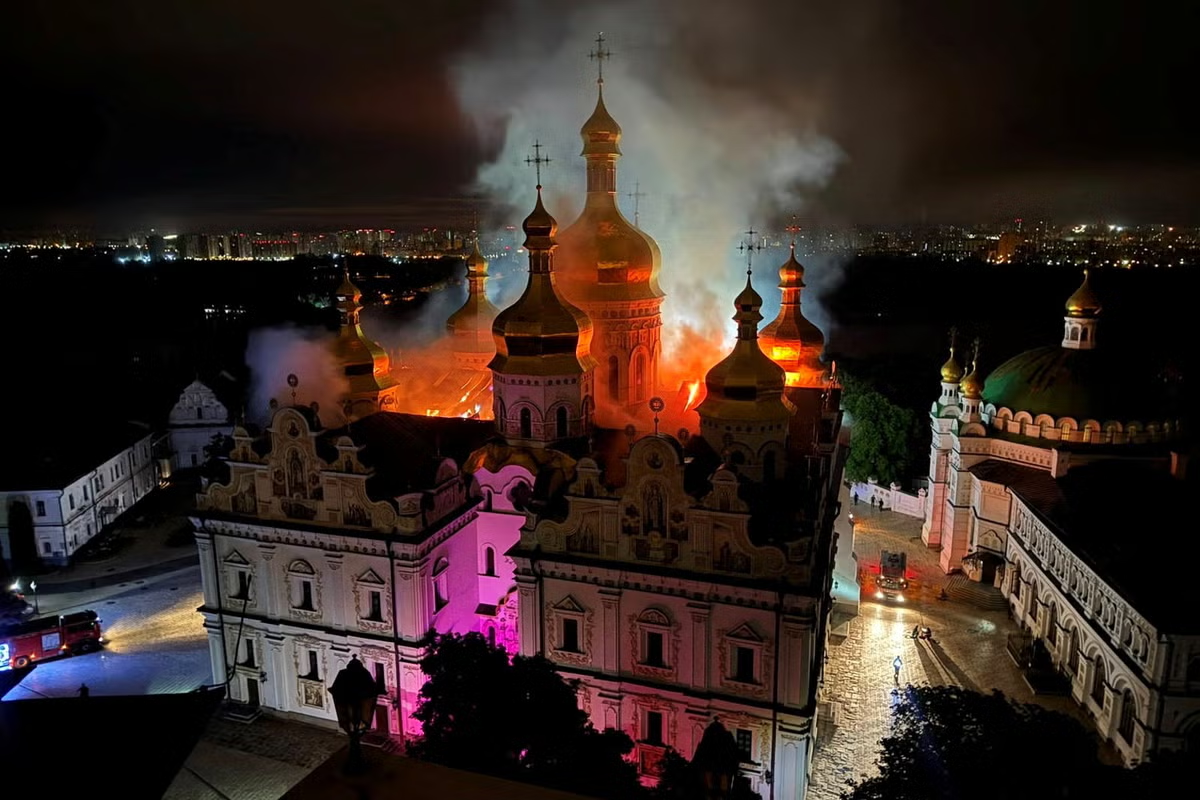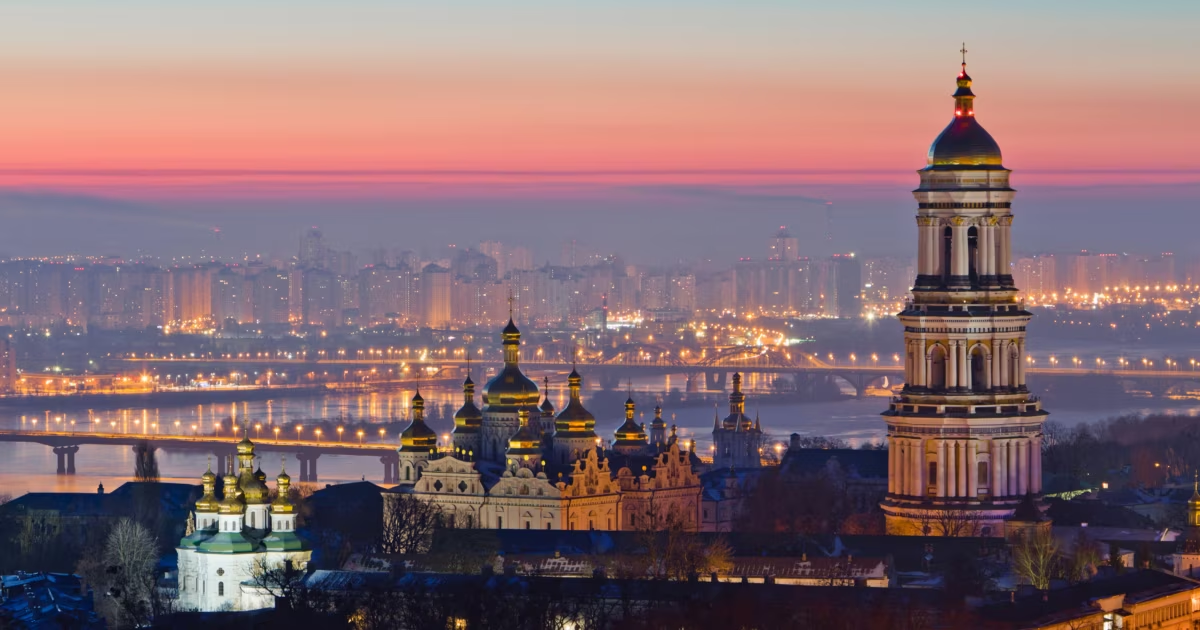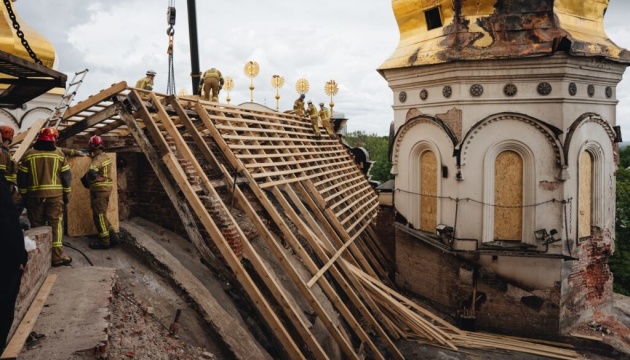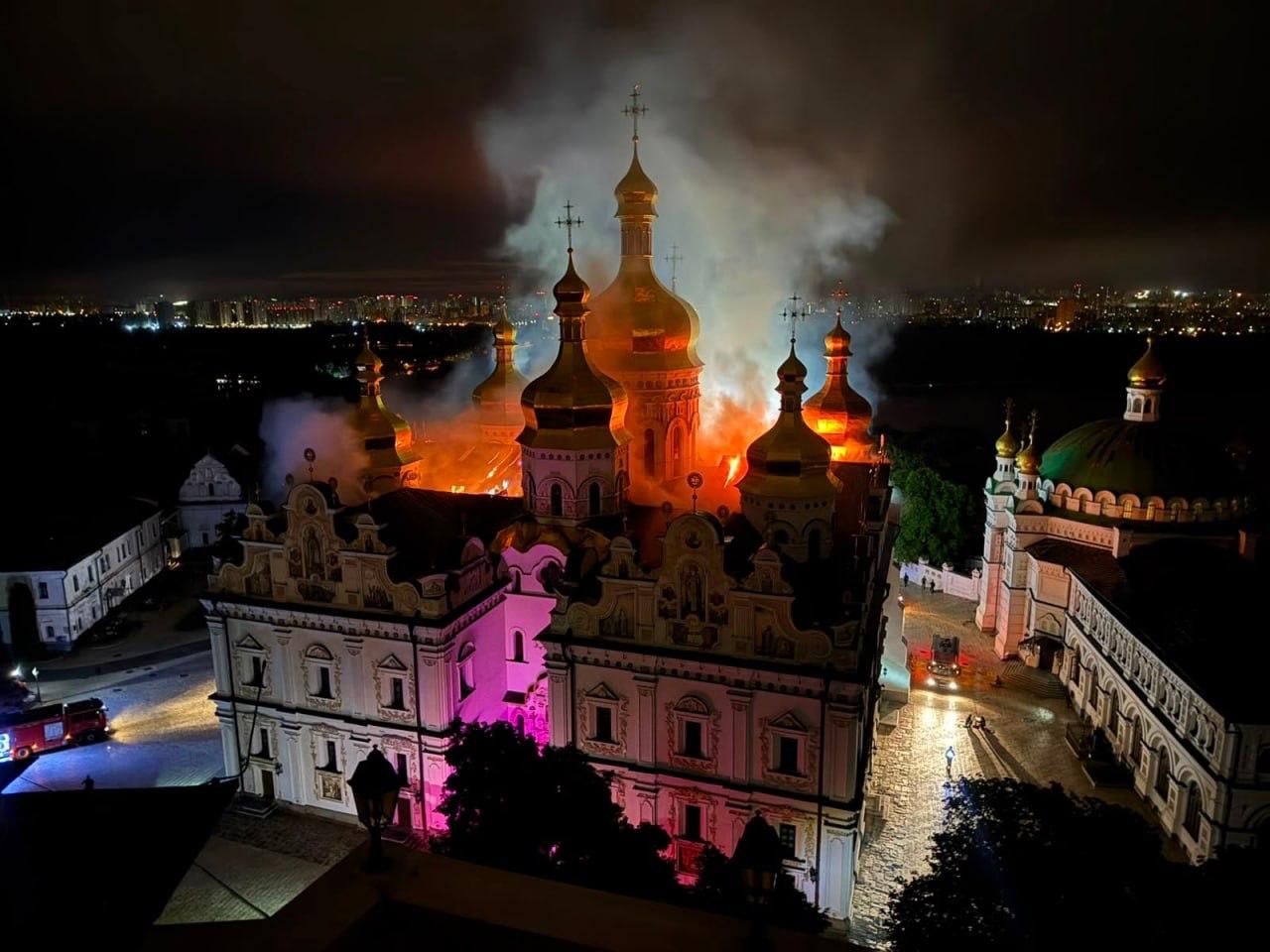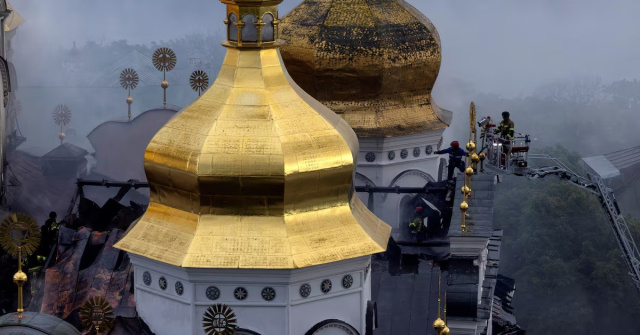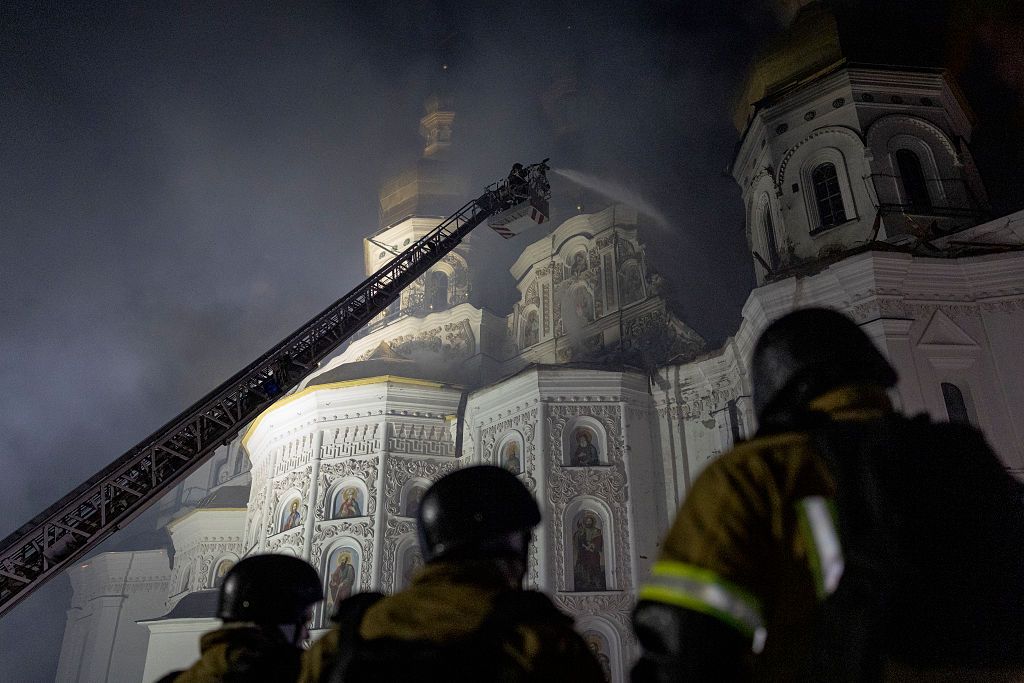
A view of the historic Kyiv Pechersk Lavra following a massive overnight Russian missile and drone attack on Kyiv, Ukraine, on June 15, 2026. (Andriy Dubchak/Frontliner/Getty Images)At 7 p.m. on Saturday, my phone lit up with a message from a colleague in Kyiv. It read: "The Lavra is bombed. It's on fire." The Kyiv Pechersk Lavra, founded in 1051, is the most important religious and cultural site in Eastern Europe. For nearly a thousand years, it has survived invasions, occupations, revolutions, and wars. And today, it joins a growing list of Ukrainian cultural landmarks damaged by Russian missiles.According to Ukraine's Culture Ministry, this list has grown to 1,783 cultural heritage sites and 2,540 cultural infrastructure facilities across Ukraine. In recent weeks alone, attacks have damaged the National Art Museum of Ukraine, set ablaze priceless Ukrainian paintings at the Kharkiv Art Museum, and destroyed over 100k film costumes at the Dovzhenko center, which housed Ukraine's oldest costume collection.Yet as the Kremlin's efforts to wipe Ukraine's identity off the map increase, Russian cultural narratives that deny Ukraine's existence continue to circulate largely unchallenged abroad.Russian-centered films continue to appear at Western festivals. Some of the world's most prestigious museums, including the MoMA, Louvre, and Tate Modern, to name just a few, still tout Ukrainian artists as Russian. And earlier this month, a senior American cultural official attended the forum in St. Petersburg International Economic Forum (the first high-ranking US official in a decade) to discuss US-Russia cultural exchange.It is long past due for Western countries and their political and cultural institutions to start seriously curbing Russian cultural influence on their soil.
How Russia bought influence over culture in the West
At 7 p.m. on Saturday, my phone lit up with a message from a colleague in Kyiv. It read: "The Lavra is bombed. It's on fire." The Kyiv Pechersk Lavra, founded in 1051, is the most important religious and cultural site in Eastern Europe. For nearly a thousand years, it has survived invasions, occupations, revolutions, and wars. And today, it joins a growing list of Ukrainian cultural landmarks damaged by Russian missiles. According to Ukraine's Culture Ministry, this list has grown to 1,783 cul
990 words~5 min read