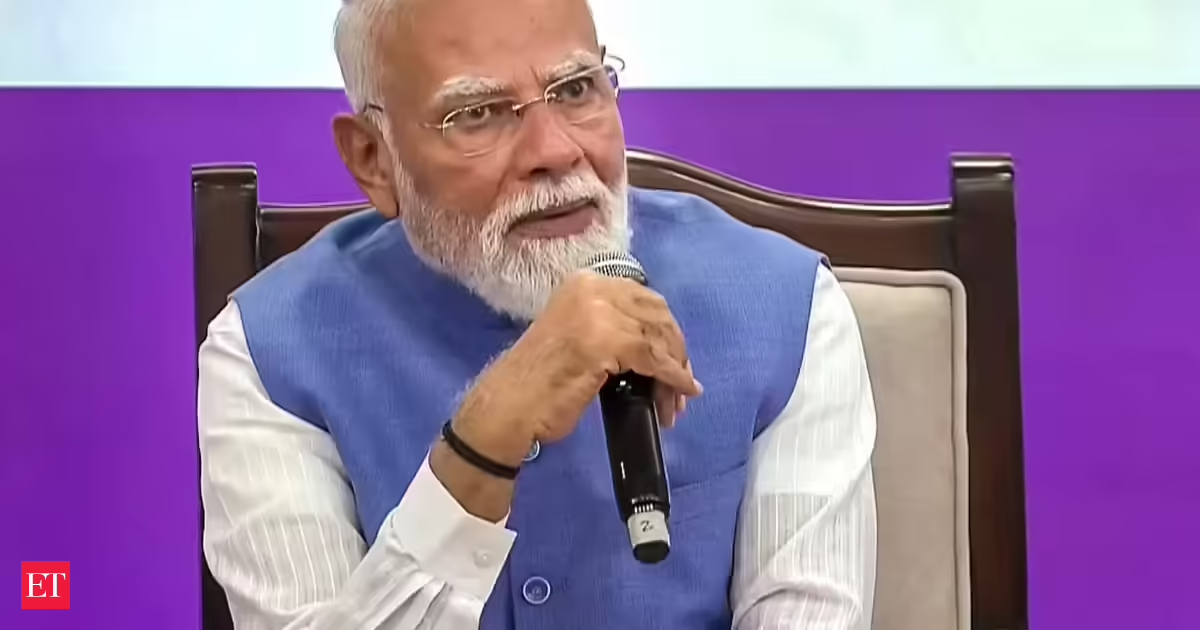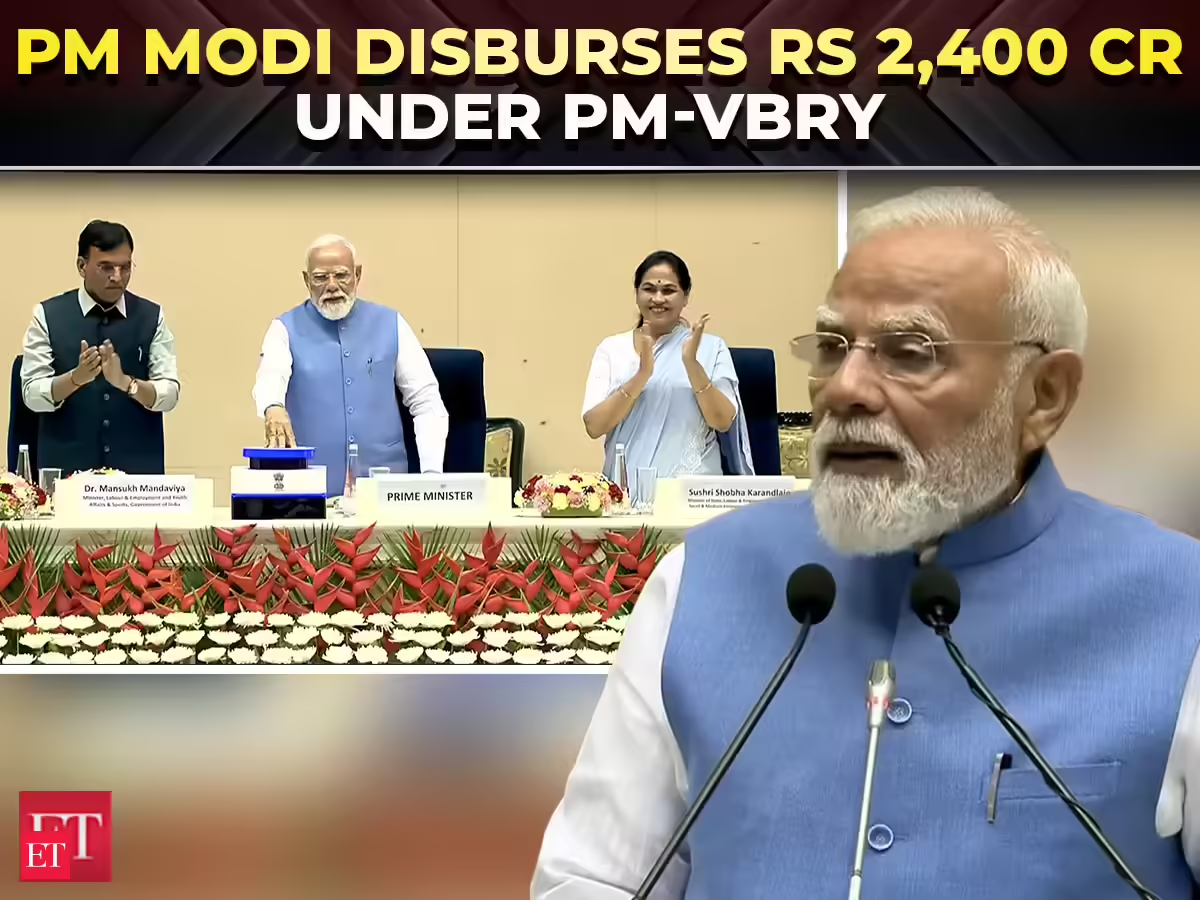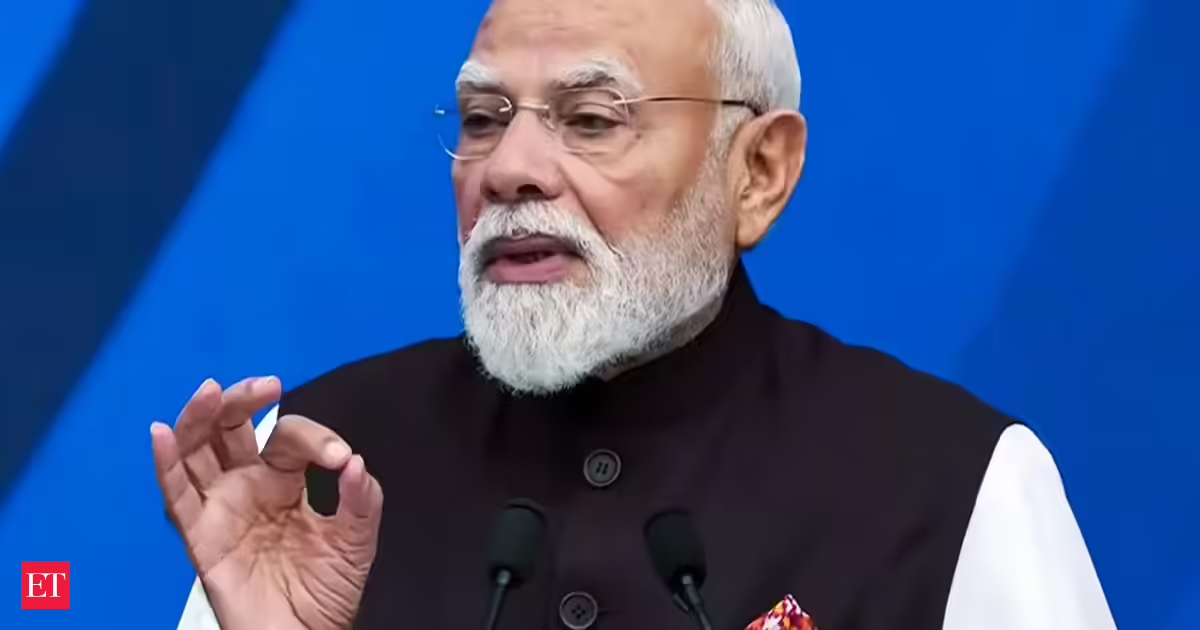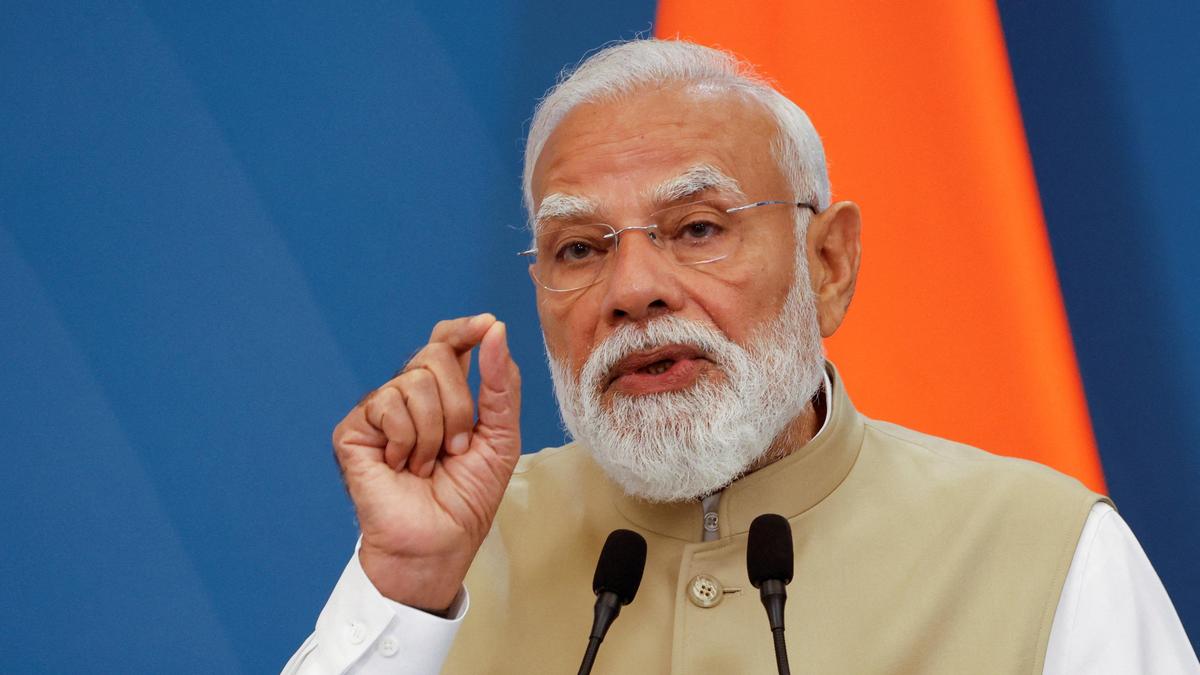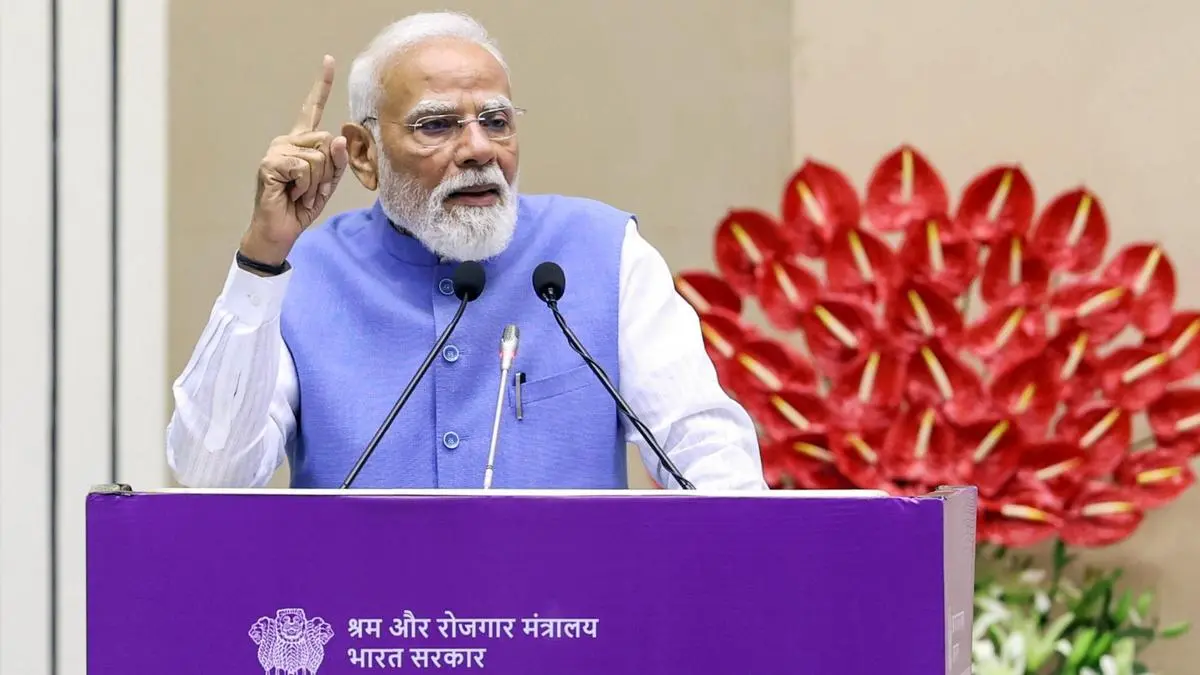
Prime Minister Narendra Modi addresses a programme at Vigyan Bhavan to disburse incentives worth around ₹2,400 crore under the Pradhan Mantri Viksit Bharat Rozgar Yojana (PM-VBRY), in New Delhi
| Photo Credit:
Prime Minister Narendra Modi on Friday announced that 70 lakh jobs and social security benefits have been created for first-time employees under the Pradhan Mantri Viksit Bharat Rozgar Yojana (PM-VBRY). Of them, close to 20 lakh young people have completed six months in their first jobs, while around 10 lakh beneficiaries have already received incentives under the scheme upon completing this milestone, Modi said as he transferred with a click of button incentives worth ₹2,400 crore through Direct Benefit Transfer (DBT) to more than 15 lakh beneficiaries.Under the Employment Linked Incentive (ELI) Scheme, formally renamed as the Pradhan Mantri Viksit Bharat Rozgar Yojana (PMVBRY), the first instalment is up to ₹7,500 which goes out after 6 months of continuous employment. While, the second instalment arrives after 12 months for workers enrolled under the Employees’ Provident Fund Organisation (EPFO), hold a monthly gross salary under ₹1 lakh, and are registered using Aadhaar-seeded accounts.The scheme, implemented by the Ministry of Labour and Employment (MoLE) through the EPFO, is backed by a total budget outlay of ₹99,446 crore and focuses on driving formal job creation, expanding social security, and incentivising fresh talent. It came into existence on August 1, 2025, and will remain open till July 31, 2027.He also appreciated employers and institutions for generating new jobs and stated that the Pradhan Mantri Viksit Bharat Rozgar Yojana forms a bridge between the youth and the industry for first-time job seekers.“Through PM Viksit Bharat Rozgar Yojana, we are supporting employment generation, empowering youth and building a stronger workforce for the future,” he insisted.The aspirations, skills and potential of our youth will shape the path to a Viksit Bharat, he said. Addressing the gathering shortly after returning from his visit to France and Slovakia, where he participated in the G-7 Summit and engaged with world leaders, the PM noted that India’s youth are receiving unprecedented recognition globally for their talent, skills, and potential. He remarked that the world increasingly acknowledges the capabilities of young Indians and emphasised that the government is committed to ensuring that every young person has the opportunity to transform their potential into success.“Prime Minister Viksit Bharat Rozgar Yojana is much more than an employment scheme. It is an initiative designed to strengthen the aspirations of young people entering their first jobs while creating a robust bridge between industry and the workforce”, Modi remarked.Modi further said that India’s youth will be at the forefront of driving global growth, innovation and entrepreneurship in the years to come. According to him, when government, youth and industry come together, the speed of getting employment multiplies manifold. It’s also a reflection of New Bharat which is shaping up.nurture talentIn the 21st century, opportunities will belong to nations that nurture skilled talent, foster innovation and uphold the highest standards of quality, he said, adding that India has unprecedented capability in these three areas.He urged the industrialists to scale up skill, education, and product and packing quality, to conform to international standards as new markets are emerging with India concluding FTAs with 40 countries.Modi interacted with employees and employers who benefited from the employment linked incentive scheme.Meanwhile, the World Bank’s Board of Executive Directors have approved $1.5 billion in financing to support India’s structural reforms to boost private sector-led job creation and economic growth under the Boosting Job Creation in the Private Sector Development Policy Financing (DPF) Operation.The DPF Operation can create job opportunities for the 11 million youth who will be entering the labor market every year over the next two decades.Published on June 19, 2026