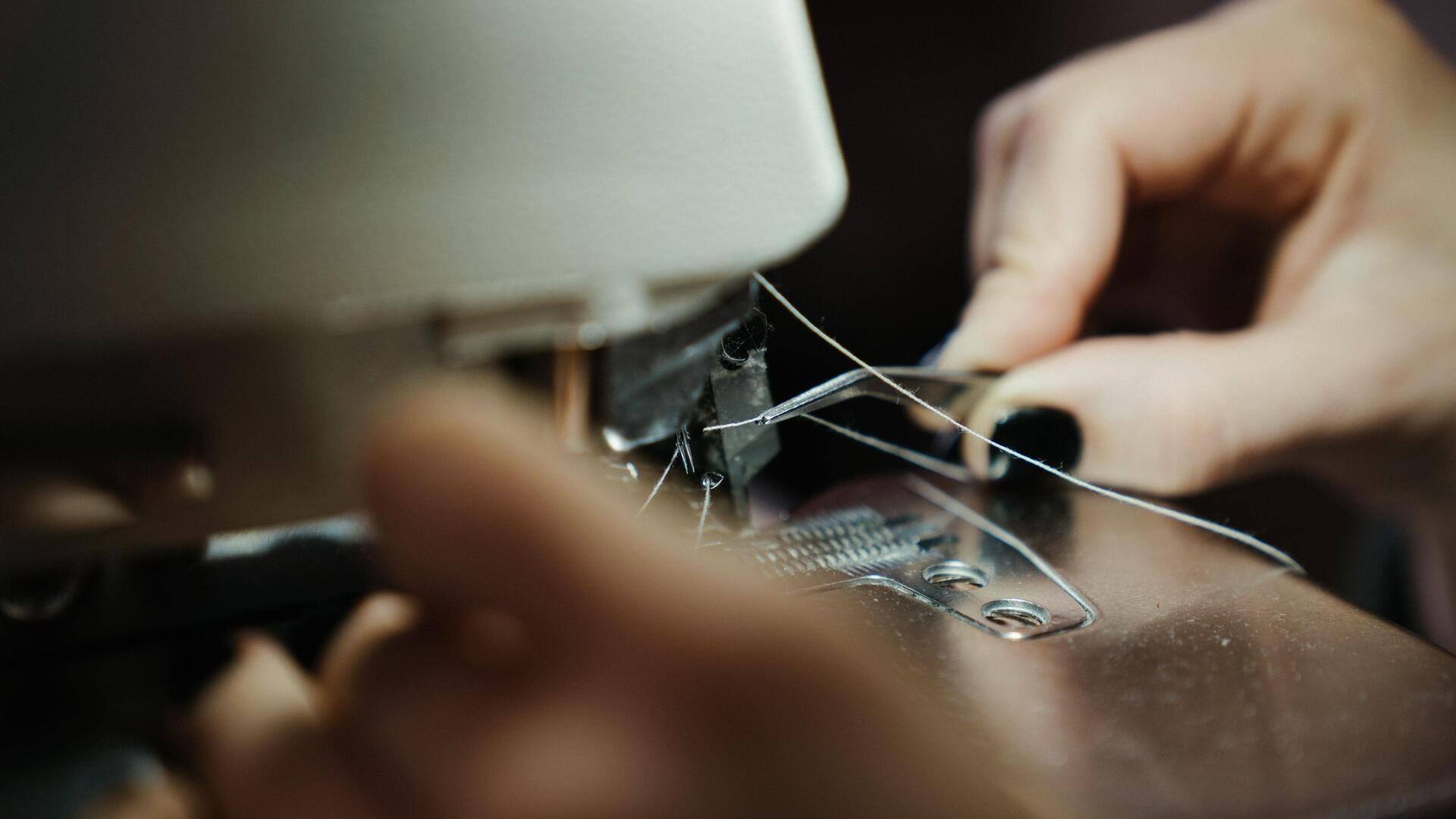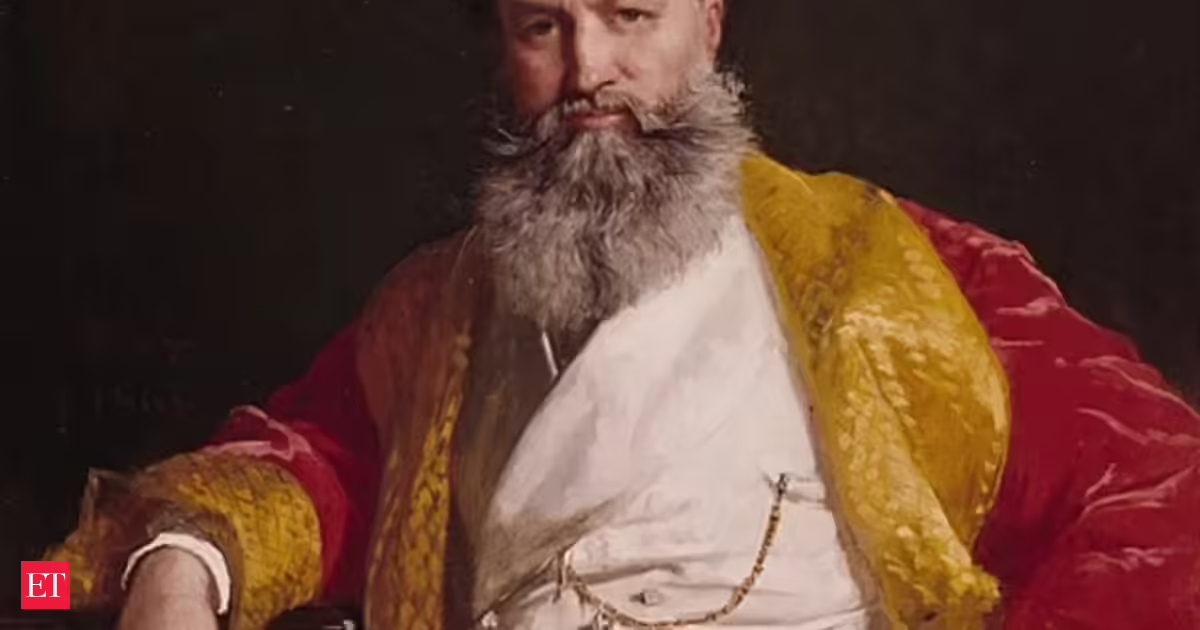
The history of the sewing machine is often told as the story of a single inventor, but the reality is considerably more complicated. Throughout the nineteenth century, inventors across Europe and the United States experimented with different ways of mechanizing sewing, producing a steady stream of patents, prototypes, and improvements.Isaac Singer entered this crowded field during the early 1850s and became associated with one of its most influential designs. Historical records from the U.S. Census Bureau describe Singer’s September 1850 machine as the first to combine several features that would later become standard, including a rigid overhanging arm, a vertical needle, a shuttle mechanism, and a wheel feed system.The importance of the design was not that it introduced every component from scratch. Rather, it brought together existing ideas in a configuration that proved practical, reliable, and easy to reproduce. In doing so, it helped establish the basic form that many sewing machines would continue to follow for generations.Isaac Singer | Wikimedia CommonsThe sewing machine emerged through competitionBy the time Singer began working on sewing machines, inventors had already spent years attempting to mechanize stitching. Historical accounts from the National Park Service note that numerous designers contributed improvements, patents, and alternative mechanisms during the nineteenth century.This context is important because it prevents the story from becoming a simple tale of individual genius. Sewing-machine development was an active technological race in which multiple inventors were pursuing similar goals. Some focused on needles, others on feed systems, and others on methods for creating reliable stitches. Singer’s significance emerged not because he worked alone but because he found a way to combine critical elements into a machine that functioned effectively as a complete system.The machine’s structure proved unusually durableAccording to the U.S. Census Bureau’s historical manufacturing survey, Singer’s machine combined a rigid overhanging arm with a vertical needle, shuttle, and wheel feed arrangement. Historians regard this configuration as important because it provided both stability and consistency during operation.A successful industrial design must do more than work once. It must perform reliably across repeated use and be practical enough for others to manufacture. Singer’s arrangement satisfied those requirements. The machine’s structure helped guide the needle accurately while maintaining control over fabric movement, making it easier to produce consistent stitching. This reliability encouraged adoption and helped establish the design as a model for future manufacturers.Successful designs often become standardsOne of the clearest measures of an invention’s influence is whether later builders continue using its underlying principles. The Census Bureau report notes that the Singer configuration became the basis for a large proportion of sewing machines produced worldwide.This pattern is common in technological history. Once a design solves a problem effectively, manufacturers often adapt and refine it rather than replacing it entirely. The overhanging arm, vertical needle, and feed mechanisms proved useful enough that later machines retained the same fundamental logic even as materials and engineering improved. The result was a design language that became familiar to generations of users.Singer’s influence extended beyond the workshopThe widespread adoption of Singer machines was reinforced by extensive documentation and commercial expansion. The Smithsonian Libraries’ trade literature collections preserve numerous Singer manuals, catalogs, and operating guides that illustrate how the company developed entire families of machines around the core design.These materials demonstrate that Singer’s influence involved more than engineering. Once a design became successful, it was supported by manufacturing systems, instructional materials, and marketing networks that helped standardize user expectations. Over time, the Singer name became closely associated with the sewing machine itself, reinforcing the perception that its design represented the industry norm.Prototype of the modern sewing-machine | Wikimedia CommonsPracticality mattered more than noveltyMany inventions attract attention because they introduce entirely new ideas. The Singer sewing machine is notable because its influence came largely from organization and refinement rather than radical novelty. Historians consistently emphasize that multiple inventors contributed to sewing-machine development, yet Singer’s version achieved unusual longevity because it integrated important features into a coherent and reproducible form.This helps explain why the design remained recognizable long after the original machine disappeared. The arrangement solved practical problems in a way that manufacturers and users found useful. Once that happened, subsequent improvements tended to build upon the existing structure rather than replace it. The machine’s success therefore reflects the power of effective design as much as invention itself.Isaac Singer’s place in sewing-machine history rests not on the claim that he invented every component himself, but on the fact that his machine helped establish a durable and influential design standard. Historical records from the U.S. Census Bureau, the National Park Service, and Smithsonian collections all point toward the same conclusion: the configuration associated with Singer proved practical enough to be adopted widely and copied extensively.By bringing together key mechanical elements into a workable whole, he helped define the form of a machine that would remain familiar for generations. The story therefore illustrates an important lesson about innovation. Sometimes the most influential breakthrough is not creating something entirely new, but arranging existing ideas in a way that finally works.
In 1850, a mechanic experimenting with sewing-machine parts settled on a new needle arrangement; it became the design most modern sewing machines still follow
Often misunderstood, the journey of the sewing machine arose through teamwork rather than individual ingenuity. Isaac Singer's invention in the 1850s ingeniously merged pre-existing components instead of creating new ones. His machine, characterized by its overhanging arm and vertical needle, became the gold standard, proving that the art of optimizing established ideas can spark significant innovation and influence the sewing industry for years to come.
TL;DRAI
In 1850, Singer integrated four mechanical elements into a reliable design that became—and remains—the global industry standard. Signal for CTOs: system coherence and reproducibility often drive adoption and longevity more than novel features alone.
835 words~4 min read