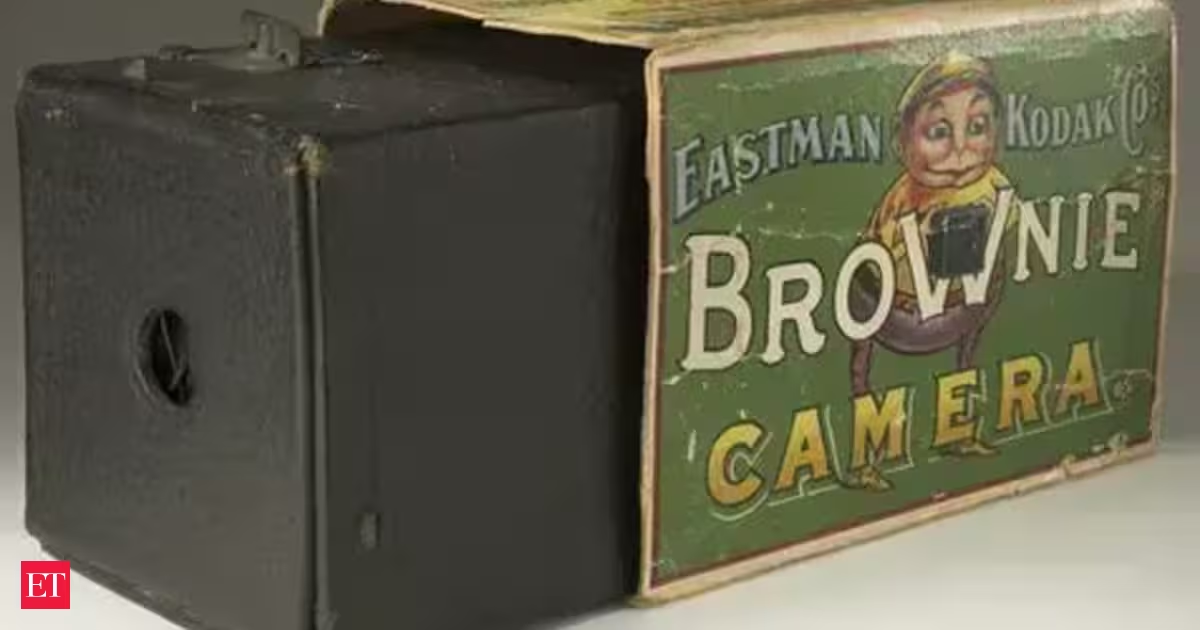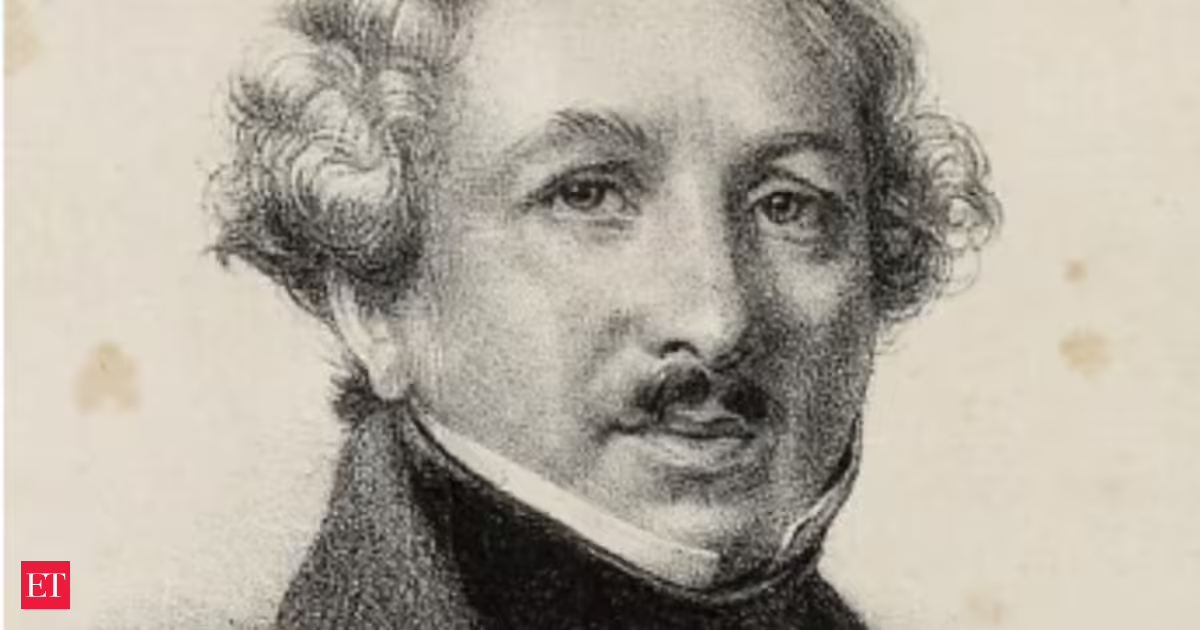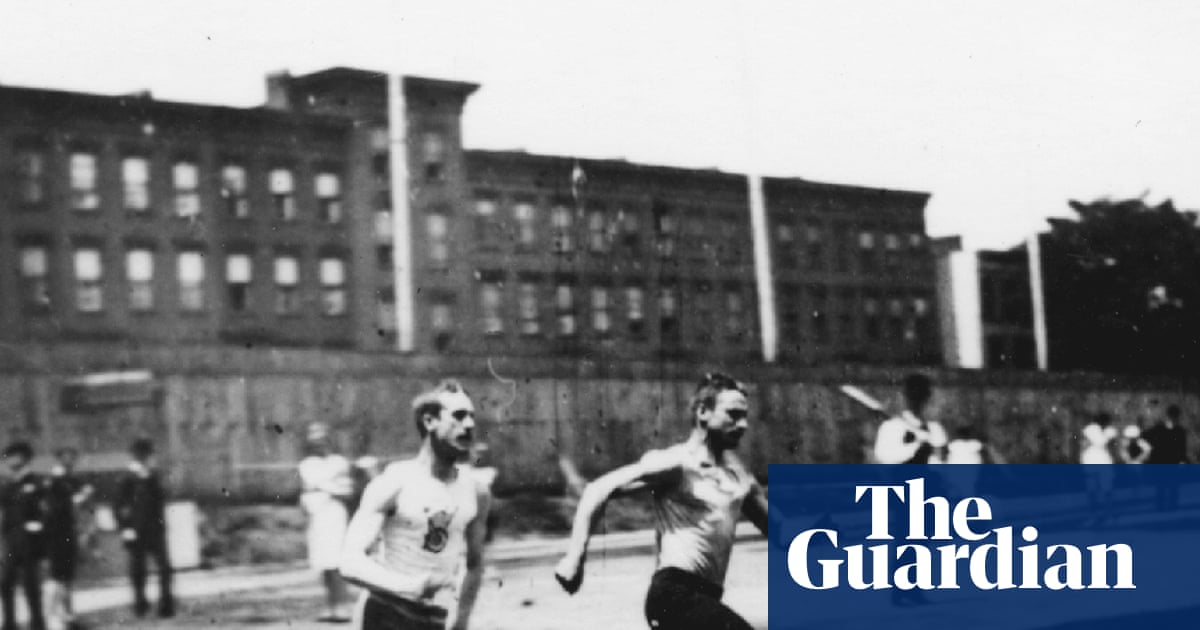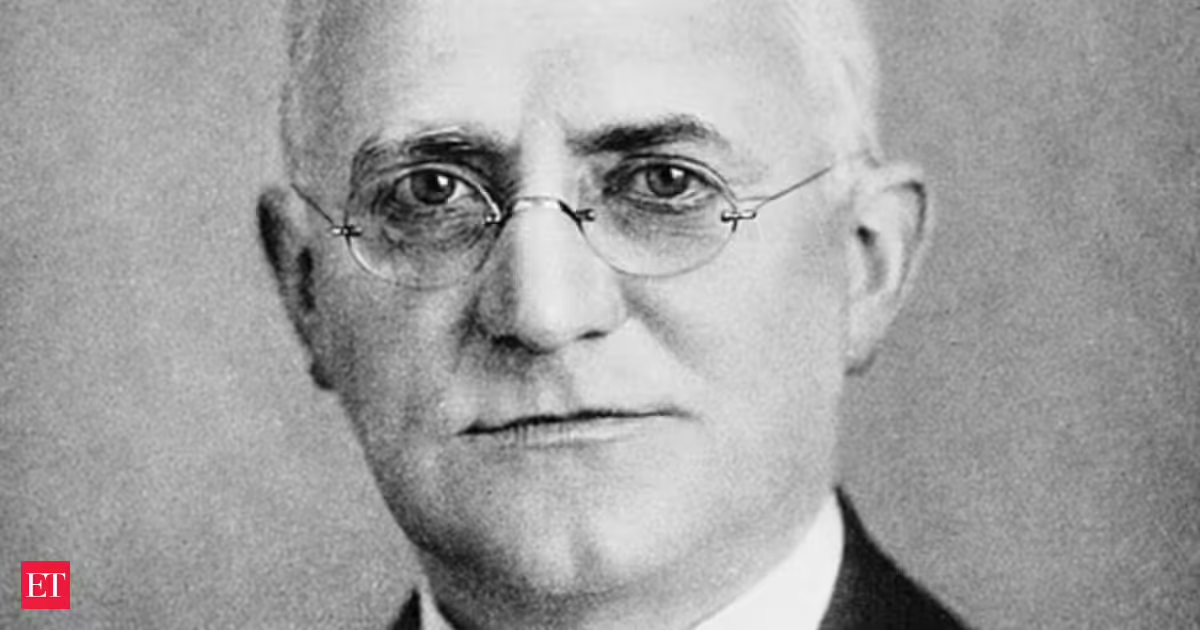
In the late 19th century, photography was still a specialized activity that demanded patience, equipment, and technical knowledge. Photographers often worked with fragile glass plates that were difficult to transport and required careful handling before and after exposure.George Eastman entered this world with a practical objective rather than a revolutionary one. He wanted to make photographic materials easier to prepare, store, and use. Histories from Cornell University, MIT’s Lemelson Center, and the University of Houston show that his early work focused on dry-plate technology and machinery designed to simplify photographic production.Yet as Eastman continued solving one practical problem after another, he moved beyond glass plates altogether and helped create roll film, a format that would shape photography for more than a century. His achievement was not the result of a single dramatic discovery. It emerged through a series of improvements that gradually transformed photography from a specialist craft into an activity accessible to ordinary people.George Eastman | Wikimedia CommonsDry plates made photography easier, but not easy enoughBefore dry plates became common, photographers often relied on wet-plate processes that required chemicals to be prepared and used within a short period of time. This made photography cumbersome and tied much of the work to immediate processing.Cornell University’s photographic history collections explain that commercially prepared dry plates allowed photographers to purchase ready-made materials rather than preparing them on location. This development reduced some of the complexity that had previously discouraged widespread use.Eastman recognized the importance of this shift and devoted considerable effort to improving how dry plates were manufactured. Instead of focusing solely on image quality, he concentrated on consistency, convenience, and repeatability, qualities that would become central to his later innovations.Machinery helped turn photography into a systemOne of Eastman’s most important contributions involved manufacturing rather than cameras themselves. According to MIT’s Lemelson-MIT biography, Eastman developed a patented plate-coating apparatus in 1879 after spending years working with dry-plate emulsions.The significance of this machine was that it moved photography further toward industrial production. Rather than depending on painstaking manual preparation, photographic materials could be produced more consistently at larger scales. Historians of technology often note that major innovations succeed when they can be reproduced reliably, and Eastman’s coating machinery helped achieve exactly that. By making production more systematic, he created conditions that allowed later developments to reach a much broader audience.Flexible film solved problems glass could notAs Eastman continued working with photographic materials, he became increasingly interested in alternatives to glass. Cornell University’s exhibition materials note that he experimented with flexible film as a way of overcoming some of the limitations associated with rigid plates.This shift represented more than a change in material. Glass plates were heavy, fragile, and awkward to transport, especially for photographers working outside studios. Flexible film offered a different vision of photography, one that emphasized portability and ease of use.The University of Houston’s historical timeline notes that Eastman introduced roll film in the mid-1880s, demonstrating that the transition away from glass had become practical rather than merely experimental. Once images could be captured on a flexible roll, camera design itself could begin changing in response.Kodak brought the technology to ordinary usersThe introduction of Kodak in 1888 marked the point at which Eastman’s technical improvements became part of everyday life. By this stage, the challenge was no longer simply creating better photographic materials. It was designing a system that ordinary consumers could use successfully.MIT’s historical profile notes that Kodak emerged after Eastman had already commercialized film products, allowing him to combine material innovation with user-friendly design. This combination proved crucial. Many technological breakthroughs remain confined to specialists because they are difficult to operate.Kodak succeeded because it reduced barriers. Consumers no longer needed extensive technical knowledge to participate in photography. The camera and the film worked together as part of a simplified process that emphasized accessibility.Roll-film | PexelsConvenience became part of the inventionHistories of photography often focus on chemistry, optics, or engineering, but Eastman’s success also depended on recognizing the value of convenience. Grand Valley State University’s art museum describes the transition from dry plates to flexible film as part of a broader movement toward making photography easier to practice.This perspective helps explain why roll film endured. The format addressed practical concerns that many users faced, including portability, storage, and handling. By reducing these obstacles, Eastman helped shift photography from an activity practiced by dedicated enthusiasts toward one embraced by a much wider public. The innovation therefore involved more than a new material. It reflected a new understanding of what users wanted from photographic technology.Beginning with dry plates, moving through manufacturing machinery, and eventually arriving at roll film and Kodak, he consistently focused on simplifying the photographic process. Historical records from Cornell University, MIT, and other institutions show that this progression unfolded over years rather than appearing overnight.Yet the outcome was profound. By making photography easier to carry, load, and use, Eastman helped transform image-making into an everyday activity. Roll film became one of the defining technologies of modern photography because it solved practical problems that people encountered repeatedly, and its influence continued long after glass plates had disappeared from common use.
In 1888, a photography manufacturer kept looking for an easier way to handle glass plates; it unexpectedly led to roll film and changed how the world took pictures
George Eastman fundamentally changed photography by introducing a series of accessible innovations rather than a single invention. He transitioned from bulky glass plates to creating roll film and intuitive cameras like Kodak. This dedication to simplifying the processes of preparation and usage transformed photography into a popular hobby, allowing anyone to capture and cherish moments easily.
TL;DRAI
Eastman built roll film (1888) by prioritizing user simplicity and manufacturing consistency over pure innovation. For tech leaders, the lesson: accessibility drives mass adoption faster than raw technical capability.
850 words~4 min read