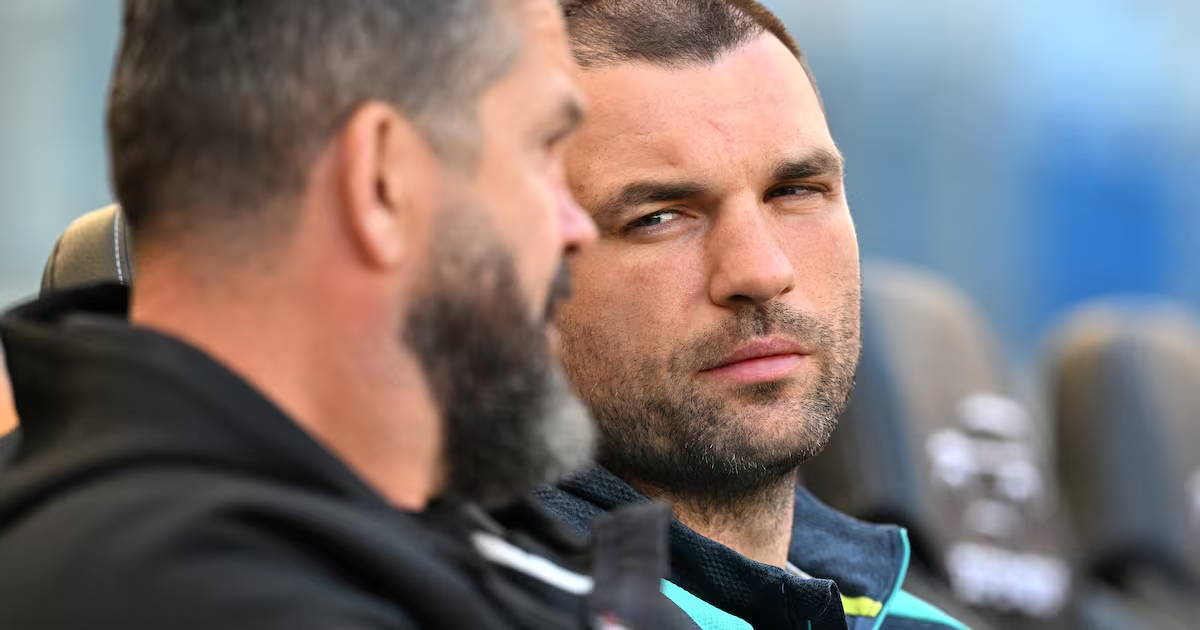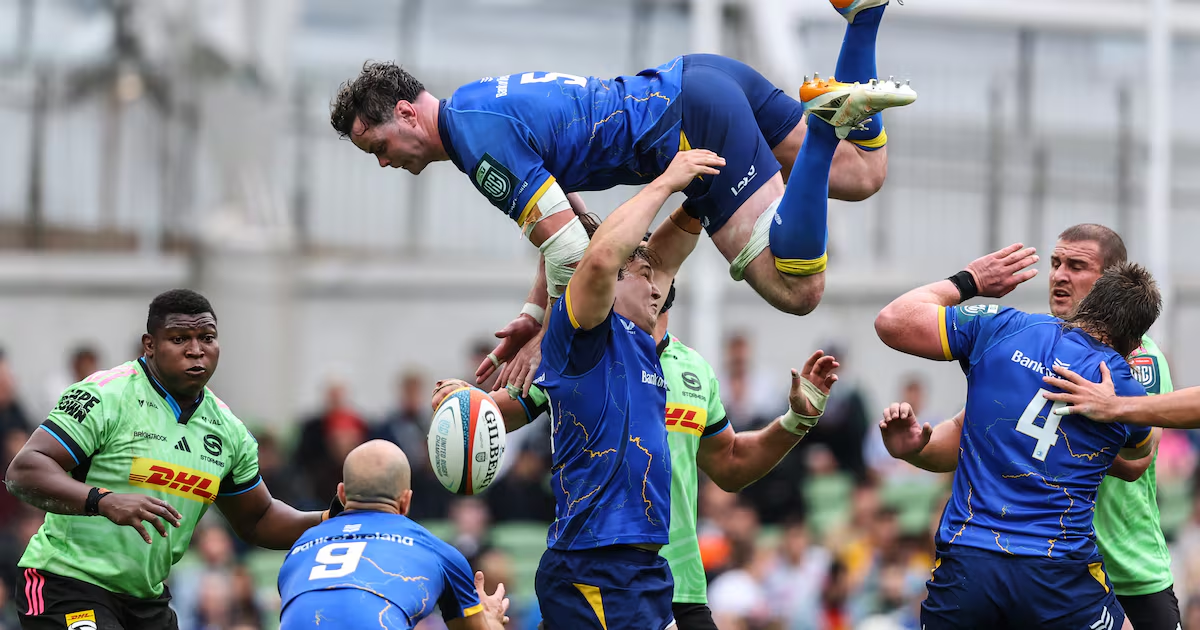
On Monday, when the Irish team heads south on their long-haul flight to Sydney before their opening match of the new Nations Championship, head coach Andy Farrell will be counting the mental, emotional and physical cost of Leinster’s gruelling campaign.And the Leinster finance department will be chewing the ends of their pencils, as the ticket sales for their home playoff games across the URC and Champions Cup were well below expectations.In the last months of the season, Leinster became financial victims of their own success. The more home playoff games they won, the more money their supporters had to pay for tickets. Put in an away gig to Bilbao and a significant percentage of the Leinster crowd had reached their financial limit.Gaining six home playoff games was an extraordinary physical burden for the players, but also for their supporters, because it was like adding almost a third of a season in extra tickets to purchase. In these tough economic times, as the cost of living soars, the price of tickets for families is a real issue. While seats for the URC quarters and semis were very reasonably priced, that information did not get out to the public.Leinster's success means fans have been asked to fork out for tickets many times this season. Photograph: Henry Simpson/Inpho With a new long-term contract locked away, Farrell will leave all those administrative worries to someone else. He has three Test matches on consecutive weekends to plan for.Ireland’s opening match against Australia at the magnificent Sydney Football Stadium is already sold out. With so many Irish living in Sydney, it will feel like a home game for the green team.The Wallabies will be well organised and a real threat in most areas, but as in past years, the lack of a world-class scrumhalf and outhalf places tight limits on their play.The next match against Japan will be played 250km north of Sydney at McDonald-Jones Stadium in Newcastle, where I expect some of the less experienced members of the squad to get their chance.Then it’s a skip across “the ditch” to take on rugby’s greatest challenge – New Zealand at Eden Park.The last defeat New Zealand suffered at Eden Park was to the French in 1994. The match-winning try that day was scored by Jean-Luc Sadourny and is known as “the try from the end of the world”. Thirty-two years later, it remains an astonishing example of individual brilliance and cohesive teamwork combining to form an almost ballet-like masterpiece.It will require something equally impressive for Ireland to break New Zealand’s winning run. While every match in a winning streak brings it one game closer to its conclusion, a large cohort of this Irish team is entering this tour utterly exhausted. Battered from the Lions tour of Australia, followed by a long club and international season, many Irish players are tired, injured and in need of a rest. That well-earned break will not come until full-time in Auckland on July 18th.In itself, the Nations Championship is an excellent concept. Over a World Cup cycle, it is a vehicle designed to provide a fairer process to determine world rankings. In turn, these rankings will flow on to a more equitable construction of the pool stages for World Cups.The tournament is designed to eliminate anomalies such as Australia playing New Zealand three times each season but England not facing New Zealand for several years. All of which made the old world rankings an unfair system of educated mathematics.The greatest example of this was at the 2023 World Cup, where France, Ireland, New Zealand and South Africa were all on one side of the draw.Until this year, the URC Grand Final had been held on the last weekend in May, and the international matches in the southern hemisphere commenced in early June.[ Leinster v Bulls: TV details, kick-off time, team news for URC finalOpens in new window ]The fly in the ointment has been the French Top 14 clubs, who, as usual, refuse to compromise their overly long season. The Top 14 final is next weekend, June 27th.When Bernard Laporte was the French rugby president, he proposed that the Ligue Nationale de Rugby, the governing body of the Top 14 and Pro D2, reform their competitions into three divisions of 12 teams. A proposal that would have shortened the French club season by six weeks. Sadly, the club presidents rejected the idea, so the rest of the rugby world is forced to compromise and the Nations Championship cannot start until after the French club final.American football players benefit from a seven-month off-season. Photograph: Doug Mills/The New York Times
Matt Williams: Ireland won’t be in the right state to face rugby’s greatest challenge
The Nations Championship is an excellent concept in itself, but rugby’s fixture overload means players don’t have enough time for rest and recovery
1,006 words~5 min read