The Model Context Protocol has gone from a niche Anthropic project to industry-standard infrastructure in under two years - hitting 97 million monthly SDK downloads and earning a permanent home under the Linux Foundation. Every major AI coding tool now speaks MCP natively, yet most tutorials either list pre-built servers to install or recite the spec without building anything real.
This guide walks you through writing a Python MCP server from zero: defining tools, resources, and prompts, testing with the MCP Inspector, and wiring it into Claude Desktop or Claude Code. The working example targets the GitHub API - a practical starting point you can extend for any project that needs live external data inside an AI assistant.
Prerequisites: Python 3.10+, uv or pip, and Claude Desktop or Claude Code installed.
What an MCP Server Actually Does
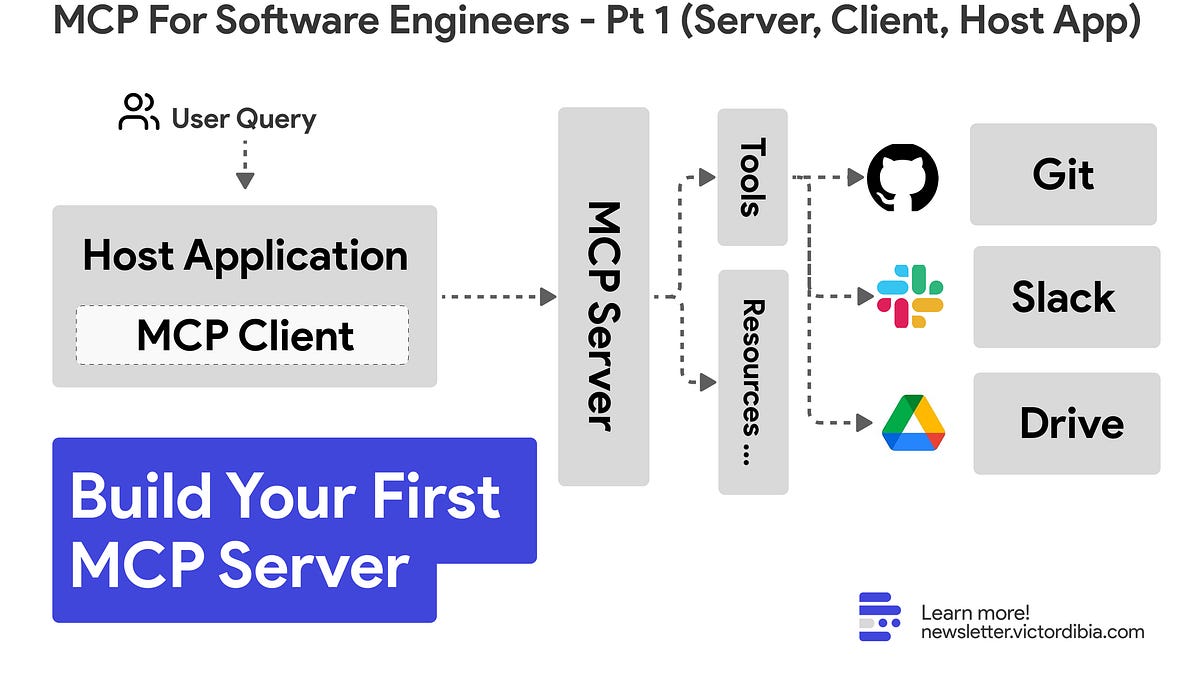
MCP is a JSON-RPC protocol that gives an AI client a standardized way to call external services. The client - Claude, Cursor, or any compliant tool - sends a request and your server handles it, regardless of what language it is written in.