The Model Context Protocol (MCP): what it is and how to build a server
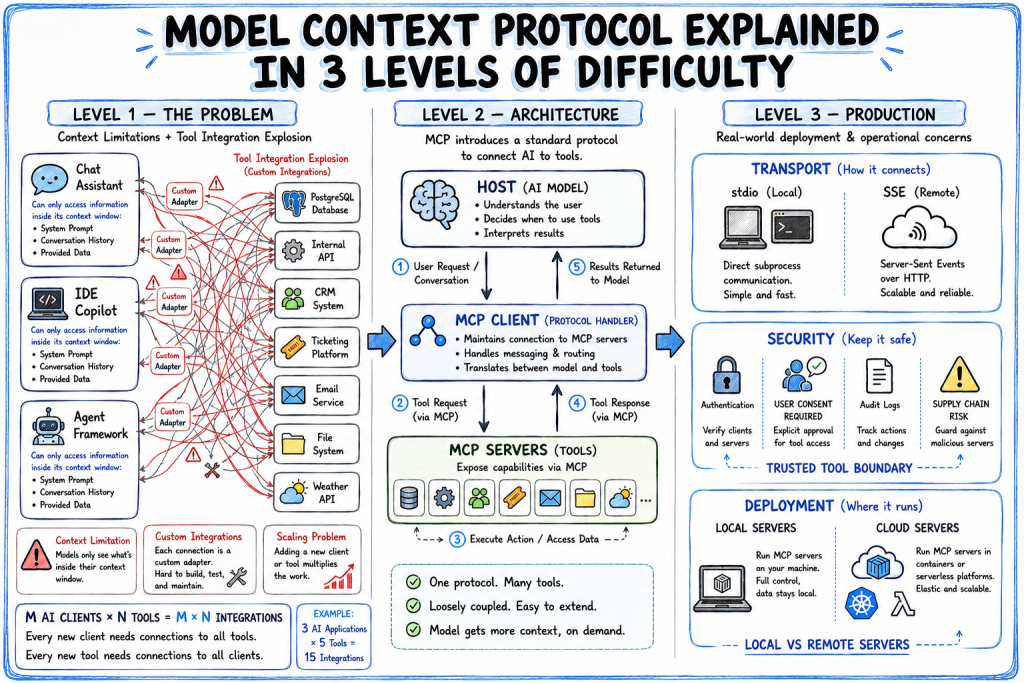
Your team's LLM-powered application talks to a search index through one custom integration, a code repository through another, a Postgres database through a chain of LangChain tools, and a file system through raw Python I/O calls. Every new data source means writing a new integration. Every integration uses a different authentication model and returns data in a different shape. The LLM application is tightly coupled to every backend it touches, and swapping one out requires changing the application code directly.
The Model Context Protocol (MCP) exists to replace this bespoke plumbing with a single, standardized interface. Think of it as a USB-C port for LLM applications: one connector shape, one protocol, and any compatible server can plug into any compatible client without custom wiring.
Why a standard protocol matters
LLM-powered tools have exploded in capability over the past two years, but the integration story has not kept up. Each AI application (IDE assistant, chat client, agent framework) historically built its own connectors for databases, APIs, document stores, and code repositories. There was no shared contract. If you wanted to use a specific code search tool with two different AI assistants, you needed two separate integrations.