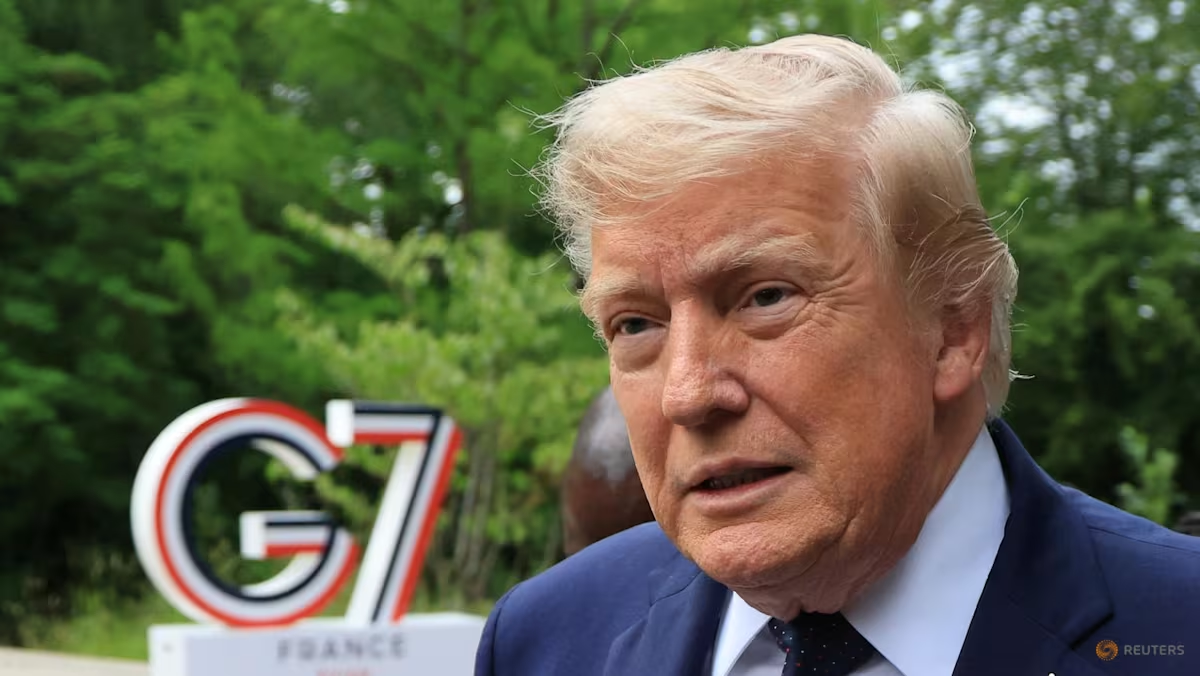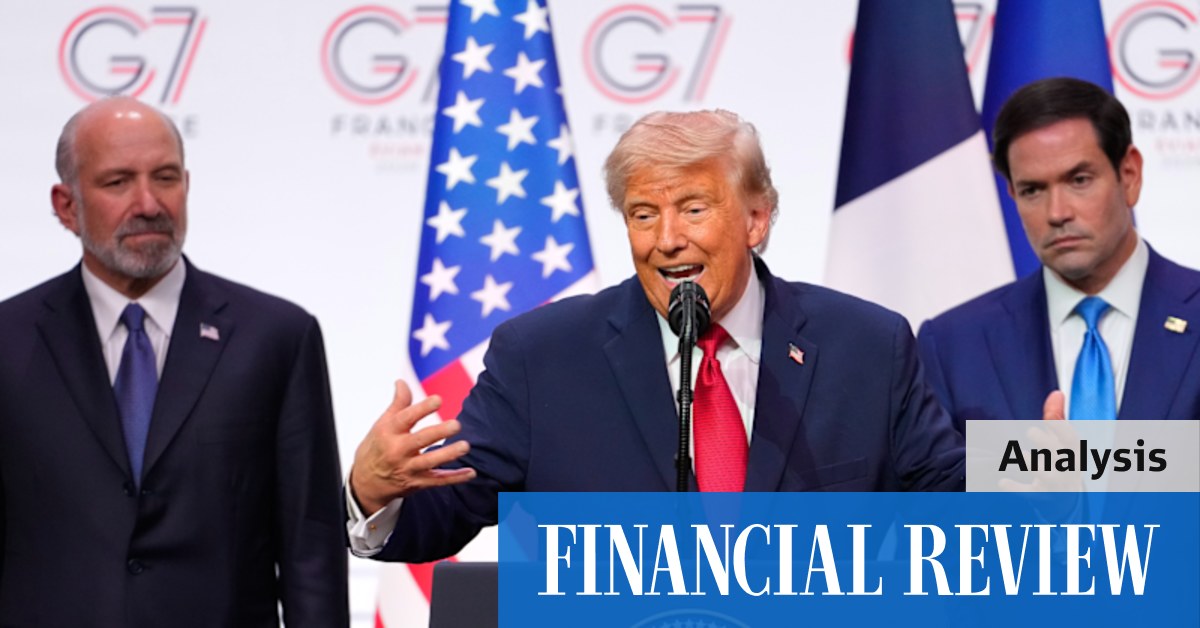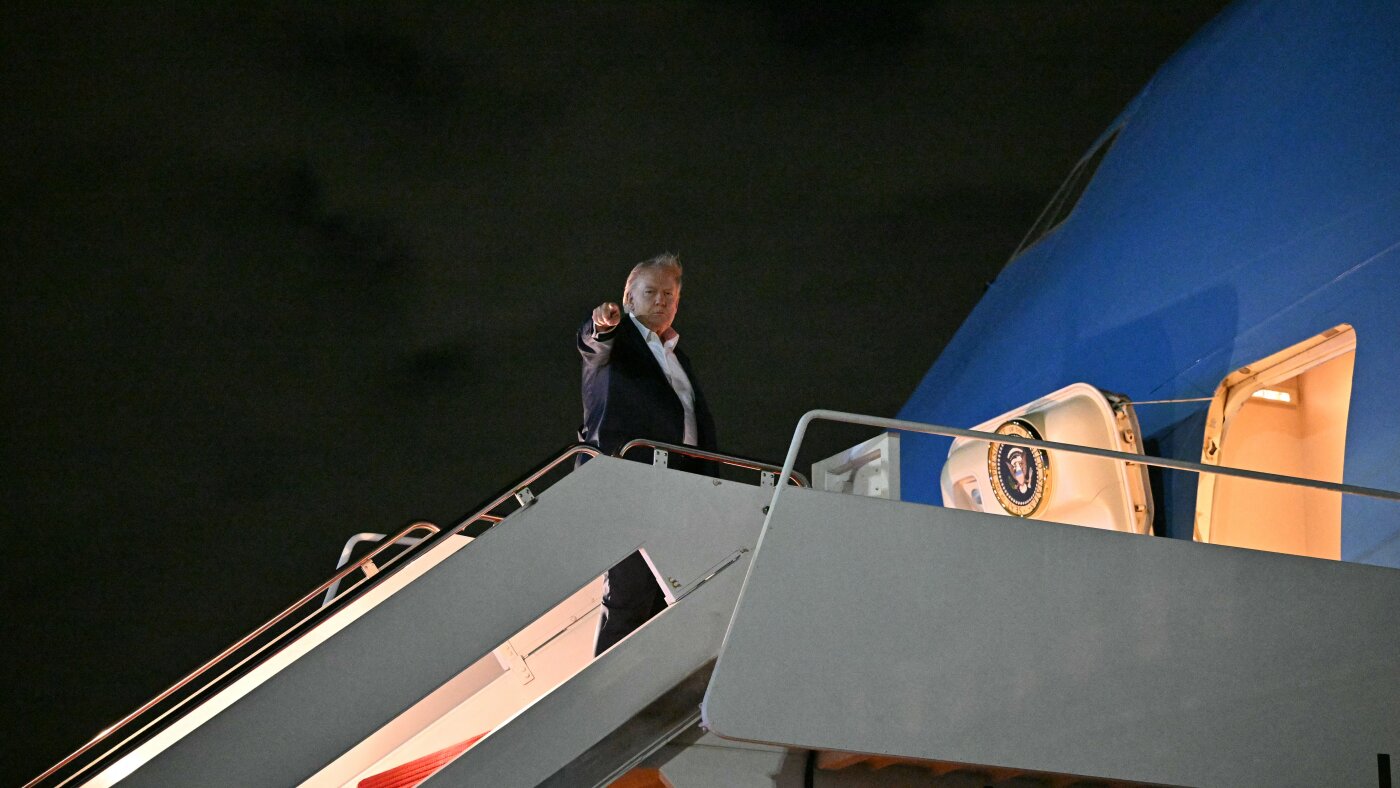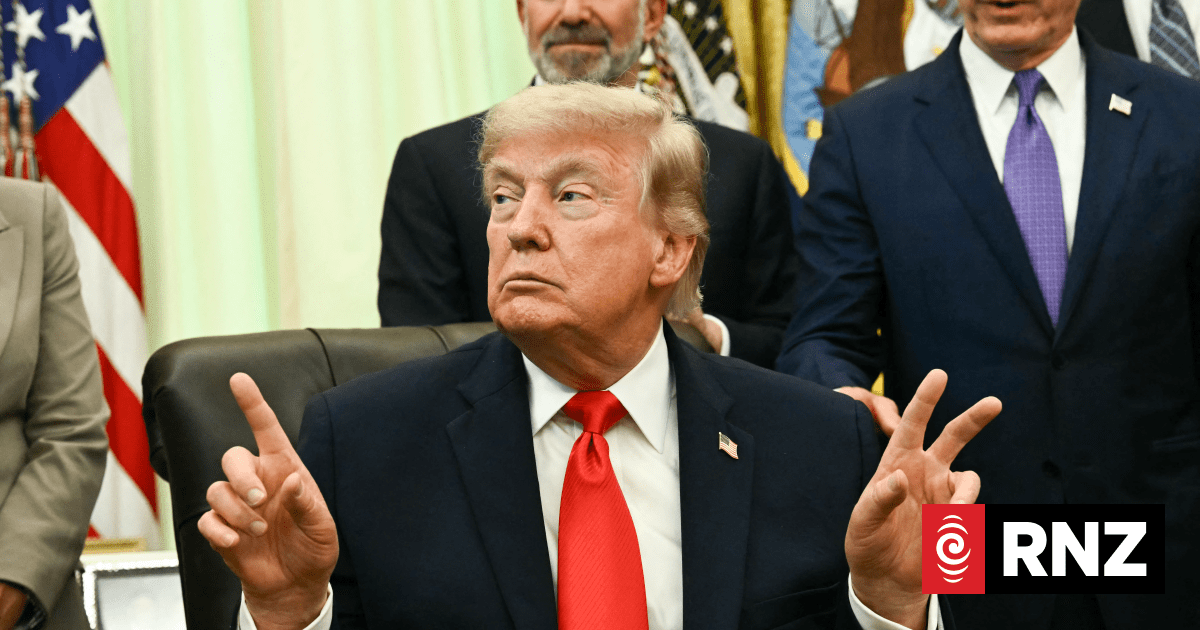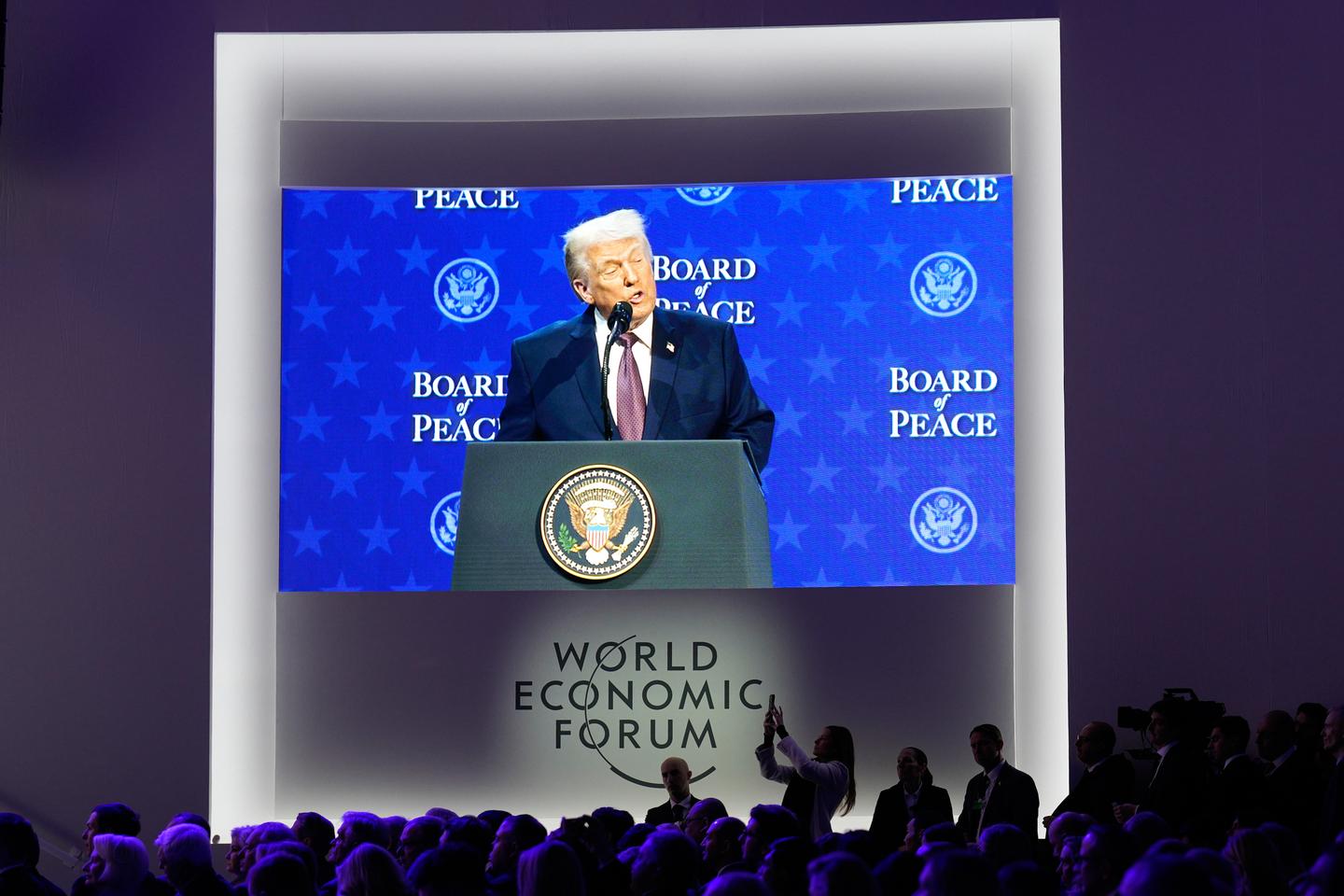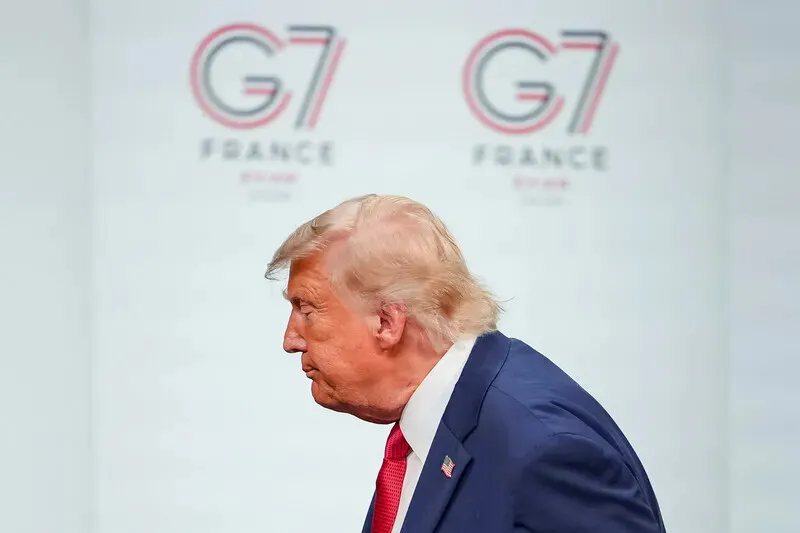
US President Donald Trump departs from a press briefing on June 17, 2026, at the Group of Seven summit in Evian, France. (Reuters/Yonhap)
By Kim Jong-dae, former Justice Party lawmakerJudging solely by its wording, the 14-point memorandum of understanding the US is set to sign with Iran is closer to a “declaration of the retreat of the hegemonic order” than a peace agreement. This document has effectively nullified the grand strategy of US President Donald Trump, who as recently as February, during the early phase of the war with Iran, envisioned regime change in Tehran and a radical reconfiguration of the Middle Eastern order.What stands out most is the asymmetry of who conceded what. All Iran offered is a reaffirmation — something it has consistently repeated over the past 20 years — of a pledge not to build nuclear weapons, acceptance of 60 days of additional negotiations, and commitment to reopen the Strait of Hormuz under Iran’s leadership within 30 days if the US meets the preconditions. In a nutshell, the MOU is just Tehran’s reaffirmation of principles publicly declared earlier to the world and symbolic concessions on the reopening of the strait. In return, the list presented by Washington is practically a document of surrender.The Trump administration must commit to an immediate and permanent end to hostilities on all fronts, including Lebanon. This essentially means persuading Israel to lay down its arms as well. The clause promising not to interfere in Iran’s internal affairs and to respect its sovereignty is a symbolic declaration that peels off the “rogue state” label the US stuck on Iran over the past 40 years since the 1979 Iranian Revolution. Attached to the MOU is a series of pledges: the complete lifting of the naval blockade of Hormuz within 30 days, phased withdrawal of American troops from areas surrounding Iran, suspension of sanctions on Iranian crude oil and petrochemicals and restored access to financial networks, release of US$24 billion in frozen Iranian assets — half of which will be paid upfront before negotiations begin — and a reconstruction plan worth at least US$300 billion in partnership with allies.During the negotiating period, US troop buildup and new sanctions are prohibited, and the issue of control over the Strait of Hormuz was deliberately left out of talks. This is a de facto acknowledgement of Iran’s geographical and military leverage as a done deal. No restrictions are specified on Iran’s missile program, implying that even if Tehran continues developing its capabilities in ballistic and cruise missiles and long-range drones, the MOU at the very least takes no issue with it. The same applies to Iranian support for the “axis of resistance,” including Hezbollah in Lebanon, the Houthis in Yemen, and pro-Iranian Shia militias in Iraq and Syria. In effect, it glosses over the core instruments of Iranian expansionism over the past several decades.A closer examination of this framework makes it difficult to regard the MOU as a declaration of a US victory. On the contrary, when measured against the prewar baseline, the extent of Iran’s symbolic victory is evident. Geopolitically, the West Asian country’s standing rises not one, but two or three notches, and its role as the “strait’s gatekeeper” in leveraging Hormuz becomes more entrenched. Iran and its allied network will fill the vacuum left by the phased withdrawal of US forces from the region.Politically, the Islamic Republic has effectively secured de facto written recognition of its regime and respect for its sovereignty from the US after weathering external military and economic pressure. Economically, the coming windfall is clear. From the resumption of crude oil and petrochemical exports and easing of financial sanctions to the unfreezing of assets and even the promise of a US$300 billion reconstruction package, a deluge of benefits, enough to revive the war-torn Iranian economy, is arriving all at once.Pathways for engagement with the outside world — unthinkable before the war — are appearing, and channels for Chinese, Russian, European and Gulf capital to flow into Iran are widening significantly. There is no guarantee that these rosy prospects will materialize exactly as outlined in the MOU, but the prospects themselves raise Iran’s standing as an economic and diplomatic power in the Middle East.The withdrawal of US forces from the Middle East symbolizes a retreat in the hegemonic structure that goes beyond mere military deployment. The moment the US disengages, the Middle East will no longer be an “American sea” but rather another battleground where multipolar powers such as China and Russia compete. Thus, one question remains: what strategic course of action will the US take following these negotiations? The US could, as Trump has often argued, stop waging “forever wars” and instead focus on containing China in the Indo-Pacific region. In this case, allied deterrence led by America would grow stronger over the short term amid constant military tensions in the South China Sea, Taiwan Strait and East China Sea.Yet another option exists. The US can avoid a direct confrontation with China and choose not to further spread its military power and finances abroad. This way, Washington could limit its role to remain an “offshore balancer” in the Indo-Pacific region and focus on defending its interests in the Western Hemisphere. The time for that strategic decision is approaching.Please direct questions or comments to [english@hani.co.kr]