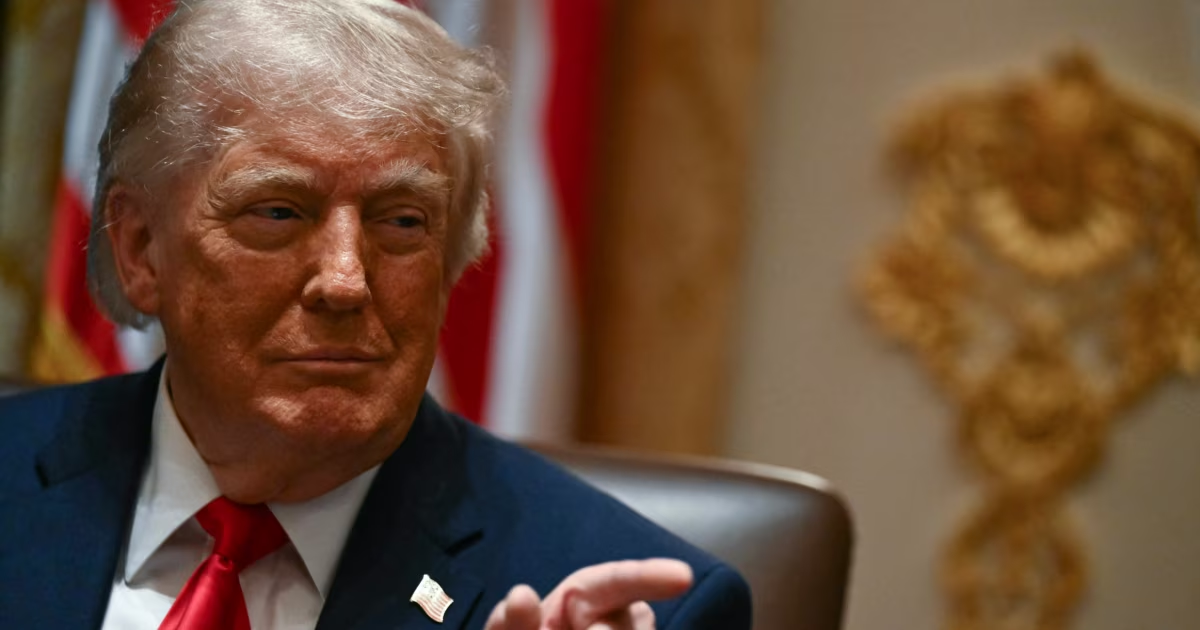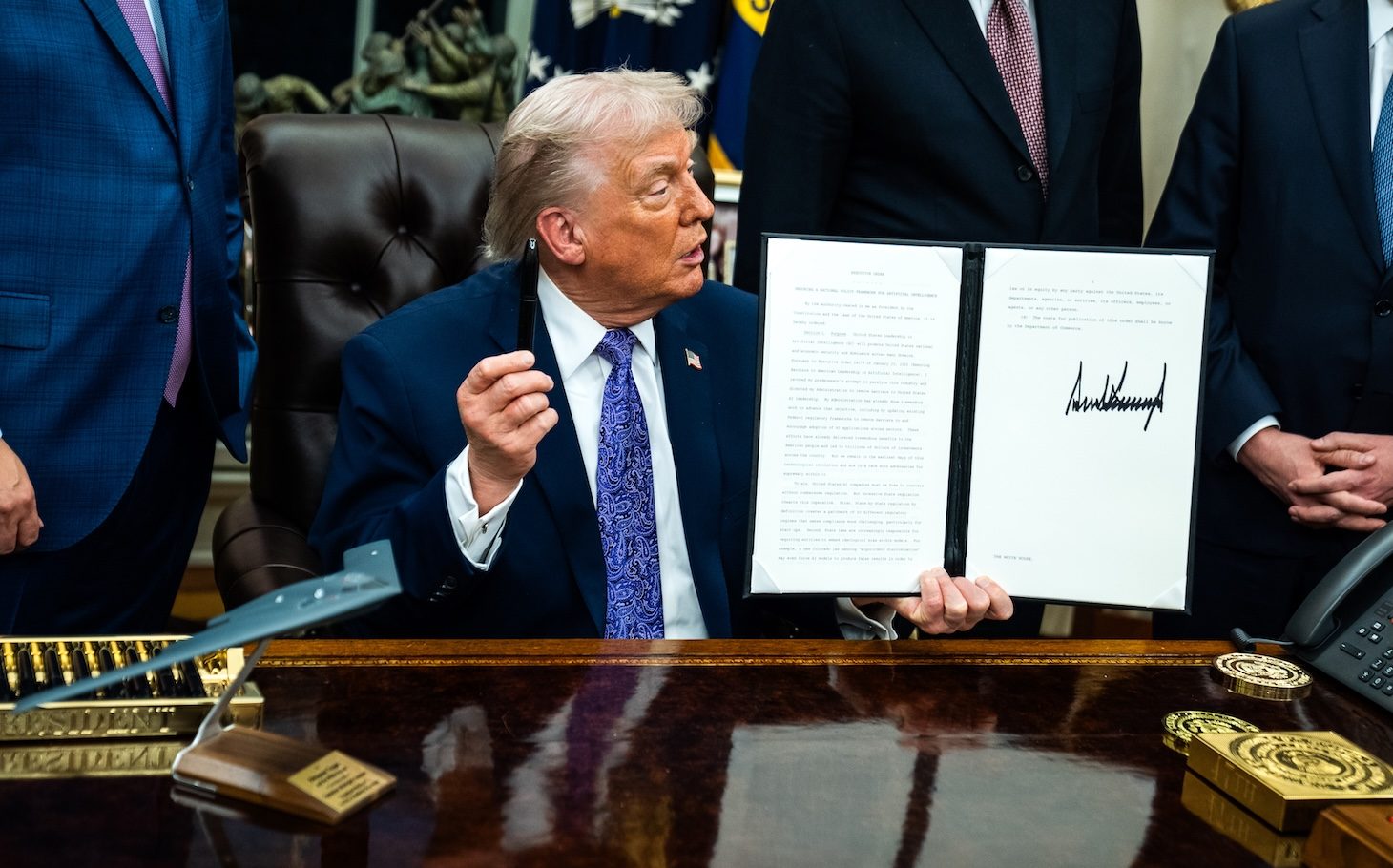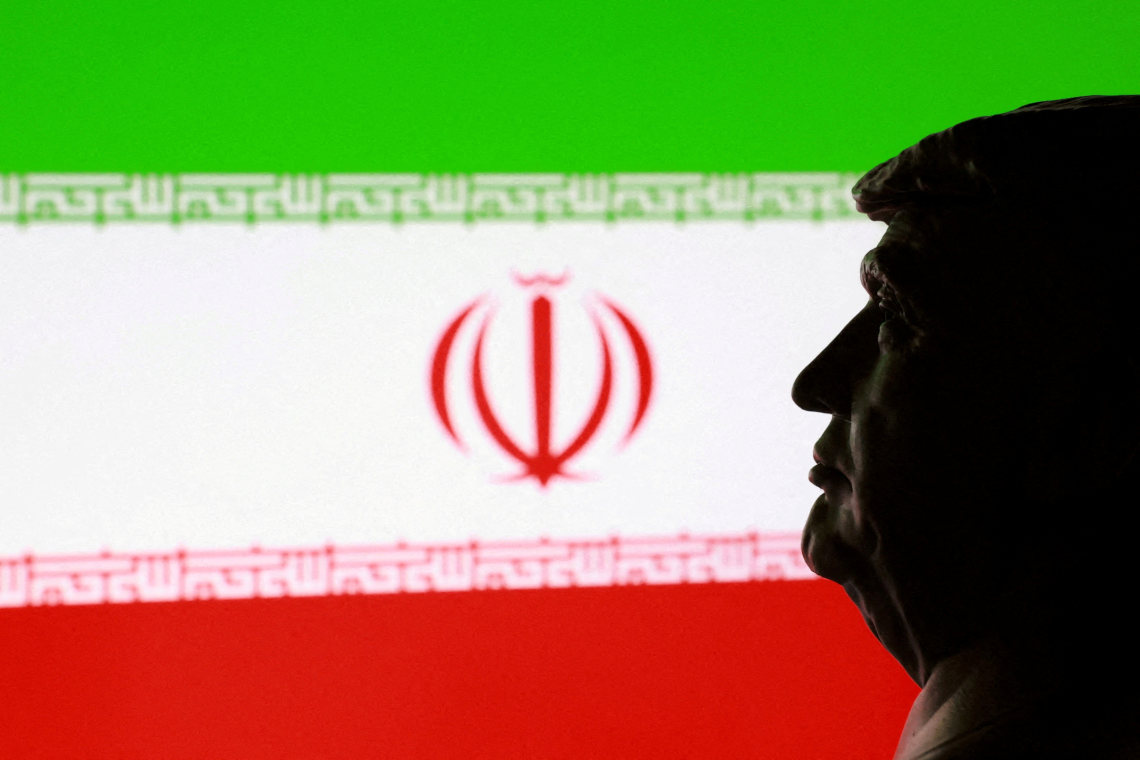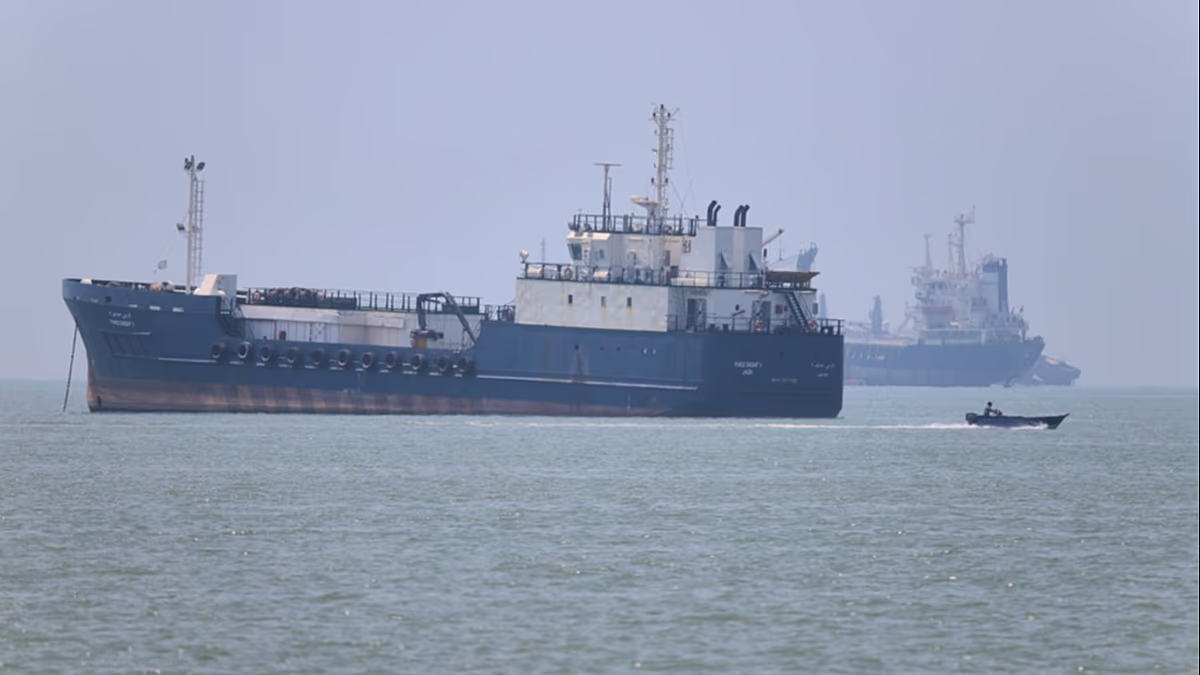
In typically braggadocious fashion, Donald Trump announced in a social media post on Sunday that “The Deal with the Islamic Republic of Iran is now complete.” However, as so often with the American president’s utterings, the reality is far from this. What is clear is that the US and Iran have agreed on framework to end the war launched by the US and Israel on February 28th, with a signing ceremony likely to take place in Geneva on Friday. This is to be followed by a 60-day period in which most of the substantial issues that divide the two sides will be addressed. In the absence of publication of any written text of the “deal”, there is limited clarity regarding anything else. Equally, it remains unclear which – if any – of the war objectives set out by the US and Israel at its outset have been achieved. The main achievement that is being loudly proclaimed by Trump and his supporters is the reopening of the Strait of Hormuz, through which, as the whole world has now learned, a significant percentage of global oil supplies and much more transits. However, in securing its reopening, Trump has simply restored the status quo ante. The strait was closed by Iran in response to the war’s launch in February, having previously been open to maritime traffic. Trump claims that passage through the strait will be “toll-free”. The Iranian Fars news agency reported that Iran would regulate marine traffic through the Gulf in co-ordination with Oman under the emerging ceasefire arrangement. The differences between the two sides do not stop there. The semi-official Mehr news agency reported that the agreement provides for the release of frozen Iranian assets to the value of $12 billion during the 60-day period, half of which is to be released before negotiations begin. An unnamed US official rejected this, telling CNN: “This is a pay for performance deal and no frozen funds will be released without the Iranians implementing their commitments.”Earlier this year, Trump mocked Barack Obama for sending Boeing 757s “loaded with cash, hundreds of millions of dollars” as part of the 2015 agreement with Iran to limit its nuclear programme in exchange for sanctions relief. Under the Joint Comprehensive Plan of Action, which Iran signed with the US, UK, France, China, Russia and Germany, Iran was obliged to reduce its stockpile of enriched uranium by 98 per cent and could only retain a small amount of low-enriched uranium – enough to fuel a nuclear power station, but substantially less than what would be needed to produce a nuclear weapon. According to the International Atomic Energy Agency, Iran was complying with the deal before the US withdrew. However, by the time of the 2025 US and Israeli attacks on Iran, it had obtained more than 400kg of highly enriched uranium. Trump is anxious to secure a deal that somehow improves on the agreement secured during Obama’s time in office, although the prospect of doing so, as with so much of this week’s deal, is still very uncertain. There is also considerable ambiguity regarding the broader regional impact of the agreement. Iran’s Supreme National Security Council stated that the deal called for an immediate end to hostilities on all fronts, signifying a belief that it applied to Lebanon where Israel continues to engage in conflict and occupies swathes of Lebanese territory. Israel, although one of the key protagonists of the war on Iran, if not its chief architect, was not party to the negotiations that brought about the latest deal. [ The Irish Times view on the US-Iran deal: Trump accepts defeatOpens in new window ]Meanwhile, criticism of the US-Iran agreement is widespread across the Israeli political spectrum. Its minister for national security, Itamar Ben-Gvir, stated that Israel was not bound by it, while his far-right counterpart, Bezalel Smotrich, asserted that the deal was bad for Israel and for the entire free world. The centrist leader of Israel’s parliamentary opposition, Yair Lapid, described it as “one of the most shocking failures of Israel’s foreign and security policy”. Avigdor Lieberman, a former defence minister, described the deal as a catastrophe and “a total victory for the ayatollahs”. For Israeli prime minister, Binyamin Netanyahu, the signs are ominous. He faces into a general election in October with his Likud party trailing its opposition. A majority of Israelis, polled earlier this month, believe he should not contest another election. Netanyahu’s dilemma is deepened not only by Trump’s engagement with Iran without Israeli input but also by his recent willingness to dismiss the Israeli prime minister using what reports suggested was the coarsest of language. If the 60 days of negotiation do culminate in a lasting deal, the persistent question will be what exactly the war achieved. Iran has certainly seen its military capacity dramatically weakened. However, about half of Iran’s stockpile of ballistic missiles and its associated launch systems were still intact when the first ceasefire was announced in April of this year. James Adams, the head of the US Defence Intelligence Agency, stated in a written submission to the House Armed Services Committee in April that “Iran retains thousands of missiles and one-way attack UAVs [drones] that can threaten US and partner forces throughout the region, despite degradations to its capabilities from both attrition and expenditure.” At least 3,400 Iranian lives have been lost but the regime in Tehran is more entrenched and hardline than ever before, as the Islamic Revolutionary Guards Corps has asserted greater control over the political system. Opposition is harshly repressed. Since the war began, at least 40 people have been executed in political or security-related cases and at least 78 more are on death row. According to Amnesty International, at least 6,000 people have been arrested since February 28th, including protesters, journalists, human rights defenders and civil society activists. In Lebanon, more than 3,500 people have been killed, over one million civilians have been displaced and hundreds of square miles of Lebanese territory occupied by Israel in the course of its ongoing war with Hizbullah. [ A war without a victor: Trump’s Iran deal delivers fragile peace with many faultlinesOpens in new window ]Elsewhere, the Gulf states have been reminded of their economic and military vulnerability, as the model of economic and social development that has been pursued by decades has been destabilised by regional insecurity and uncertainty regarding the reliability of the US as an ally. In an interview last Sunday with The New York Times, Trump threatened to restart attacks on Tehran if no agreement was concluded. In addition, he said he would make the US “the guardian of the Middle East” in exchange for 20 per cent of the region’s revenues. What is not clear is how much more of Trump’s guardianship the region can endure.
Trump says US will be ‘guardian of the Middle East’. How much more can the region endure?
US and Iran have agreed on framework to end the war launched by the US and Israel, but many questions remain
1,133 words~5 min read