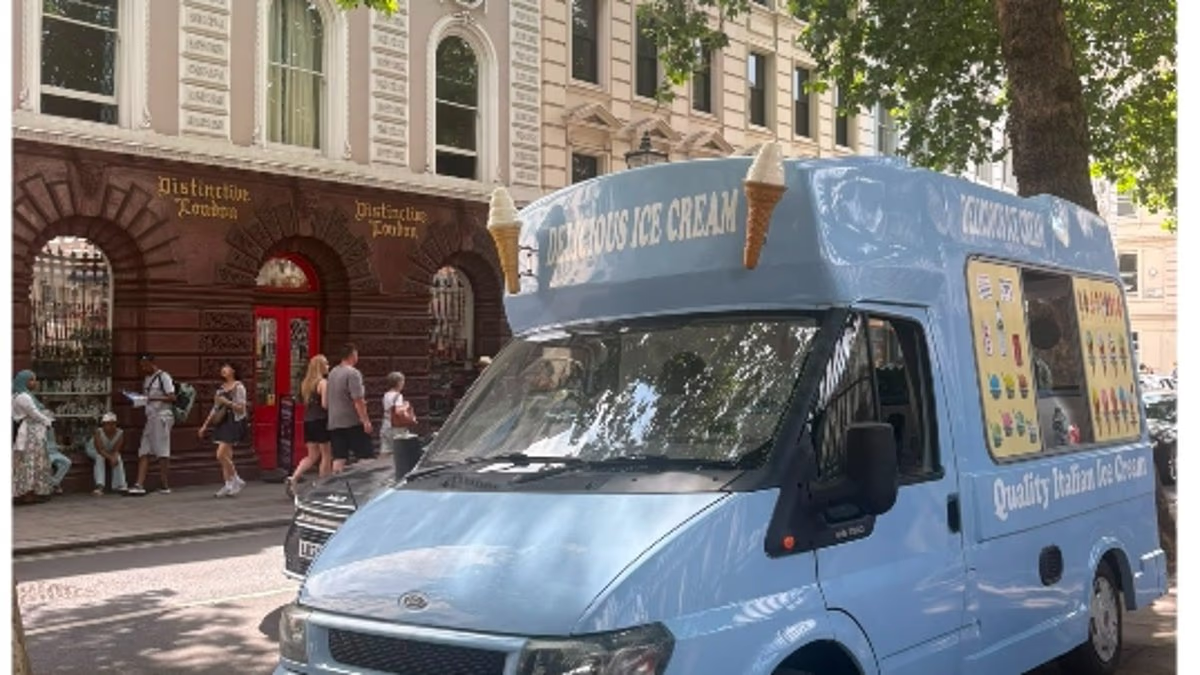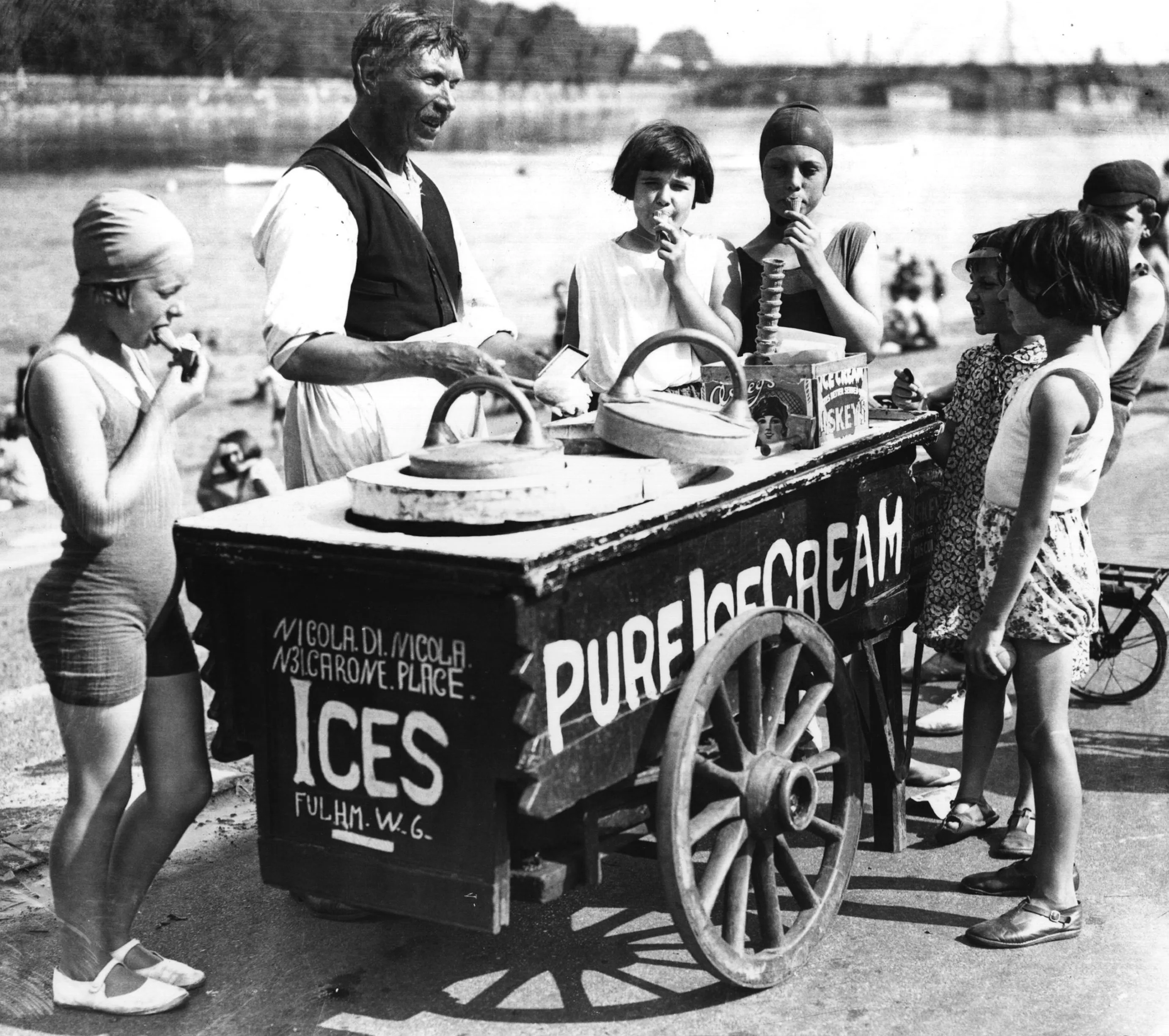
The soft, creamy swirls of snowy white ice cream, topped with a Flake for a classic ‘99’, have been a fixture of British summers for almost seven decades.And despite the popularity of gourmet Italian gelato, our love affair with ‘soft serve’ ice cream continues apace.The UK market is now worth £1.6billion, with one survey estimating Brits buy more than 2,300 ice creams from vans during their adult lifetime.But the days when a ‘99’ cost less than a pound are long gone. Today, the price of an average cone from an ice cream van has soared to £4.60.And while Mr Whippy may have changed little in the public imagination since it first arrived in 1958, the reality behind the iconic swirl is rather more complicated.Far from a traditional blend of frozen milk, cream and sugar, modern soft serve contains a cocktail of stabilisers and emulsifiers designed to create its distinctive taste, texture and appearance.‘It may seem like a reassuringly old-fashioned treat, but Mr Whippy is actually a Frankenstein’s monster of ultra-processed ingredients,’ says Laura Southern, a nutritionist and founder of London Food Therapy.What’s more, some ice cream sellers are complaining about the quality of flakes with reports earlier this week of ‘chocolate bloom’ – an unsightly white coating where the chocolate has melted and been incorrectly cooled again – affecting batches. Modern soft serve contains a cocktail of stabilisers and emulsifiers designed to create its distinctive taste, texture and appearance Rather than cream, a Mr Whippy's primary fat source is coconut fat, which gives the ice cream its smooth textureSeveral vendors said there had been a ‘quality drop’ since the production of flakes was moved from the UK to Egypt in 2020. Cadbury said it was looking into complaints ‘to get back to the high quality people expect from us’.So what are we getting for our money? A comforting blast of nostalgia, yes, but also a huge calorie injection. A standard 90g soft serve cone contains around 200 calories; add a Flake and it jumps to around 250.If you opt for a double cone with two Flakes, you’re looking at around 500 calories, with a squirt of sweet sauce bumping it up by a further 50.The exact Mr Whippy formulation is kept a closely guarded secret by Unilever, which has owned the brand since 1966 and licenses it to thousands of vendors.Its mix is manufactured in factories and shipped by vendors in the form of vats of ready-to-use liquid. Nutritional information for this mix reads more like a chemistry experiment than a recipe for old-fashioned ice cream.The ingredients list comprises reconstituted skimmed milk, sugar, coconut fat, skimmed milk powder, glucose syrup, emulsifier (mono-and di-glycerides of fatty acids), stabilisers (locust bean gum, guar gum, carrageenan) and flavourings.Perhaps the biggest surprise is that rather than cream, its primary fat source is coconut fat.‘Vegetable fat is cheaper and gives that smooth texture we expect from soft serve,’ explains Laura. ‘But coconut fat contains more saturated fat than dairy cream.’ At 6.7g per 100g, Mr Whippy’s mix is considered high in saturated fat under NHS guidelines. A standard cone of 90g could contain around 6g, around a third of a woman’s recommended daily limit and a quarter of a man’s, before a Flake is added.It contains 19g of sugar per 100g of mix, or 17g per serving – more than four teaspoons – which Laura describes as ‘super high’ (the NHS recommends that adults consume no more than 30g of sugar per day). But it’s the ingredients which give Mr Whippy its famous texture that concern her more: emulsifiers and stabilisers.Emulsifiers allow fat and water to combine smoothly, while stabilisers help stop the mixture separating and keep the soft serve standing proudly in its distinctive swirl, rather than collapsing.Research has linked high consumption of stabilisers and emulsifiers in ultra-processed foods (UPFs) with cardiovascular disease and certain cancers. It has also been shown to damage our ability to regulate our hunger.‘Stabilisers and emulsifiers can affect our gut health, causing digestive problems,’ says Laura. ‘Regularly eating ultra- processed food which contains them can increase inflammation in our bodies, which may contribute to a range of chronic health conditions, including obesity and type 2 diabetes.’As well as the ingredients listed, standard soft serve formulations usually contain around 55 per cent water, added to the reconstituted milk.There’s also a large proportion of air, added by the soft serve machine, which freezes the mix, continuously churns it, injects air and then dispenses it. Food scientists estimate that around one third of a serving consists of air.‘Air and water are free,’ says Laura. ‘But with emulsifiers and gums you can transform them into this whipped, fluffy texture people associate with Mr Whippy.’Of course, they also help the mixture go further.The wafer cone, usually made from flour, sugar, vegetable oil and emulsifiers, offers little nutritionally and comes in at around 20 calories. ‘It’s just adding to your sugar load,’ says Laura.‘Because there’s barely any protein in the ice cream – just 3.5g per 100g – there’s nothing to help slow down the sugar’s absorption.’ It will send your blood sugar soaring – a process which can damage our metabolic response and lead to weight gain.So, given that the ingredients appear relatively inexpensive, how has a treat once associated with pocket money turned into a £4.60 indulgence?According to Unilever’s current trade list price, Mr Whippy vanilla mix costs around £2.58 per litre. A 90g serving contains roughly 23p worth of mix. Once the air added during the freezing process is taken into account, the cost of the ice cream itself may be even less – a fraction of what customers are paying.The extras are hardly bank-breaking either. A wafer cone is likely to cost only a few pence, while a Flake may add around 15p. Even allowing for sauce, the ingredients in a standard cone are likely to cost well under £1.The ingredients are only part of the story, though. There are more than 5,000 ice cream vans in the country, many of which are independent businesses facing rising costs in an industry dependent on a few short months of the year. Ice cream vendors must cover everything from the cost of the van, the soft-serve machine, electricity, fuel and insurance, to licensing fees, council fees for their pitch and card charges.And while successful vendors can expect to sell as many as 600 soft serve cones per day during a heatwave, according to industry figures, there’s always the risk that the summer may be a washout.Recently, the prices of a host of other popular ice creams and lollies have shot up, too. In 2024, analysis by Which? found that some, including Cornetto ice creams, had risen by more than 30 per cent in the space of two years as manufacturers struggled with soaring energy, transport and ingredient costs.For Laura, the key is to regard Mr Whippy as an occasional treat. ‘Health wise, you’re better off with a small, individual carton of ordinary ice cream, which will contain far fewer ultra-processed ingredients,’ she says.‘But enjoying the odd soft serve cone in the summer won’t do you any harm if it brings you joy and the rest of your diet is good.’For some, the ingredient list might be enough to make them think twice next time they hear the unmistakable sound of an ice cream van in their neighbourhood. For others, the ever-rising prices might prove a stronger deterrent.But for many of us, when the sun is shining and Greensleeves is chiming through the streets, nothing will prevent us from joining that queue.
What's really in a Mr Whippy - and why the '99p cone' costs nearly £5
The soft, creamy swirls of snowy white ice cream, topped with a Flake for a classic '99', have been a fixture of British summers for almost seven decades.
1,258 words~6 min read