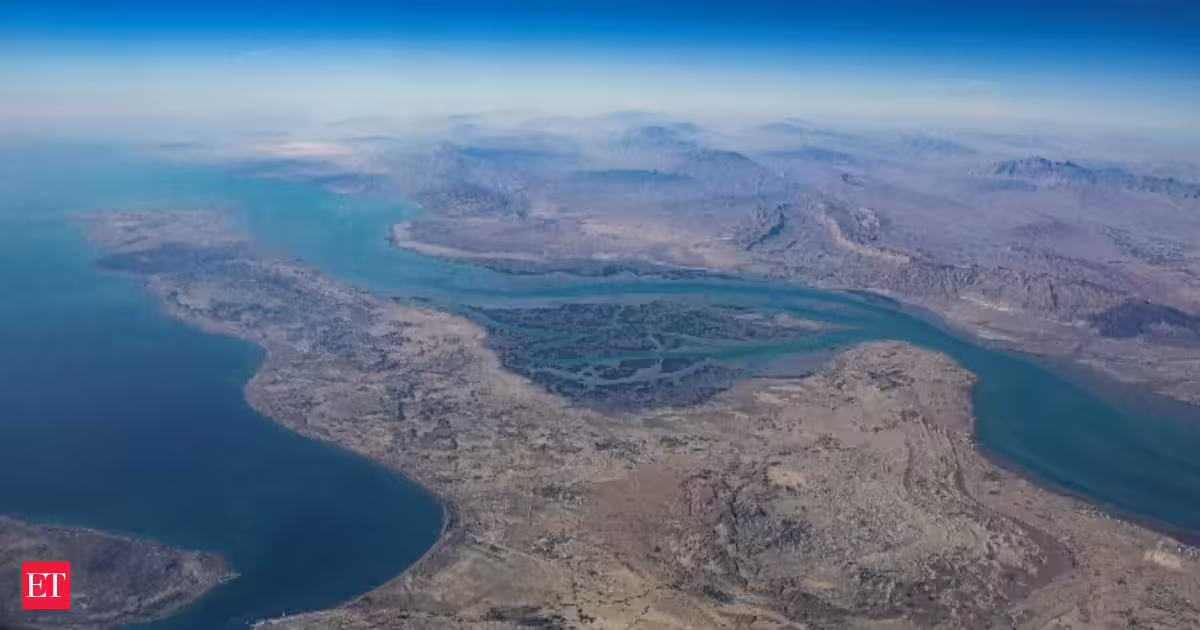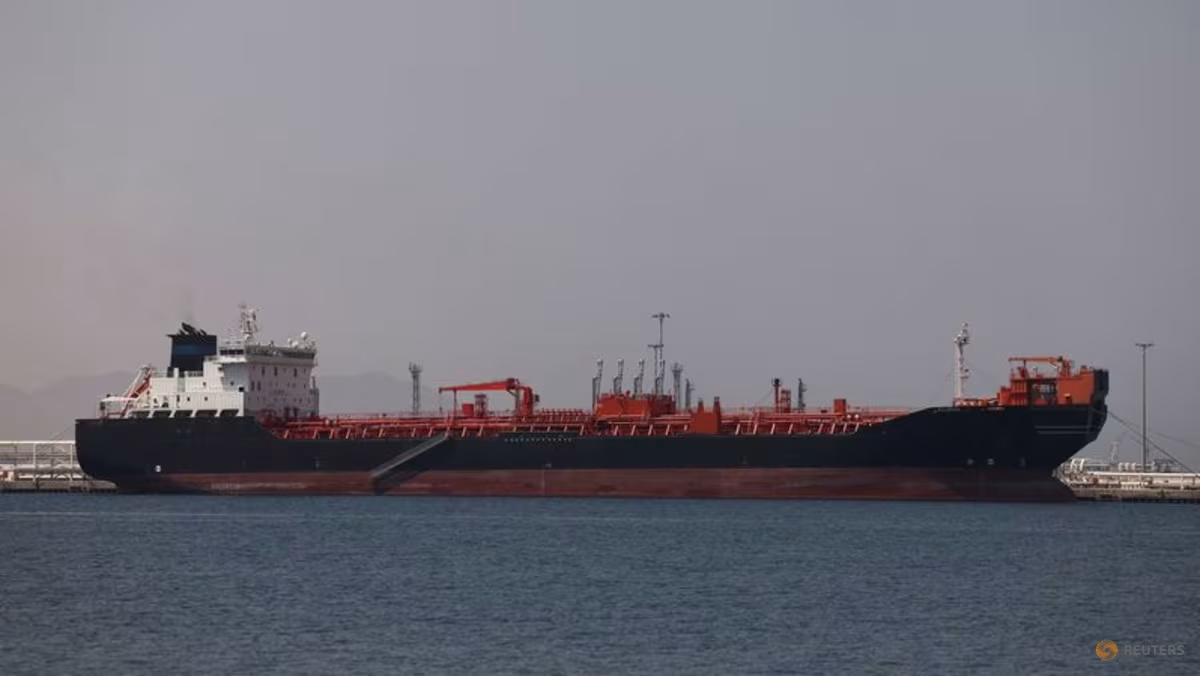
This week's interim agreement between the US and Iran to end hostilities and reopen the Strait of Hormuz has shifted the oil market's focus to how soon Mideast flows can resume and oil markets can normalize. Based on Brent’s plunge to below $80 per barrel this week, traders appear optimistic and assume no significant setbacks. This leaves them focused on fundamentals pointing to a supply surplus developing as early as the fourth quarter and expanding to a full-blown glut in 2027, based on projections by some major forecasters. The shift underscores how rapidly oil market expectations can change when geopolitical disruptions ease and constrained supply begins returning to market. Significant uncertainty remains about the interim peace deal's staying power. But if it lasts, the International Energy Agency (IEA), which has described the Hormuz crisis as the largest disruption in oil market history, now says the market faces an average surplus of about 5 million barrels per day in 2027 after it copes with an expected deficit of 900,000 b/d this year. That view is also broadly shared by the Energy Information Administration (EIA), although the US agency sees a larger deficit of 3.87 million b/d this year followed by a 4 million b/d surplus in 2027, when it sees Brent averaging $79/bbl. Energy Intelligence balances also currently predict a surplus of 4 million b/d next year.
Oil Surplus Fears Resurface Amid Demand Recovery Questions
An interim peace deal in the Mideast turns the focus to how much demand lost during the Hormuz closure will return as markets eye ample supply in 2027.
TL;DRAI
US-Iran deal reopens Hormuz; Brent drops below $80/bbl as forecasters predict 4-5M barrels/day surplus in 2027. Lower energy costs reduce data center capex and AI training expenses; infrastructure budgets should adjust for cheaper power in 2027.
226 words~1 min read