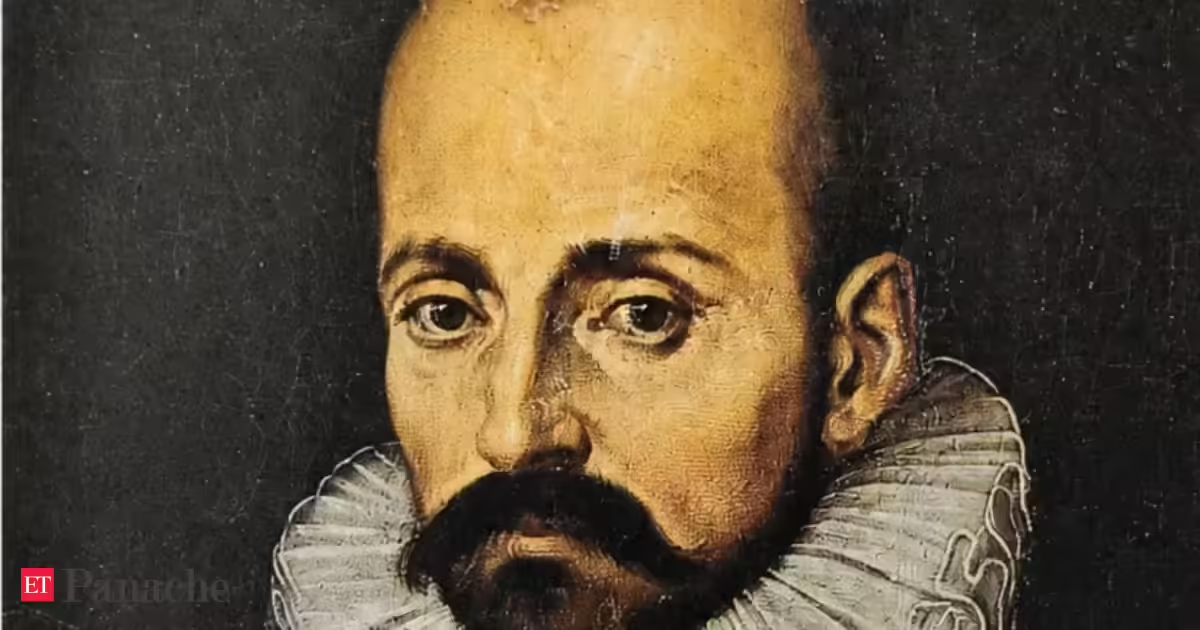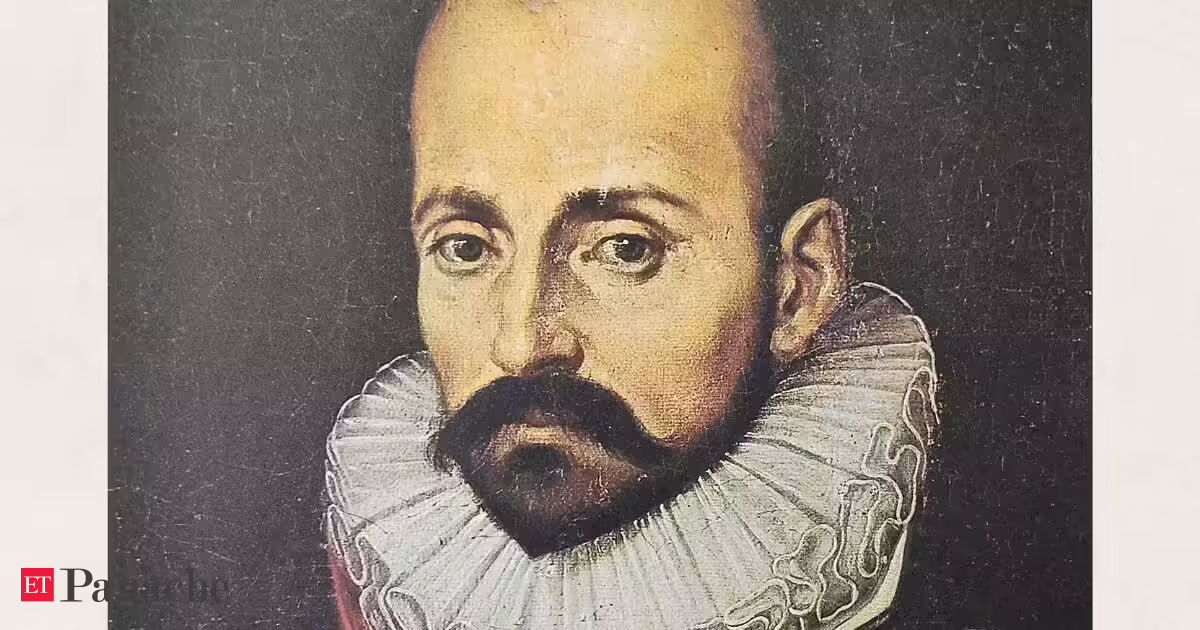
Michel de Montaigne was a French Renaissance philosopher and essayist best known for shaping the modern essay form through his work Essais. He wrote in a very personal, reflective style, often turning everyday life and human behaviour into subjects of philosophical thought. His writings still attract attention today because they feel direct, honest, and closely tied to real human experiences rather than abstract theory. One of his most widely shared observations about relationships comes from this body of work, where he often explored marriage, friendship, and the small tensions of daily life in a practical way.“A good marriage would be between a blind wife and a deaf husband.”This quote is often discussed because it presents a simple but unusual way of looking at long-term relationships. It is not meant to be taken in a literal sense but rather as a comment on how couples sometimes manage to stay together by not reacting to every small flaw they notice in each other.The idea suggests that relationships often survive when people choose not to focus too much on minor faults. In this interpretation, being “blind” means not constantly noticing every imperfection, while being “deaf” means not reacting strongly to every complaint or irritation. It points to the idea that harmony in marriage sometimes depends on restraint, patience, and a bit of selective attention.At the same time, the quote also carries a slightly humorous and ironic tone. Montaigne is not praising ignorance, but instead highlighting how constant awareness of each other’s flaws can create unnecessary tension. It reflects a practical view of domestic life, where emotional balance often comes from choosing what to ignore rather than trying to correct everything.Michel de Montaigne’s life and backgroundMontaigne was born in 1533 in southwestern France, at the Château de Montaigne. His family belonged to the educated nobility, and his father played an important role in shaping his early education. He was raised with an unusual method where Latin was used as his first language at home, which helped him connect directly with classical literature later in life.He went on to study law and worked in the Bordeaux Parlement as a councillor. During this period, he formed a close friendship with Étienne de La Boétie, which had a deep emotional impact on him. After La Boétie’s death, Montaigne gradually withdrew from public life, and this personal loss influenced much of his later writing.Writing Essais and philosophical approachIn 1571, Montaigne retired to his family estate and began writing in a tower library, where he spent much of his time reading and reflecting. This period led to the creation of his most important work, Essais, first published in 1580 and expanded over time. The book does not follow a strict system of philosophy but instead contains personal reflections on topics like friendship, death, education, and human behaviour.His writing style was unusual for its time because he often focused on himself as the subject. He did not present fixed answers or theories, but instead openly questioned his own thoughts and experiences. This made his work feel very human and relatable, even when discussing serious philosophical ideas.Public life and later yearsEven though Montaigne preferred a private life of reading and writing, he was still involved in public affairs during a turbulent time in France marked by religious conflict. He served as the mayor of Bordeaux for a period and tried to maintain balance during political and religious tensions.He continued revising his Essais until his death in 1592. Over time, his work became highly influential, shaping how later writers approached personal reflection and essay writing. His ideas remain widely read today because they focus less on abstract theory and more on the practical realities of human life, relationships, and personal understanding.
Quote of the day by Michel de Montaigne: 'A good marriage would be between a blind wife and a deaf husband...' The importance of imperfections in a marriage explained by the father of modern essays
Michel de Montaignes famous quote, “A good marriage would be between a blind wife and a deaf husband,” reflects his humorous yet realistic view of long-term relationships. The idea suggests that marriages often work best when partners choose not to focus on every flaw or complaint, but instead practice patience and selective attention to maintain harmony. Rather than promoting ignorance, Montaigne uses exaggeration to highlight how tolerance and restraint can reduce unnecessary conflict in domestic life.
619 words~3 min read