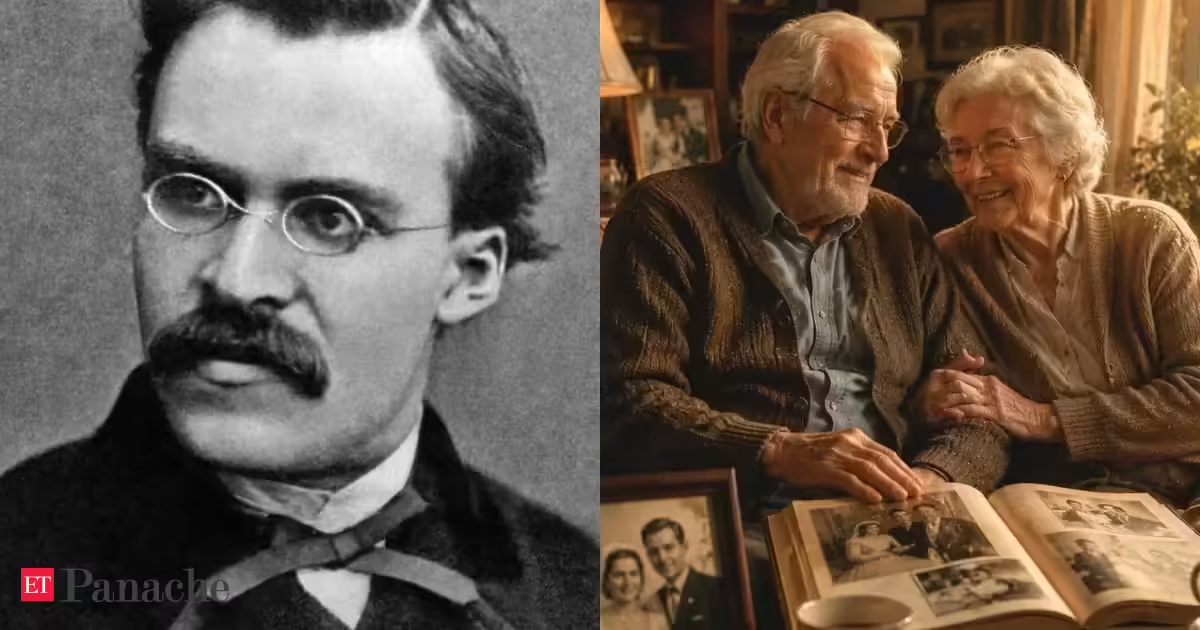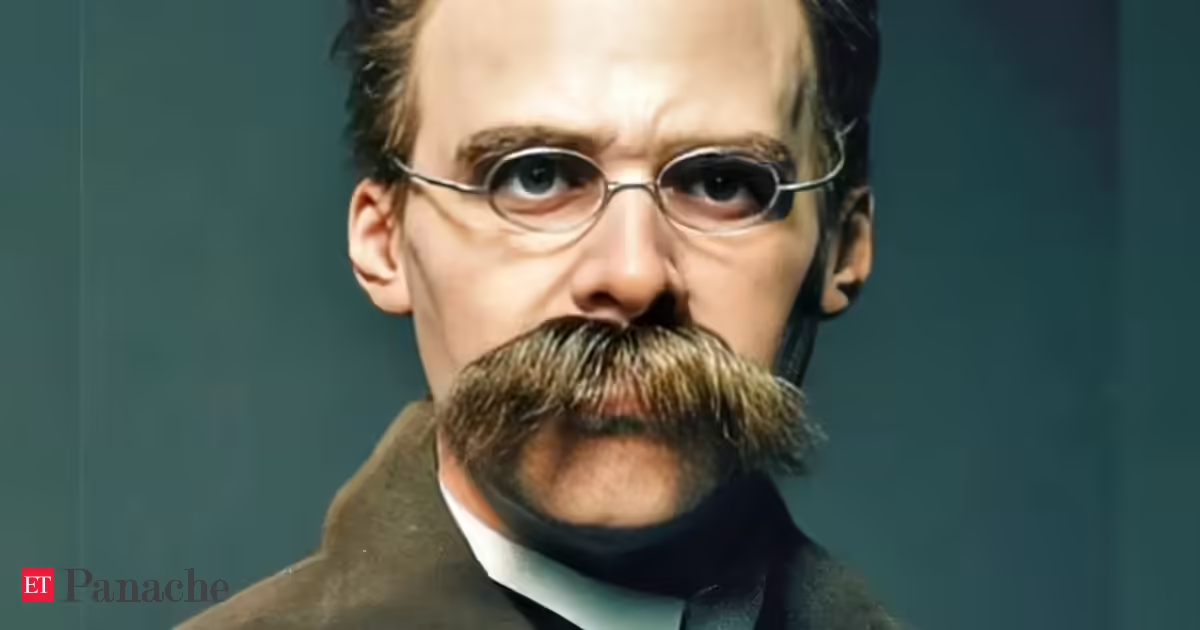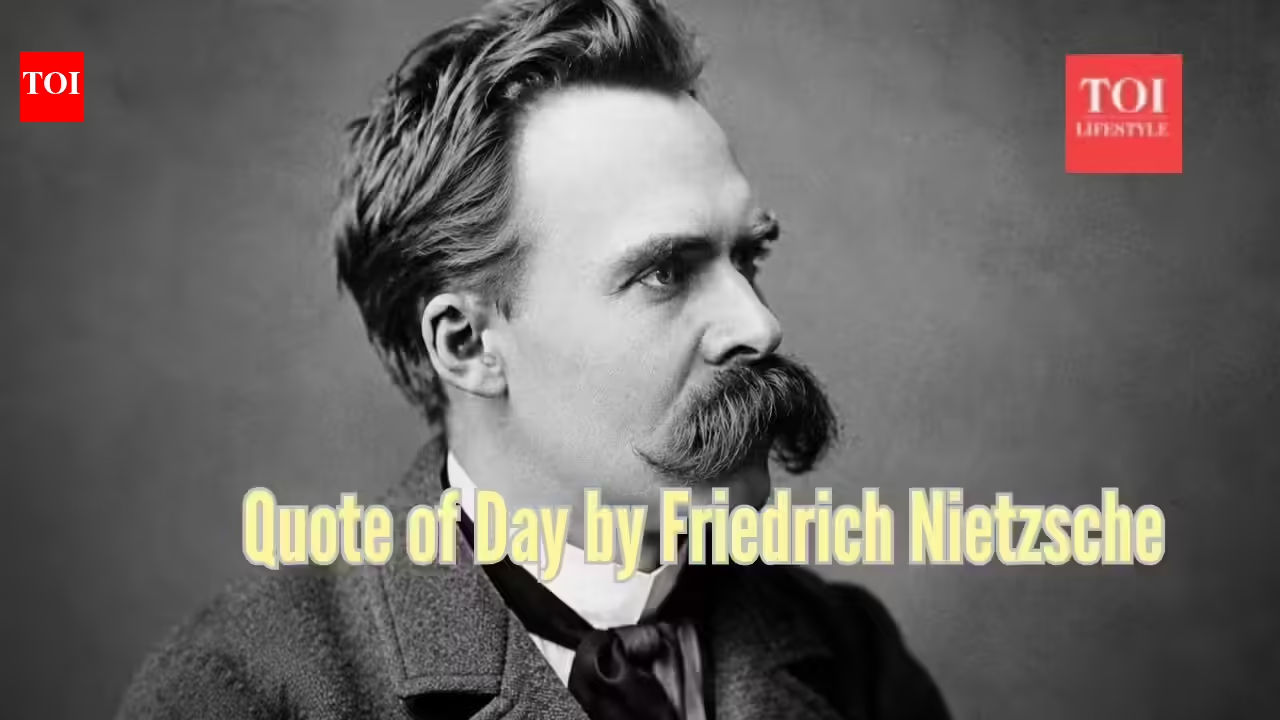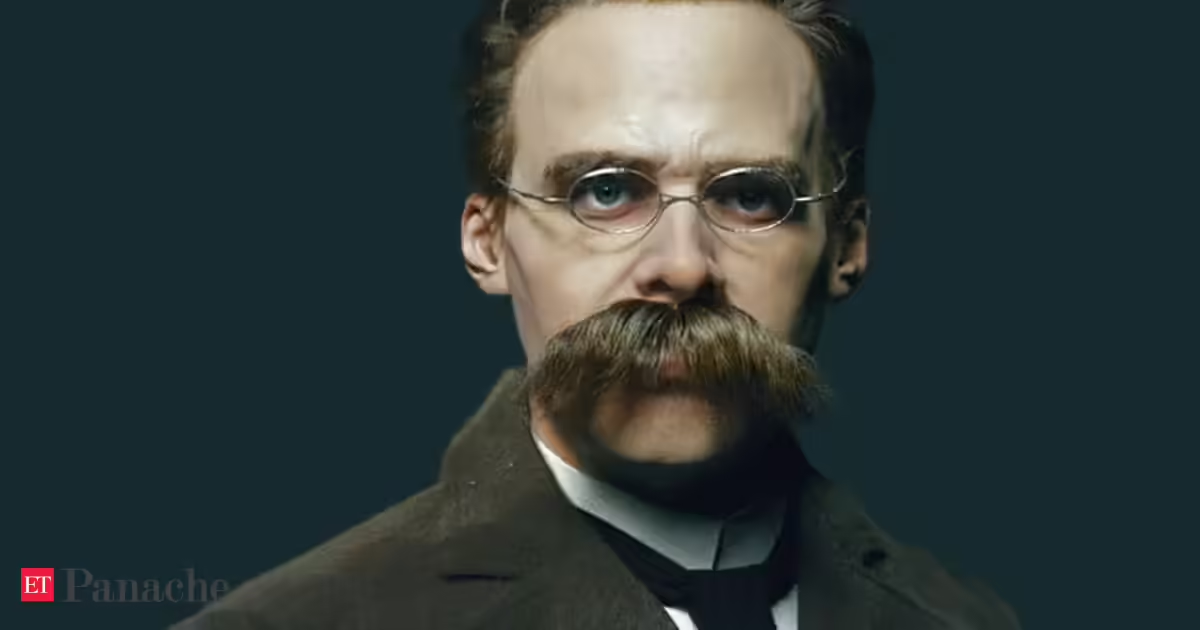
Friedrich Nietzsche, one of the most influential and debated thinkers in Western philosophy, often wrote in short, sharp aphorisms that questioned society, morality, and human relationships. Among his many observations on life and human bonds is a line from his 1878 book Human, All Too Human, where he reflects on the nature of marriage and companionship. The quote of the day offers context of how Nietzsche viewed relationships as something deeper than romance alone, rooted in friendship and understanding between two people.The quote of the day by Friedrich Nietzsche is: “The best friend will probably acquire the best wife, because a good marriage is founded on the talent for friendship.”This statement is not just about marriage in a romantic sense, but about how relationships grow from everyday human connection. Nietzsche is pointing out that friendship is not a side element in marriage but actually its foundation. In his view, emotional compatibility, trust, and shared understanding matter more than attraction alone. A relationship that lacks friendship, according to this idea, becomes unstable over time because it is missing the basic human connection that holds two individuals together.At the same time, the quote also suggests something indirect about personality and relationships. Nietzsche seems to imply that people who are capable of forming strong friendships in life are also more likely to build strong marriages. It is less about “finding the perfect partner” and more about becoming a person who can connect deeply with others in general. That ability naturally reflects in one’s choice of partner and the strength of the relationship.In simple terms, Nietzsche is stressing that marriage is not a separate emotional category. It grows out of everyday human behavior, especially the ability to maintain friendship without selfishness or constant emotional demands. A marriage built only on passion may fade, but one built on friendship has the stability to last longer, even when challenges come in life.You Might Also Like:Nietzsche and Human, All Too HumanThe quote comes from Human, All Too Human: A Book for Free Spirits, published in 1878. This work marks an important shift in Nietzsche’s writing style and thinking. Earlier, he was influenced by romantic ideas and figures like Richard Wagner and Arthur Schopenhauer. But during this phase, he moved away from romantic idealism and began writing in a more critical and realistic tone about human behavior.The book is structured in aphorisms, short reflections on morality, culture, psychology, and social life. Aphorism 378, where this idea on marriage appears, is part of the section dealing with women and children. In this context, Nietzsche is not trying to define marriage in a strict or moral sense but is observing it as a human institution shaped by personality, emotion, and social behavior.His writing here is more analytical than emotional. He breaks down relationships into practical human traits rather than idealized concepts. That is why this quote continues to be discussed—it reduces marriage to something simple and human rather than mystical or purely romantic.You Might Also Like:Friedrich Nietzsche: Life, Thought, and InfluenceFriedrich Nietzsche (1844–1900) was a German philosopher, cultural critic, and essayist whose ideas reshaped modern thinking about morality, religion, and human identity. Born in Röcken in Prussia, Nietzsche grew up in a religious household, as his father and grandfathers were Lutheran ministers. However, early tragedy marked his childhood, including the death of his father and younger brother, events that deeply affected his emotional development.Nietzsche initially studied theology but later shifted to classical philology, focusing on ancient Greek language and literature. He became a professor at the University of Basel at a very young age, showing early academic promise. However, his career in academia was short-lived due to worsening health problems, including chronic migraines and digestive illness, which eventually forced him to resign in 1879.Despite leaving formal academic life, Nietzsche produced a series of influential works during the next decade. These include Thus Spoke Zarathustra, Beyond Good and Evil, and On the Genealogy of Morals. In these writings, he explored ideas such as the “death of God,” the critique of traditional morality, and the need for individuals to create their own values rather than relying on inherited systems.What is Übermensch?One of his most well-known ideas is the concept of the “Übermensch,” or “overhuman,” which represents a person who overcomes conventional moral limits and shapes life through personal strength and self-determination. Another key idea is the “will to power,” which he described as a fundamental drive behind human behavior and ambition.Nietzsche also introduced the idea of eternal recurrence, which suggests that life may repeat itself endlessly in the same form. This thought was not meant as a scientific claim alone, but as a philosophical challenge—whether a person could accept their life completely, as if it would repeat forever without change.His later years were marked by a mental collapse in 1889, after which he lived under care until his death in 1900. The exact cause of his breakdown remains debated among historians and medical researchers, but what remains undisputed is the lasting influence of his ideas.Nietzsche’s work later became central to existentialist thought and influenced major figures in philosophy, psychology, and literature, including Sigmund Freud and Martin Heidegger. Although controversial and often misunderstood, his writings continue to shape discussions on morality, individuality, and human freedom.
Quote of the day by Friedrich Nietzsche: 'A good marriage is built on the ability to be friends, hence the best friend will probably have the best wife...' - what makes a happy marriage truly last, explained through Nietzsche’s philosophy of friendship
Friedrich Nietzsche, a major figure in Western philosophy known for his sharp and aphoristic style, explored human relationships through a realistic lens in his 1878 work Human, All Too Human. In his quote of the day, he emphasizes that marriage is fundamentally built on friendship rather than romance alone. Nietzsche suggests that emotional compatibility, trust, and the ability to form genuine human connections are more important for a lasting relationship than passion by itself.
872 words~4 min read