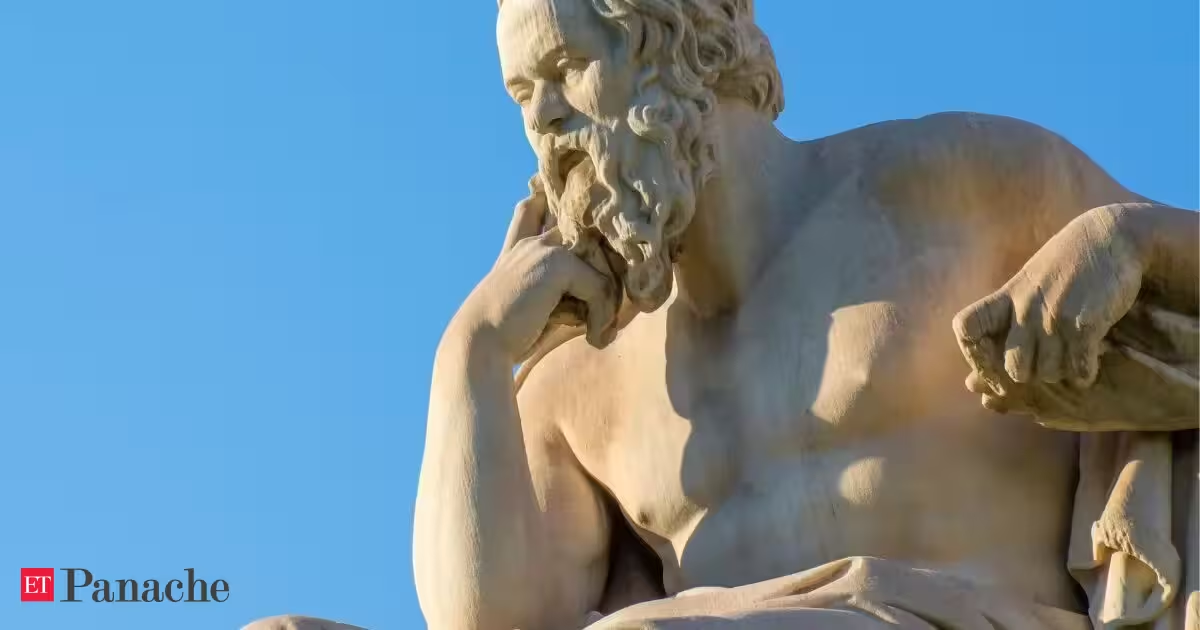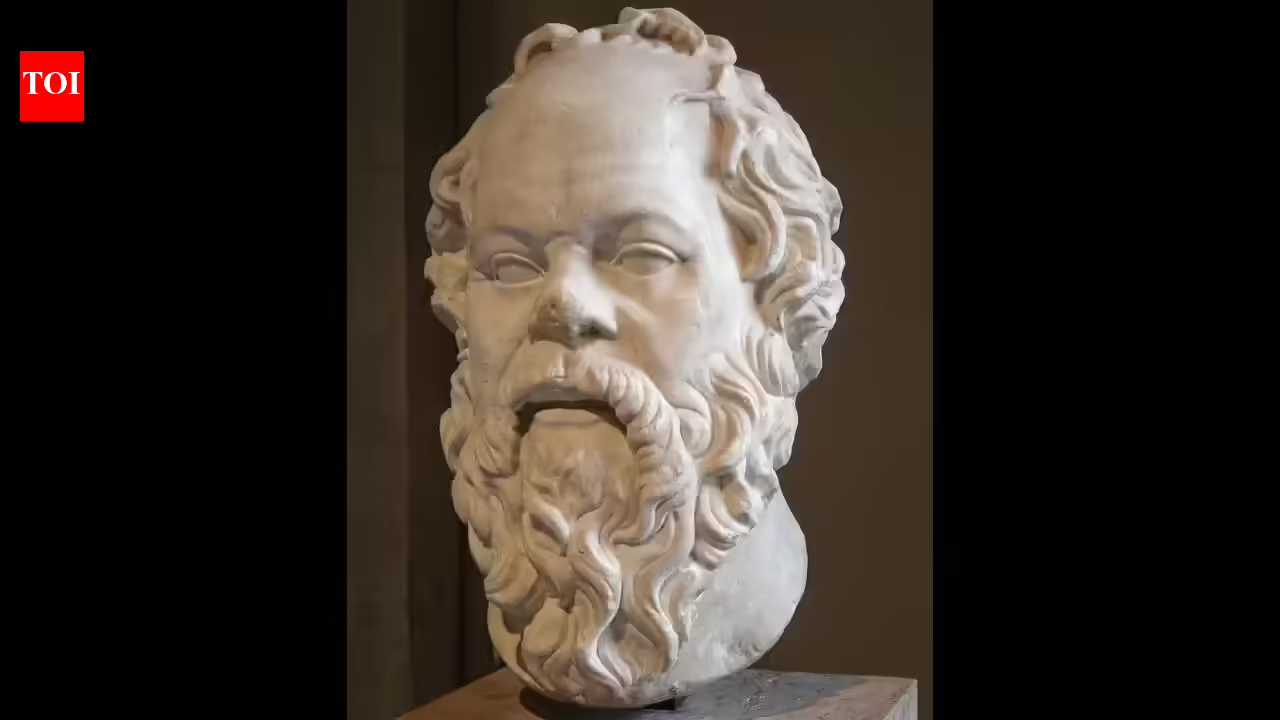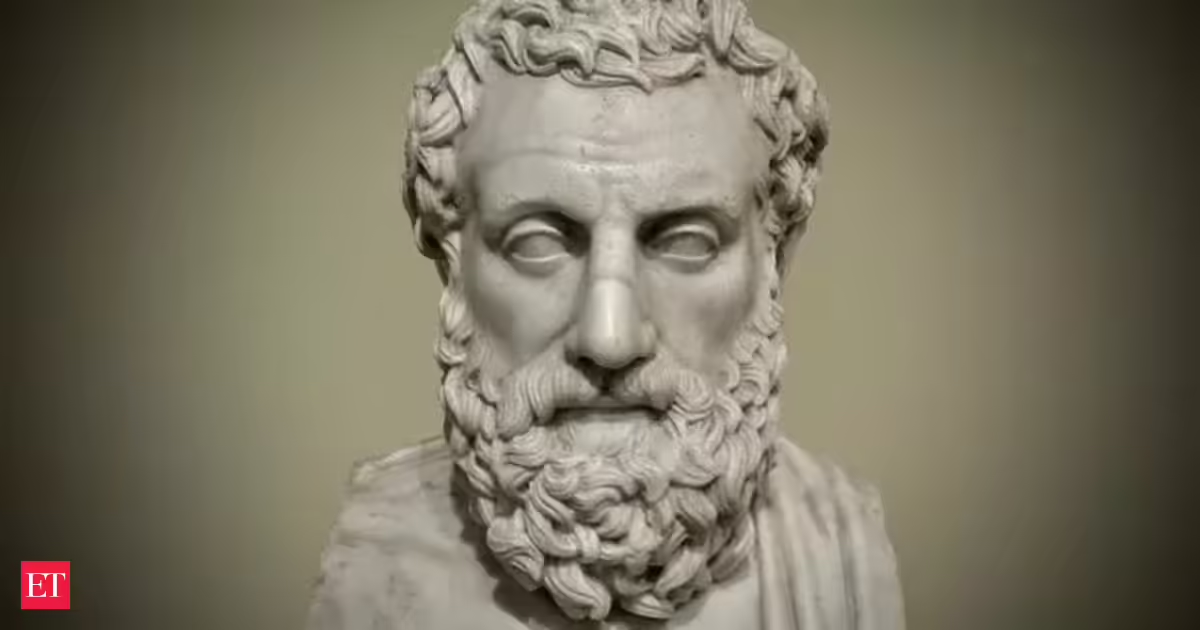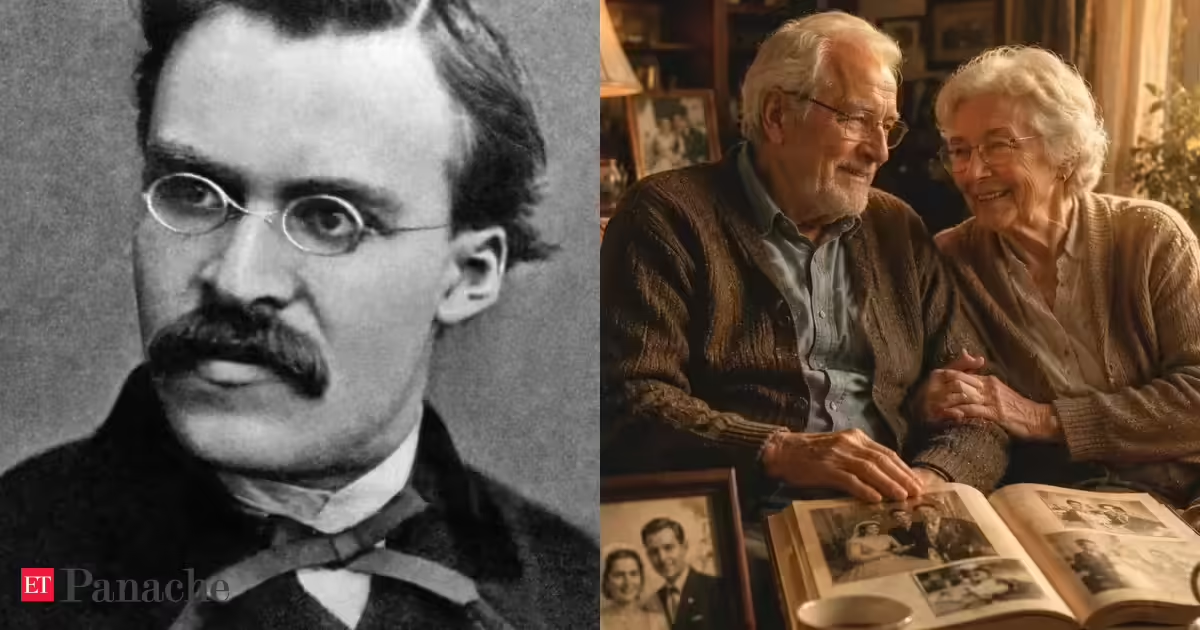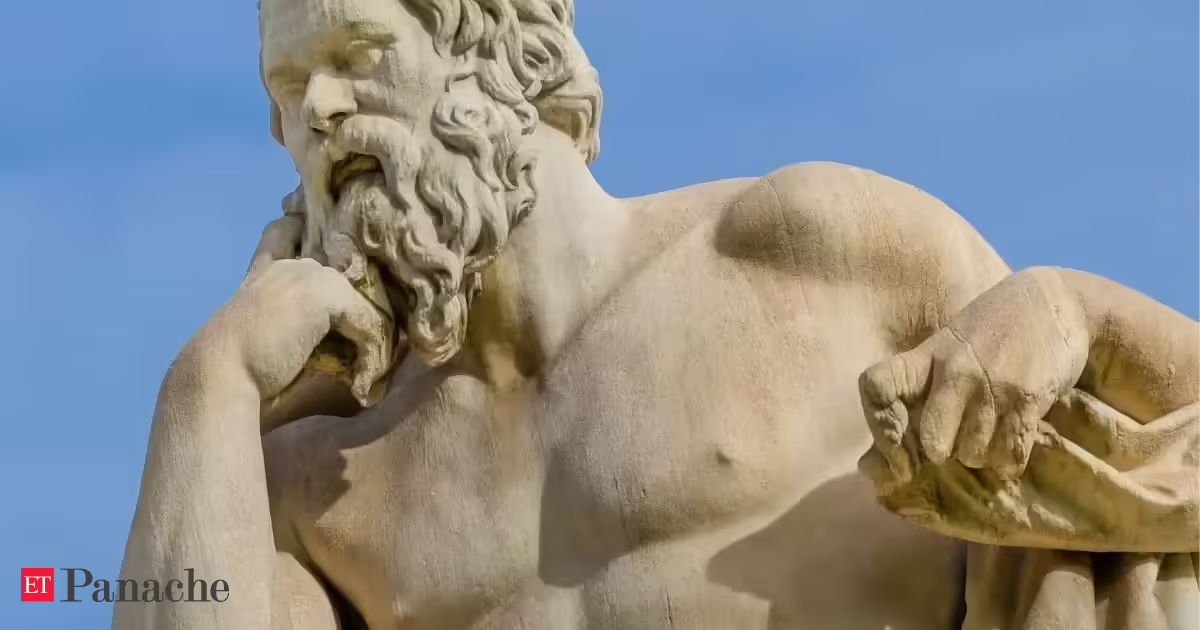
The quote of the day is about marriage, which has long been discussed not just as a personal choice but as a partnership that shapes everyday life. Across different cultures and centuries, thinkers have often argued that lasting relationships depend on qualities deeper than appearance or financial success. One quote often linked to the teachings and values associated with the ancient Greek philosopher Socrates suggests shifting attention away from temporary attractions and toward personal character."When entering marriage, look not at the face, which changes with the seasons, nor the wealth, which can vanish in a night. Look instead at the character, for a virtuous companion is a treasury that never empties." — SocratesThe quote of the day based on teachings from Socrates draws attention to something many people discover only with time. Physical beauty can fade as people age, and financial circumstances can change unexpectedly. A relationship that depends mainly on those factors may struggle when circumstances shift. The message encourages people to look beyond what is immediately visible and consider qualities such as honesty, kindness, loyalty, patience, and integrity when choosing a life partner.It also reflects a broader idea found throughout Socratic thought: that virtue is more valuable than material possessions. A person with strong character brings stability, trust, and support into a relationship. Those qualities do not disappear with changing fortunes or advancing age. The quote suggests that a virtuous companion becomes a lasting source of strength, making character a far more reliable foundation for marriage than appearance or wealth alone.How the quote reflects Socrates' philosophyAlthough historians note that Socrates never wrote books himself, the ideas behind this quote are based on themes that appear in accounts recorded by his followers, particularly Plato and Xenophon.You Might Also Like:In Xenophon's Symposium, Socrates speaks about the difference between physical beauty and what he considered spiritual or inner beauty. He argued that outward attractiveness is temporary, while the beauty of the soul can grow stronger over time. That perspective echoes the first part of the quote, which warns against placing too much value on physical appearance.A similar theme appears in Plato's Phaedrus. There, Socrates discusses how attraction based solely on appearance can be driven by temporary desires rather than deeper understanding. The emphasis remains on developing meaningful connections rooted in character and wisdom rather than surface-level attraction.The second part of the quote, which refers to wealth vanishing overnight, also mirrors Socrates' well-known skepticism toward material success. In Plato's Apology, he criticizes people who devote their lives to money, status, and public recognition while neglecting wisdom and moral development. According to Socrates, wealth itself was not the source of goodness. Instead, virtue was what gave value and purpose to everything else a person possessed.A philosopher who changed the way people thinkSocrates, who lived from approximately 470 BCE to 399 BCE, is widely regarded as one of the most influential figures in the history of Western philosophy. Born and raised in Athens, he lived during a period often described as the city's golden age.You Might Also Like:Historical accounts describe his father, Sophroniscus, as a stonemason and his mother, Phaenarete, as a midwife. Unlike many famous thinkers who left behind extensive writings, Socrates never wrote down his ideas. What the world knows about him comes mainly through the works of his students and contemporaries, especially Plato and Xenophon.His appearance stood in sharp contrast to the ideals of beauty admired in Athens. Sources frequently describe him as having a snub nose, prominent eyes, and a generally unconventional appearance. Yet his influence came not from status, wealth, or physical presence but from his ability to ask questions that forced people to examine their beliefs.The Socratic Method and the search for truthPerhaps Socrates' most enduring contribution was his method of inquiry, now known as the Socratic Method.You Might Also Like:Rather than presenting himself as someone with all the answers, Socrates engaged people in conversation. He would ask a series of questions, encouraging them to explain and defend their beliefs. As discussions continued, contradictions often emerged, leading participants to reconsider assumptions they had previously taken for granted.This approach was not intended to embarrass people. Instead, it was meant to push them toward clearer thinking and a deeper understanding of concepts such as justice, courage, wisdom, and virtue.One of the central ideas associated with Socrates was that genuine wisdom begins with recognizing the limits of one's own knowledge. Accounts from Plato describe how Socrates gained a reputation for wisdom not because he claimed to know everything, but because he openly acknowledged what he did not know.A life guided by principleSocrates was not merely a philosopher in theory. Historical records suggest he tried to live according to the principles he discussed.He served as a soldier in the Athenian army and was known for courage and endurance during military campaigns. Accounts from ancient writers describe him remaining calm under pressure and showing remarkable self-control even in difficult conditions.His commitment to principle became especially visible during moments of political tension. According to historical sources, Socrates refused to participate in actions he believed were unjust, even when doing so could place him at personal risk.That commitment eventually contributed to the events that led to his trial and eventual death.
Quote of the day by Socrates: 'When entering marriage, look not at the face, which changes with seasons, nor the wealth, which can vanish. Look instead at...' How to choose a partner for marriage explained by the father of western philosophy
Marriage is often seen as more than a personal decision, but as a lifelong partnership built on deeper values. The quote of the day, based on teachings from Socrates, emphasises that true compatibility in marriage should be based not on physical appearance or wealth, both of which are temporary, but on character, which offers lasting strength and stability. It highlights virtues like honesty, kindness, and integrity as the real foundation of a strong relationship.
866 words~4 min read