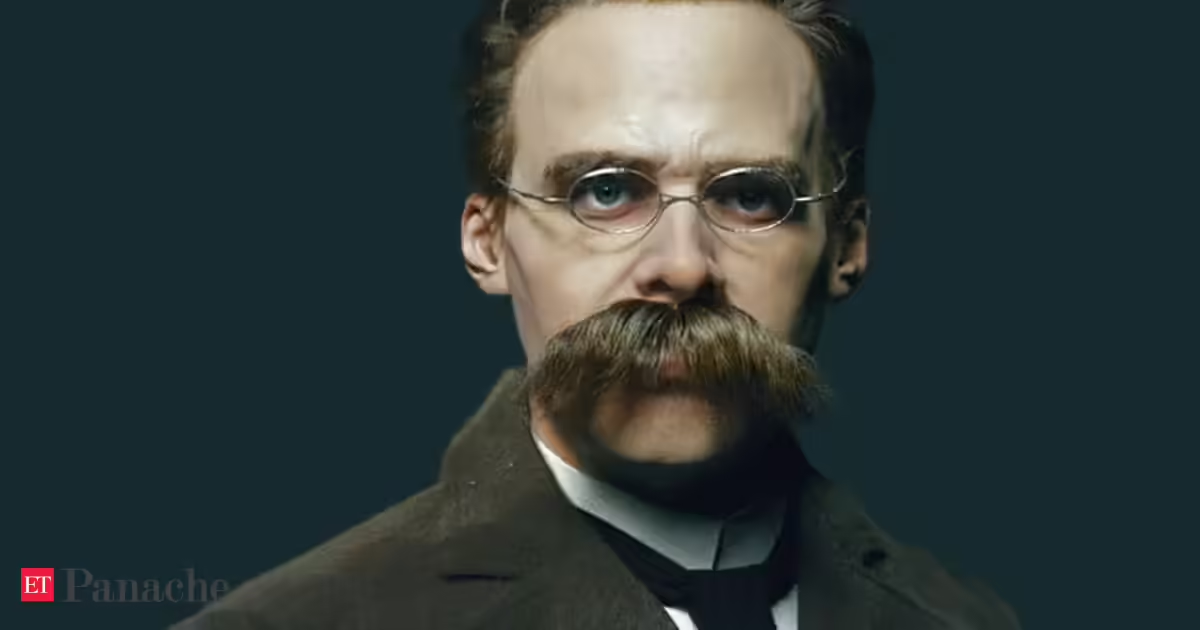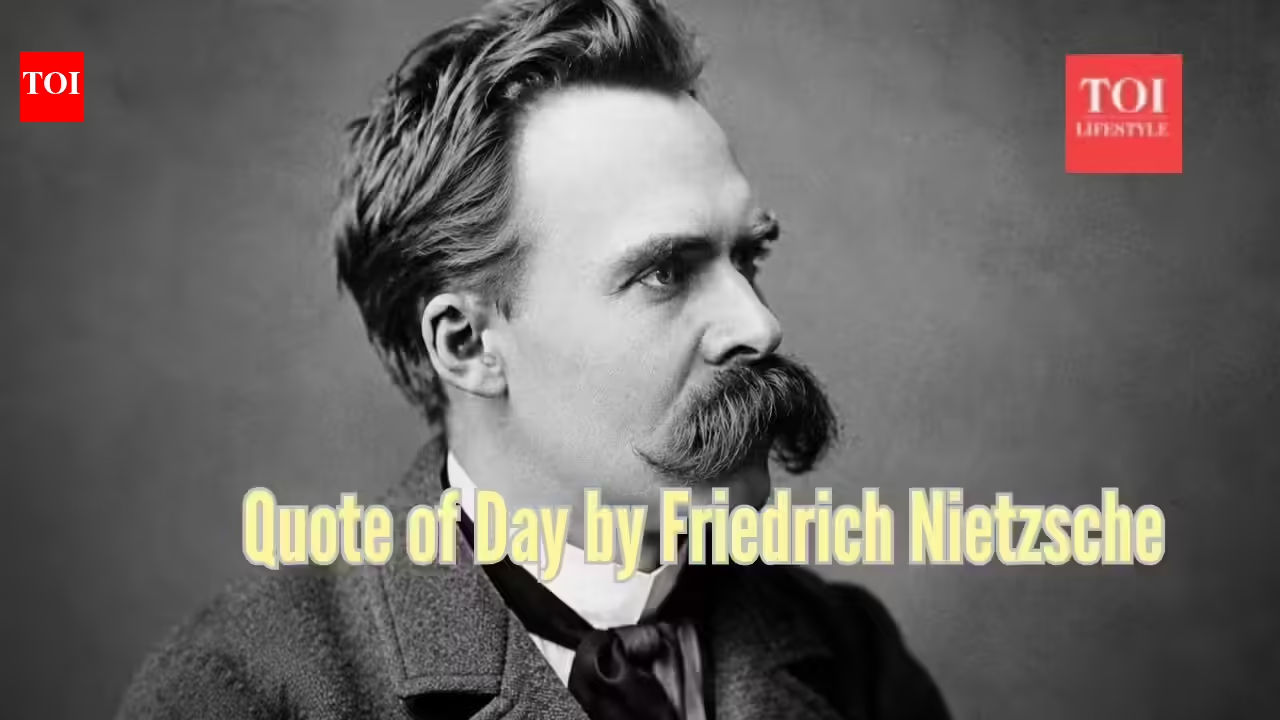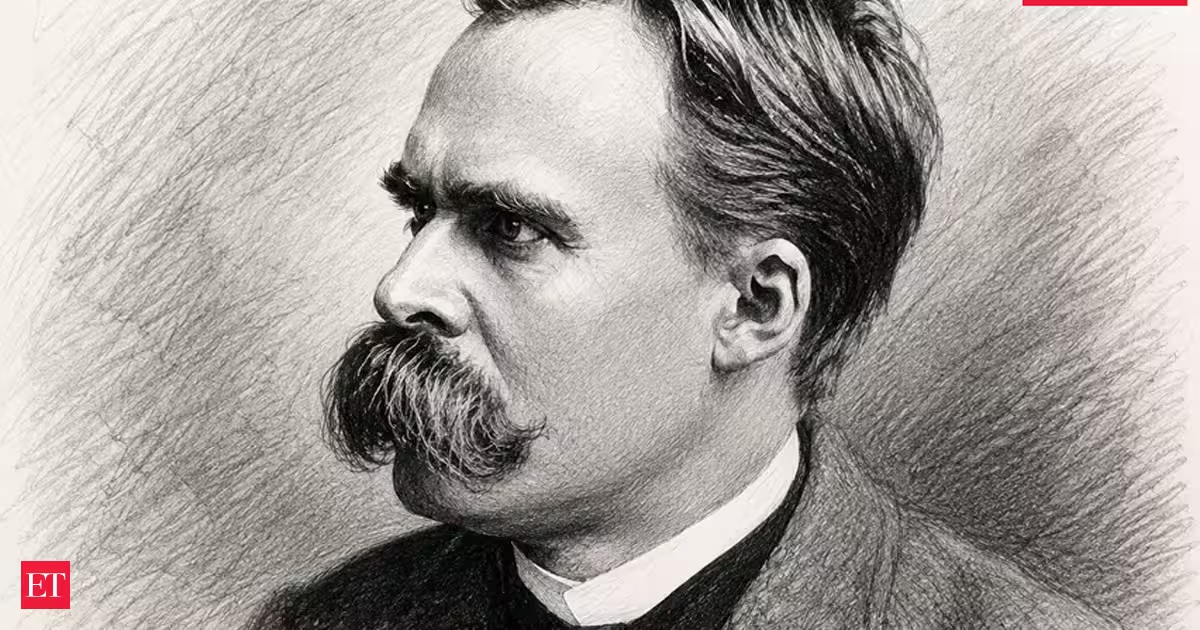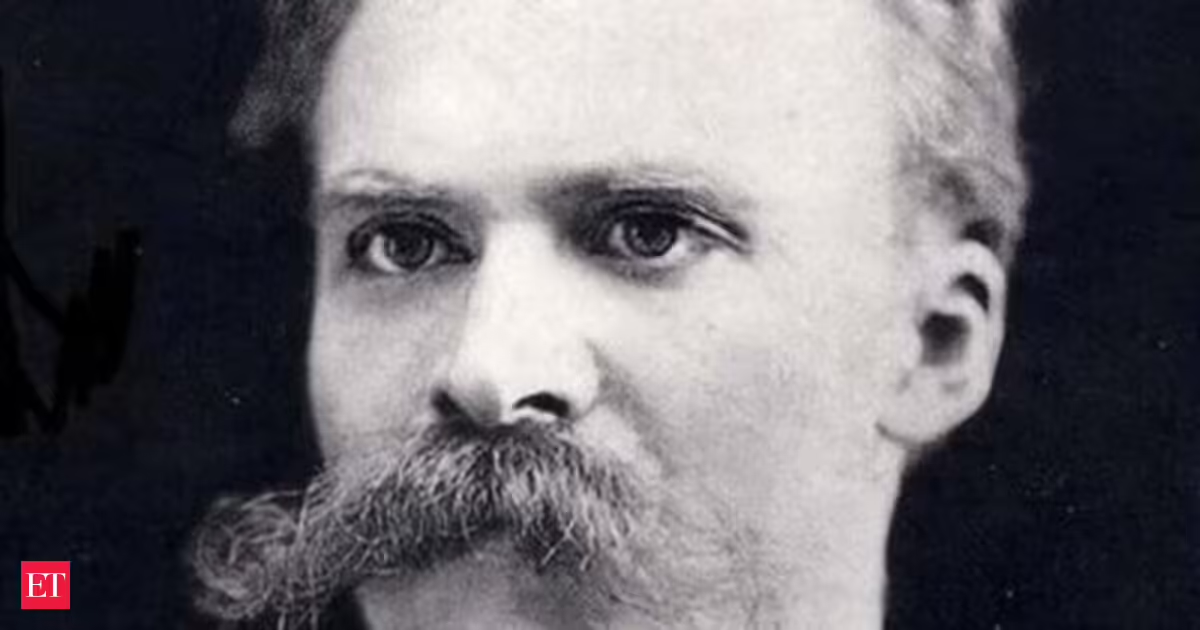
German philosopher Friedrich Nietzsche remains one of the most influential and widely discussed thinkers in modern history. Known for challenging traditional beliefs about morality, religion, truth, and human nature, Nietzsche's writings continue to attract readers more than a century after his death. Many of his observations were controversial during his lifetime, and some still spark debate today. Among them is a quote from his 1886 book Beyond Good and Evil, where he reflected on marriage, friendship, and the different forms of human connection.As today's Quote of the Day, Nietzsche wrote: "Marriage was contrived for ordinary people, for people who are capable of neither great love nor great friendship, which is to say, for most people – but also for those exceptionally rare ones who are capable of love as well as of friendship."The quote presents an unusual view of marriage. Rather than seeing marriage simply as a romantic bond, Nietzsche suggests that truly successful relationships require something deeper. In his view, great love and great friendship are distinct experiences, and many people may not fully achieve either. He appears to argue that marriage often serves practical and social purposes for most individuals rather than representing the highest form of emotional connection.At the same time, Nietzsche leaves room for a more positive interpretation. The latter part of the quote points to what he considered an exceptional relationship—one in which love and friendship exist together. According to this reading, a strong partnership is not sustained by attraction alone. It also depends on trust, companionship, mutual understanding, and the ability to relate to one another as friends. This perspective continues to resonate with modern discussions about what makes long-term relationships successful.Friedrich Nietzsche was born on October 15, 1844, in Röcken, a small village in what was then Prussia, now part of Germany. His father was a Lutheran pastor, but he died when Nietzsche was only five years old. The loss had a significant impact on his childhood, and he was largely raised by his mother, grandmother, sister, and aunts.As a young student, Nietzsche displayed remarkable academic ability. He developed a strong interest in literature, music, languages, and classical studies. During his early years, he wrote poetry, composed music, and studied several languages, including Greek, Latin, Hebrew, and French. Even then, he showed signs of questioning conventional ideas and was drawn toward writers who challenged established norms.Academic success at a young ageNietzsche initially enrolled at the University of Bonn, where he studied theology and classical philology. Although he had once considered following in his father's footsteps and entering the ministry, he soon abandoned those plans. His growing doubts about religion led him to focus entirely on philology, the study of ancient languages and texts.He later transferred to the University of Leipzig, where his academic talent became increasingly evident. Under the guidance of renowned scholar Friedrich Ritschl, Nietzsche built a reputation as a brilliant young thinker. In an extraordinary achievement, he was appointed professor of classical philology at the University of Basel in Switzerland in 1869. He was just 24 years old and had not yet completed a doctoral degree, making the appointment highly unusual.Moving beyond philologyAlthough Nietzsche began his career studying ancient texts, his interests gradually expanded beyond traditional academic research. He became increasingly concerned with understanding human behavior, morality, culture, and the forces that shaped society.Over time, he grew dissatisfied with what he viewed as the detached nature of academic scholarship. He believed the study of history and antiquity should help explain modern life rather than remain confined to universities. This shift in thinking laid the groundwork for his future philosophical works.By the late 1870s, ongoing health problems forced him to leave his teaching position. He suffered from severe migraines, digestive illnesses, and persistent physical discomfort. While these health issues ended his academic career, they also gave him more time to focus on writing.The books that shaped his legacyNietzsche's most productive years came after leaving the University of Basel. During this period, he wrote a series of works that would later become some of the most influential texts in modern philosophy.One of these was Human, All Too Human, published in 1878. The book marked a major turning point in his intellectual development. Through short aphorisms and observations, Nietzsche questioned religious beliefs, traditional morality, and commonly accepted ideas about human behavior.His later works included The Gay Science, Thus Spoke Zarathustra, Beyond Good and Evil, and On the Genealogy of Morals. These books explored themes such as individuality, morality, freedom, power, and the search for meaning in a changing world.The famous idea that "God is dead"Among Nietzsche's most well-known statements is the declaration that "God is dead." The phrase has often been misunderstood as a simple attack on religion. In reality, Nietzsche used it to describe what he saw as a cultural transformation taking place across Europe.He believed that traditional religious beliefs were losing their influence over society. As faith declined, people would face the challenge of creating new systems of values and meaning. Nietzsche argued that humanity could no longer rely on inherited moral frameworks without questioning them.This idea became central to much of his later philosophy and helped establish him as one of the most influential critics of conventional morality.
Quote of the day by philosopher Friedrich Nietzsche: 'Marriage was made for ordinary people, for those who are capable of neither great love nor great friendship...' What is the one secret that makes long-lasting marriages explained by the German writer
Today's Quote of the Day comes from German philosopher Friedrich Nietzsche, who offered a thought-provoking perspective on marriage, love, and friendship in his 1886 book Beyond Good and Evil. The quote suggests that lasting relationships require more than romantic love and are strongest when friendship exists alongside it. The article explores the meaning behind Nietzsche's words while examining his life, philosophical ideas, major works, and lasting influence on modern thought.
867 words~4 min read