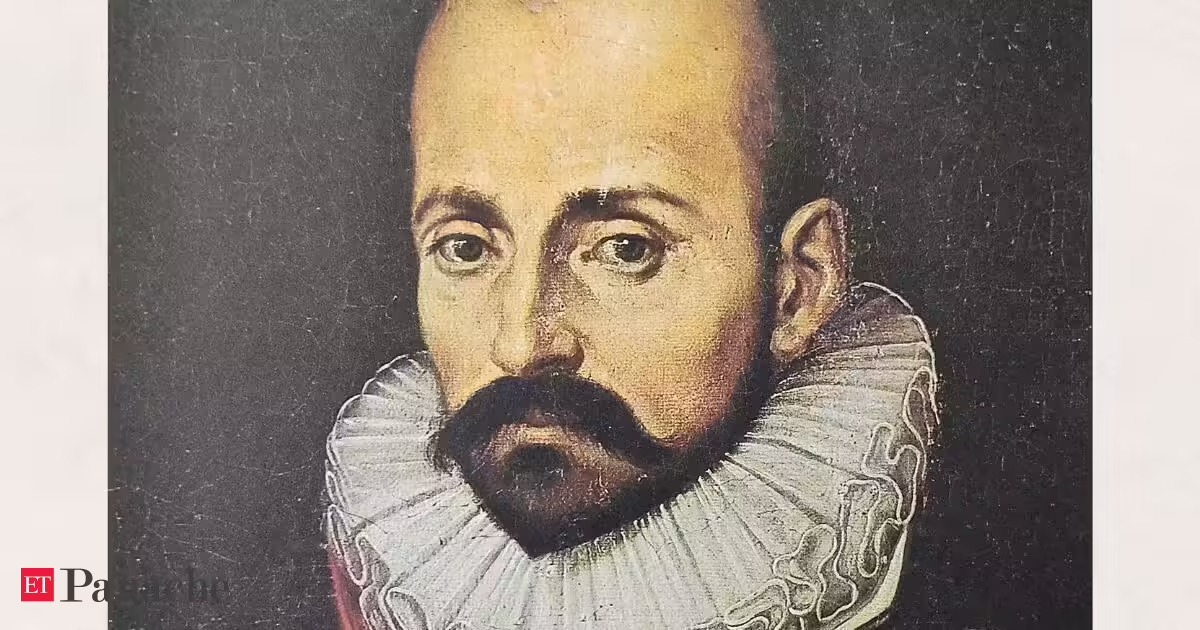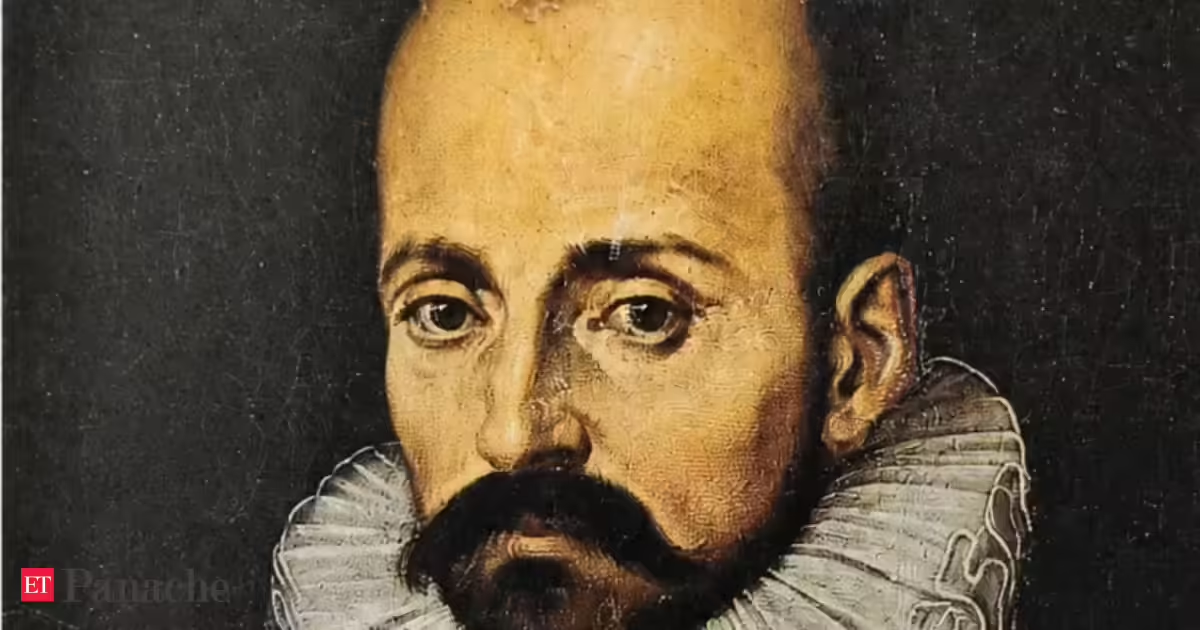
Relationships often carry a curious paradox. From a distance, commitment can seem desirable, offering companionship, stability and a sense of belonging. Yet once people settle into long-term partnerships, they may find themselves longing for greater freedom, independence or excitement. This tension between desire and reality has fascinated philosophers, writers and psychologists for centuries. Human beings often idealise what they do not have, only to discover that every choice comes with its own set of rewards and limitations. Today's quote of the day by French philosopher and writer Michel de Montaigne echoes a similar sentiment. Michel de Montaigne, in his famous work Essays (Essais), Book III, Chapter 5, "Upon Some Verses of Virgil", wrote, ‘Marriage may be compared to a cage. The birds outside despair to get in, and those within despair to get out’, reflecting on the complex emotions, expectations and contradictions that often surround marriage and commitment. Quote of the day by Michel de Montaigne: Deeper meaning In this quote of the day, Michel de Montaigne uses the image of a birdcage to illustrate a common aspect of human nature: people often desire what they do not have. Those outside the cage represent individuals who long for marriage, seeing it as a source of love, security, companionship and fulfilment. Meanwhile, those inside the cage symbolise married people who may sometimes feel restricted by the responsibilities, compromises and expectations that come with commitment. Montaigne is not necessarily criticising marriage itself. Rather, he is highlighting the tendency to idealise alternatives and imagine that happiness lies elsewhere. The quote suggests that dissatisfaction often comes not from our circumstances alone but from the human habit of comparing reality with imagined possibilities. By drawing attention to this contradiction, Montaigne encourages readers to reflect on their expectations and recognise that every life choice brings both freedoms and limitations.Michel de Montaigne quote of the day: Modern relevanceAlthough written centuries ago, Montaigne’s quote of the day remains strikingly relevant in modern life. In an era shaped by social media, dating apps and endless lifestyle comparisons, people are constantly exposed to idealised versions of other people's relationships and choices. Singles may view marriage as the key to happiness, while married individuals may occasionally envy the independence and flexibility of single life. The quote also applies beyond marriage, reflecting how people often believe that a different job, city or lifestyle would solve their problems. Modern psychology supports this idea through concepts such as the “grass is greener” effect, where individuals overestimate the benefits of alternatives while overlooking the challenges they bring. Montaigne’s words serve as a reminder to evaluate reality more honestly and appreciate the advantages of one’s current circumstances. True contentment often comes not from changing situations but from developing realistic expectations and gratitude for what one already has.More about Michel de MontaigneFrench philosopher and writer Michel de Montaigne remains one of the most celebrated intellectual figures of the Renaissance. Born on February 28, 1533, at the Château de Montaigne near Bordeaux, France, he is best remembered for pioneering the essay as a literary form centred on personal reflection. Rather than presenting rigid arguments, he examined everyday experiences and universal human concerns, writing candidly about topics such as friendship, loss, education, doubt and the complexities of human nature. His introspective approach continues to resonate with readers centuries later.According to Britannica, Montaigne encouraged people to question assumptions and think for themselves instead of accepting conventional wisdom without scrutiny. His landmark work, Essays, introduced a fresh style of writing that blended observation, self-examination and philosophical inquiry. Through these pieces, he explored uncertainty, individuality and the importance of understanding oneself.In 1565, Montaigne married Françoise de la Chassaigne, the daughter of a fellow member of the Parliament of Bordeaux. Historical accounts suggest the marriage was influenced more by social expectations and family considerations than romantic attachment. The couple had six daughters, though only one, Léonore, survived into adulthood.Montaigne's literary legacy rests largely on Essays, a work that reshaped the possibilities of nonfiction writing. He wove together personal anecdotes, reflections and philosophical discussions, allowing ideas to unfold naturally rather than through formal instruction. His writings examined subjects ranging from education and mortality to courage, reading habits and emotional resilience. Convinced that self-knowledge was central to living wisely, he spent much of his work exploring the inner life. Montaigne died on September 23, 1592, following an attack of quinsy, a severe inflammatory illness affecting the tonsils.
Quote of the day by famous philosopher Michel de Montaigne: ‘Marriage may be compared to a cage. The birds outside despair to get in and those within despair to get out’ - a timeless lesson on human desire and dissatisfaction
French philosopher Michel de Montaigne's quote, 'Marriage may be compared to a cage. The birds outside despair to get in, and those within despair to get out,' highlights the human tendency to idealize what we lack. This sentiment remains relevant today, as we often believe happiness lies elsewhere, overlooking the limitations and rewards of our current circumstances.
TL;DRAI
Montaigne compares marriage to a cage—outsiders despair to enter, insiders to leave, revealing how humans idealise what they lack. This cognitive pattern persists via social media and dating apps, where constant comparison to imagined alternatives prevents contentment.
732 words~3 min read