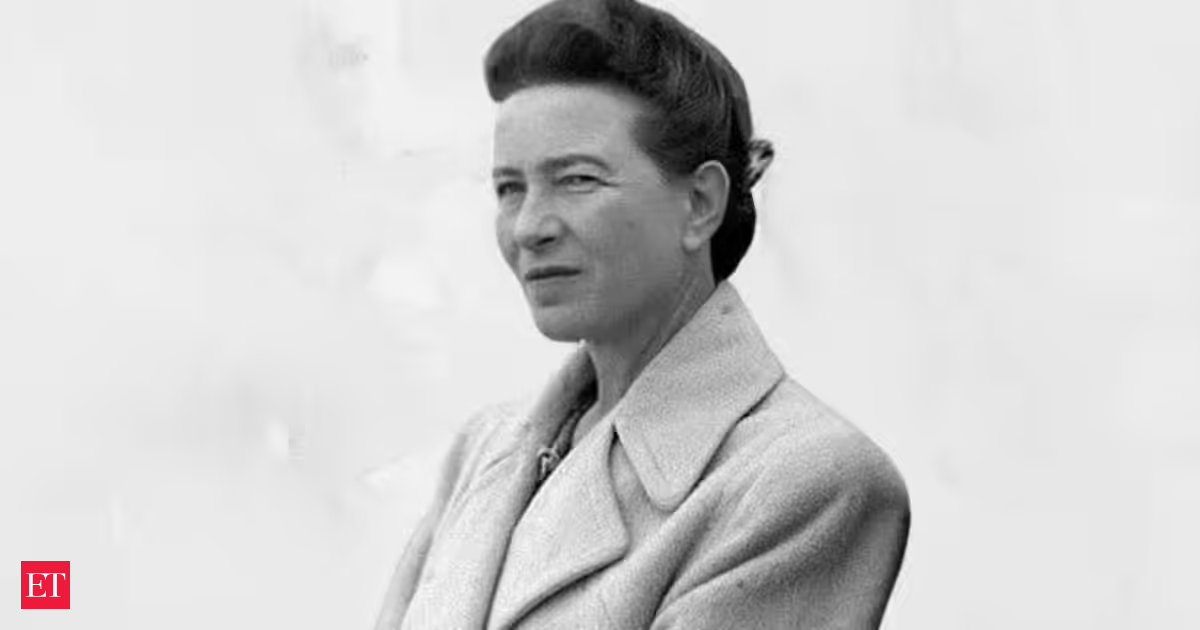
Simone de Beauvoir was a woman who never feared judgment. Widely regarded as one of the most influential female thinkers of the 20th century, the French philosopher and author wrote several novels and philosophical essays while actively participating in the political debates of her time. Many of her observations continue to resonate with readers decades later. Among her most widely discussed quotes is a line that offers a sharp yet surprisingly simple insight into love, marriage and human relationships.The quote of the day goes, "To catch a husband is an art; to hold him is a job."What did Simone de Beauvoir mean through this quote?If you read it for the first time, the quote sounds witty and humorous. But like much of Beauvoir's writing, it carries a deeper message beneath its simplicity.By describing "catching a husband" as an art, Beauvoir refers to the excitement and complexity of courtship. Attraction, romance, chemistry and the process of building a connection often involve charm, timing and emotional intelligence. The beginning of a relationship can feel exciting and effortless.You Might Also Like:However, the second half of the quote shifts the focus. Calling marriage "a job" suggests that maintaining a long-term relationship requires continuous effort. Love alone is not enough. A successful marriage demands communication, compromise, trust, patience and emotional commitment from both partners.Through a single sentence, Beauvoir highlights a reality many couples eventually discover: finding love is only the beginning. Sustaining it requires work every day.Simone de Beauvoir's reflection on marriage and societyThe quote also refers to Simone's broader views on women's lives and social expectations.During much of the 20th century, marriage was often viewed as a woman's primary source of social status and economic security. Women were frequently expected to devote themselves to maintaining households and relationships, often carrying the bulk of the emotional labour within a marriage.You Might Also Like:Beauvoir questioned these traditional structures throughout her career. Her quote subtly points out how marriage can become a responsibility that demands ongoing effort, especially from women. Rather than presenting marriage as a fairy-tale ending, she reminds readers that relationships continue to evolve long after the wedding day.That perspective was considered bold for its time and remains relevant even today.Why the quote still resonatesDecades after it was first attributed to Beauvoir, the quote continues to circulate widely online because its message feels surprisingly modern.In an era of dating apps, social media and relationship advice videos, people still grapple with the same questions about love, commitment and compatibility. While the way people meet has changed dramatically, the challenge of building a lasting partnership remains the same.The quote is sort of a reminder that successful relationships are not built solely on romantic feelings. They are strengthened through everyday acts of understanding, respect and effort.It also challenges the common belief that finding the right partner automatically guarantees happiness. Instead, Beauvoir suggests that long-term love is something people actively create and maintain together.Who was Simone de Beauvoir?According to the Stanford Encyclopedia of Philosophy, Simone de Beauvoir (1908–1986) was a philosopher, novelist, feminist, public intellectual and activist, and one of the most important figures associated with existentialism in post-war France.She is best known for her groundbreaking 1949 book The Second Sex, which went on to become one of the foundational texts of modern feminist thought. In the book, Beauvoir examined how society constructs gender roles and explored the ways women were historically treated as secondary to men.Beyond philosophy, she wrote novels, memoirs, plays, travel diaries and political essays. Alongside philosopher Jean-Paul Sartre, she helped establish the influential French journal Les Temps Modernes, which became a major platform for intellectual and political debate.More than three decades after her death, her ideas continue to shape discussions about gender, relationships and personal freedom.
Quote of the day by Simone de Beauvoir: 'To catch a husband is an art; to hold him is a job' - A simple yet sharp take on the realities of married life by French philosopher and author
French philosopher Simone de Beauvoir's famous quote reveals a timeless truth about relationships. She described finding a partner as an art, full of charm and excitement. However, maintaining a marriage, she noted, is a job demanding constant effort. Scroll down and read on to know why the quote still feels relatable in today's era.
621 words~3 min read