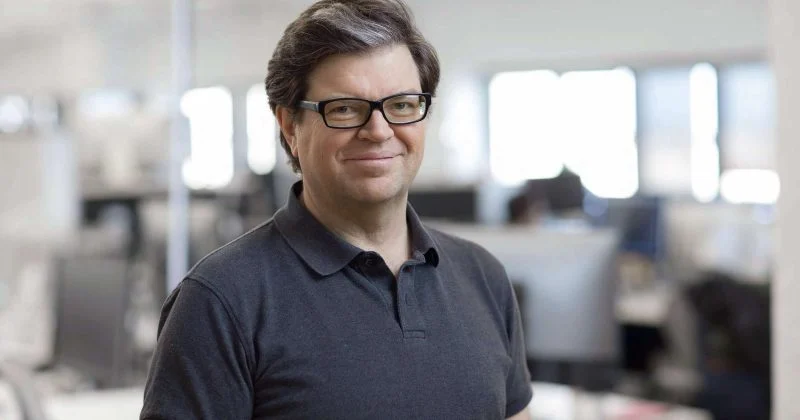
Yann LeCun thinks today’s AI is, to put it politely, kind of shallow. The pioneering researcher and Executive Chairman of AMI Labs took the stage at VivaTech in Paris on June 17 to lay out a vision for artificial intelligence that goes far beyond the chatbot era. His core argument: the future of AI depends on systems that can predict what happens in the physical world, not just which word comes next in a sentence.
LeCun, who previously served as Chief AI Scientist at Meta and is widely considered one of the godfathers of deep learning, has been beating this drum for years. The difference now is that he has a startup flush with over a billion dollars to prove his point.
The problem with predicting the next word
Large language models that power tools like ChatGPT predict the next token, the next chunk of text, based on patterns learned from enormous datasets. LeCun’s argument is that this approach has a ceiling: no matter how much data you feed an LLM, it will never truly understand that a ball rolls downhill or that a glass shatters when dropped.
LeCun’s alternative is what he calls “world models.” World models are AI systems designed to learn from sensory interactions with the real world, building internal representations of how physical systems behave. The technical framework underpinning this at AMI Labs is called Joint Embedding Predictive Architecture, or JEPA.