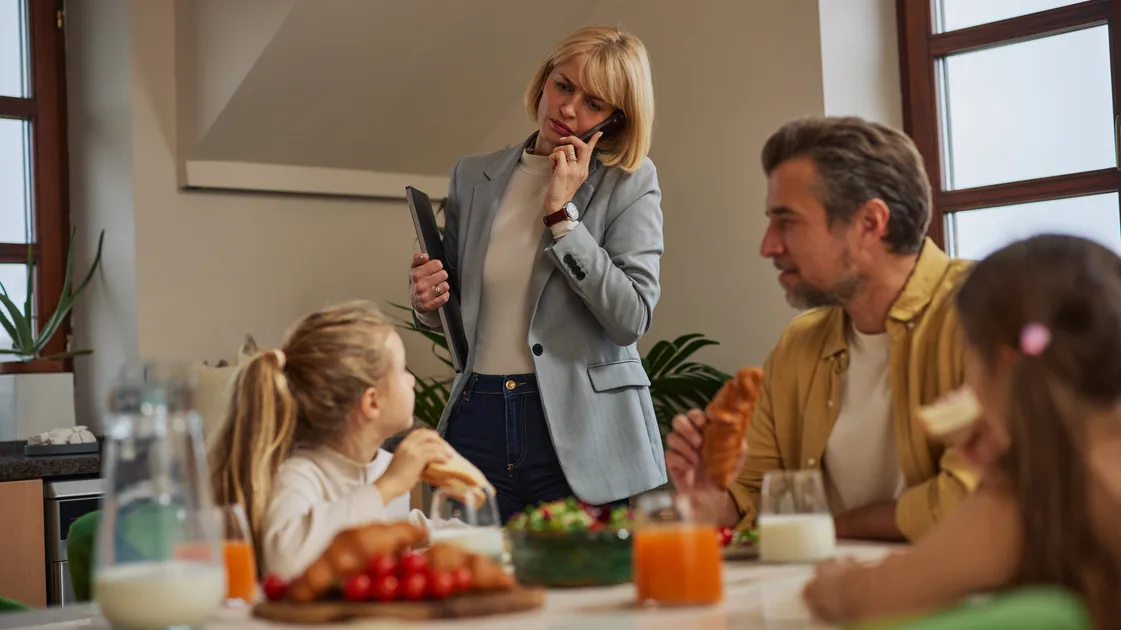
What if everything marketers think they know about parents is wrong?Parents today are actively rewriting the script, determined to raise their children differently than the generations that came before them. At the same time, AI, creator culture, rising costs and shifting ideas about identity are accelerating those changes in real time. New research from Moonbug Entertainment found that fathers compare themselves to other parents online more than mothers do. Millennials use AI for parenting more than Gen Z. And perhaps most importantly, there is no longer a single ‘parent audience’ moving through one shared consumer journey. Instead, today's family market is increasingly fragmented across four distinct groups: millennial mothers, millennial fathers, Gen Z mothers and Gen Z fathers. Each brings different parenting philosophies, media habits, trust signals and purchase behaviors.For marketers, the implication is simple: one parent strategy no longer works.To better understand this shift, Moonbug Entertainment, the studio behind global kids’ brands such as CoComelon and Blippi, conducted a survey of 1,000 parents in the U.S. aged 18-45 with at least one child under the age of 10 for its The Next State of Parenthood 2026 study. The findings explore how technology, economic pressure and evolving parenting norms are reshaping how families discover, evaluate and purchase products. Dismantling the single ‘parent audience’For years, corporate marketing departments treated parents as a single demographic group. The Next State of Parenthood 2026 study shatters that legacy assumption. Today’s marketplace is divided into four distinct consumer funnels across millennial mothers, millennial fathers, Gen Z mothers and Gen Z fathers, each requiring a unique creative approach.“What this year’s research makes clear is that the path from awareness to purchase looks fundamentally different across these four parents,” said Dan’l Hewitt, global head of brand partnerships at Moonbug Entertainment. “Some parents will convert directly from a creator they trust. Others will save the post, research it across multiple platforms and decide on their own time. The same message will not land for both. The opportunity for brands is in recognizing that there isn’t one funnel anymore. There are four, and each one calls for a different approach.”The data highlights stark differences in identity and strategy across generational cohorts. While 87% of millennials say being a parent is central to who they are, 80% of Gen Z parents view parenting as one part of a broader identity. Two-fifths of millennials (44%) parent similarly to how they were raised. Gen Z is more likely to forge a new path with a significantly different parenting approach (20%) or intentionally the opposite way (12%).Modern parents overwhelmingly recognize they need to prioritize self-care. While 78% believe rest makes them a better parent, 61% report feeling guilty for taking personal time for themselves. Parenting made easier with AI The 2026 findings challenge conventional wisdom regarding which generation is leading technology adoption. The data reveals that millennials are the most active AI users across parenting and household decisions.Far from simply automating mundane tasks, AI has evolved into an everyday parenting support system. Over four-fifths of parents (84%) have used AI for at least one household or parenting-related task.Millennials are integrating AI directly into their consumer journeys and regularly leveraging the technology for product research (44%), children’s health questions (42%), meal planning (41%) and parenting advice (40%). Parents are turning to technology as a source to fill the gaps left behind by disappearing community support systems. The study found that nearly two-fifths have used AI to generate age-appropriate explanations to sensitive or emotionally complex topics (39%), bedtime stories (37%) or difficult messages to teachers, coaches or family members (38%). One quarter rehearse difficult parent-child conversations with the help of AI (27%).Millennial fathers rely even more on AI as a resource for explaining sensitive topics in age appropriate ways (53%), product research (50%), bedtime stories (48%), birthday card notes or invitations (48%) and difficult messages (43%). For brands, this shift signals that AI has become a key influence layer in the modern consumer lifecycle.Engaging the modern fatherThe parenting content landscape remains overwhelmingly targeted toward mothers. However Moonbug’s recent findings reveal that fathers are watching, comparing and internalizing parenting pressures at higher rates, making modern fathers a highly responsive yet underserved consumer base.The majority of fathers (53%) admit they compare themselves to other parents online as opposed to 37% of mothers. This vulnerability is paired with a distinct shift toward emotional awareness: 42% of millennial fathers identify with the concept of “gentle parenting” while 34% of Gen Z fathers say the same. Empathy-first parenting has become a defining characteristic of modern fatherhood.Marketers have a clear opportunity to move away from legacy archetypes and speak directly to this group. Rather than designing messaging that inadvertently raises performance expectations, brands that offer reassurance and structural permission may find a receptive audience, one that is highly attuned to digital culture. Nearly two-fifths of millennial fathers (38%) actively follow multiple parenting creators and consistently over-index on platforms centered around research, discussion and information.The path forward for marketersThe brands winning with parents aren't simply reaching more families. They're showing up at the moments where trust is formed and purchase decisions are made – and increasingly, those moments are becoming creator-led.Any parent-focused media plan must be anchored in video creator content. YouTube has become deeply woven into a parent’s life. At 76%, YouTube is the most-used daily platform among parents, beating out Facebook (69%), Instagram (66%) and TikTok (62%).Millennials, in particular, remain very active across the platform with 50% using YouTube several times a day. This frequency peaks among millennial fathers, who hit a 54% daily use rate. The millennial audience is not passive: 43% publicly engage through likes, comments and shares with 84% active engagers and 70% of semi-active engagers converting directly into buyers.The consumer journey is highly fragmented across diverse platforms. Parents reported discovering products on YouTube (27%), TikTok or in-store browsing (23%), Instagram (21%), family and friends or Google (18%), Amazon (17%) or a child’s direct request (12%).Millennials are highly likely to sequence their decisions across multiple digital channels, from YouTube to Google Reviews, Amazon and brand websites. Conversely, Gen Z mothers display more caution with high-consideration purchases. Two-fifths (41%) consult four or more sources when evaluating a purchase over $500. Trust is fragmented, making multiplatform validation essential.Across all demographics, parents are rejecting hyper-polished corporate imagery. An overwhelming majority of parents (70%) prefer authentic or naturally produced creative content over polished, professional production. Messaging that feels honest, useful and reflective of real family life fosters connection.In an environment of rising inflation, logic suggests price would dictate every household choice. However, the study challenges this assumption with 68% of parents citing product quality and durability as a top purchase driver and 59% prioritizing price. More than half reveal they will gladly pay a premium for sustainable or organic options in children’s food (51%) and personal care products (52%), even as that willingness to pay drops significantly for purchases that do not directly affect their children’s health.Ultimately, traditional media channels still carry significant weight with consumer trust. The majority of millennials (53%) say TV and radio advertising directly increases their trust in a brand, a number that jumps to 51% for millennial fathers. Modern parenting marketing succeeds when it respects the nuances of the different audiences, leveraging tools such as AI and YouTube to meet parents exactly where they are.Moonbug is an award-winning global entertainment company inspiring kids everywhere to laugh, learn and grow. To find more insights into how to engage families with greater relevance and impact, visit https://www.moonbug.com/state-of-parenthood-report.
New study shows the ‘parent audience’ no longer exists
Research finds major differences between millennial mothers, millennial fathers, Gen Z mothers and Gen Z fathers, with implications for how brands reach families.
1,249 words~6 min read