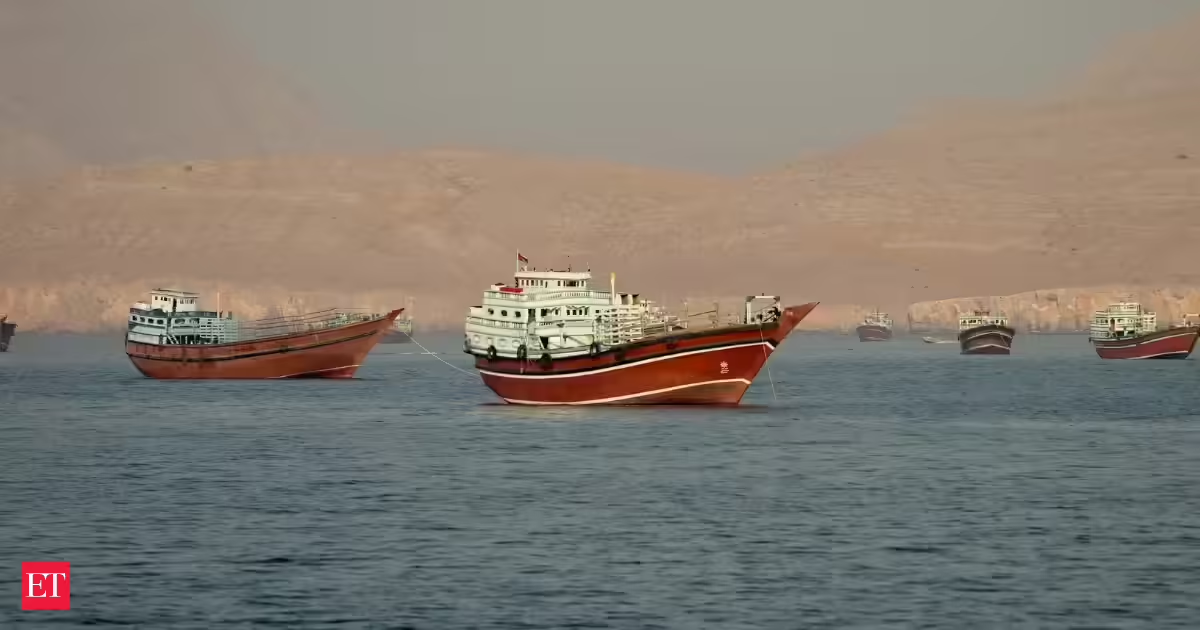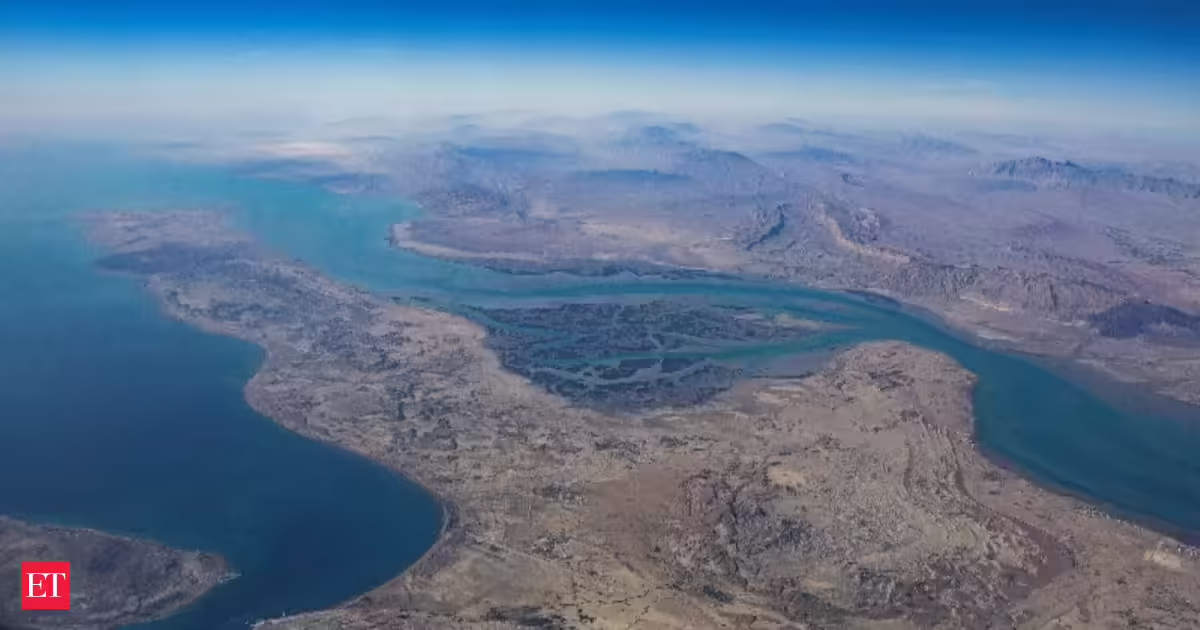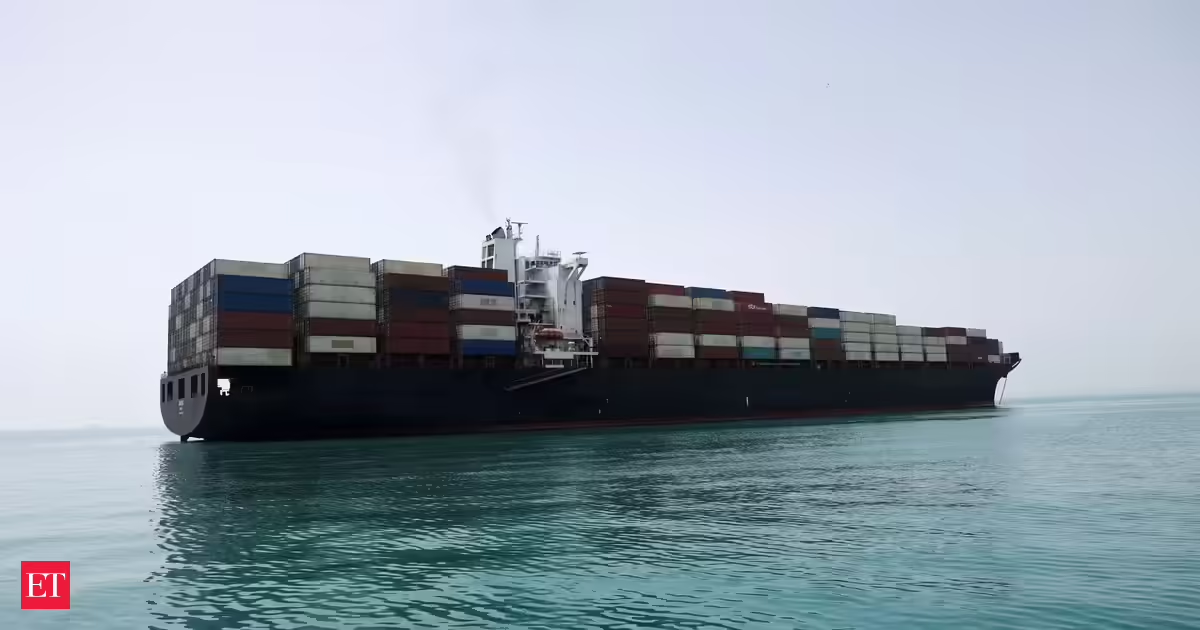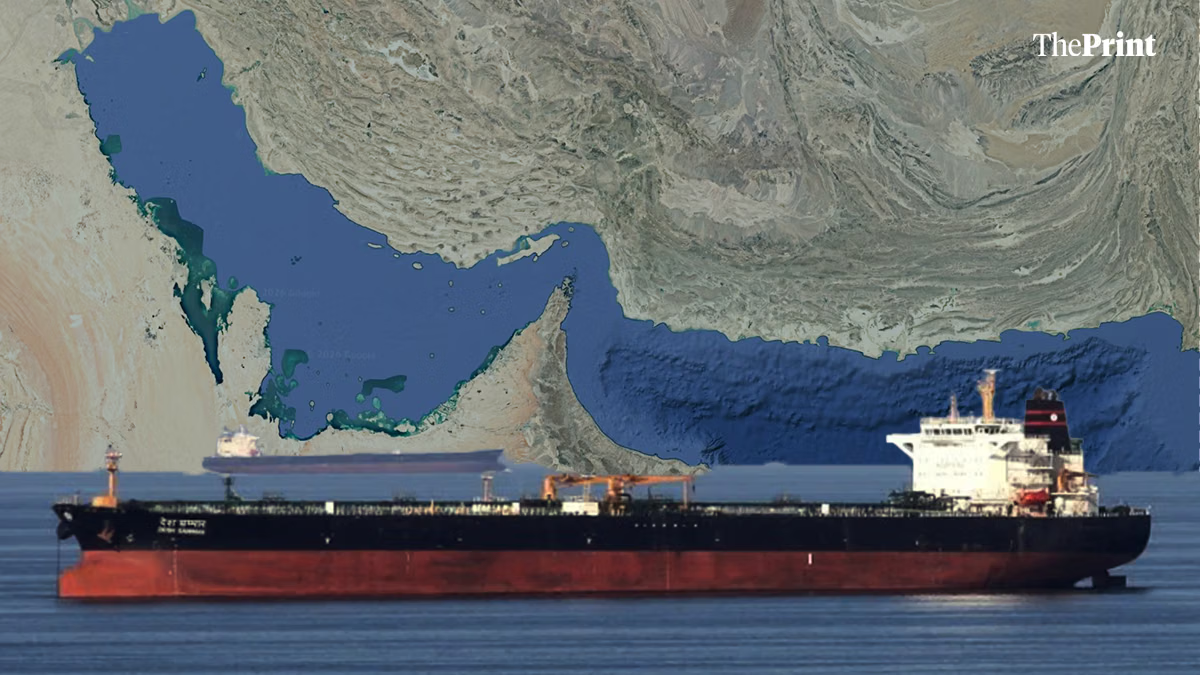
New Delhi: An interim agreement between the United States and Iran could make way for reopening the Strait of Hormuz, thereby showing the first signs of normalising global oil markets after months of disruption, the International Energy Agency (IEA) said Wednesday.
IEA, a Paris-based independent agency that provides policy recommendations on the energy sector, described the agreement as the “biggest breakthrough in negotiations since the start of the conflict” in its June oil market report released Wednesday.However, the report cautioned that full recovery will take time as naval mines must be removed from the main shipping lanes, and Gulf countries will need time to recover their production levels.
“While details of the deal, that is scheduled to be signed on 19 June in Switzerland have yet to be clarified and several issues remain outstanding, it is an encouraging step forward,” the IEA said in its latest oil market report.Once the deal is signed, it could result in lifting the US blockade on Iranian oil traffic and accelerate the reopening of one of the world’s most critical energy waterways that accounts for 20 percent of global oil flows.A date for the agreement has already eased market tensions and triggered a decline in oil prices which reached their lowest levels since early March.According to the IEA, ICE Brent futures (futures crude oil contracts) are trading around $81 per barrel at the time of publication of this report, roughly $37 below their April peak.The report states that oil shipments through the Strait of Hormuz have begun recovering since early June. Oil flows grew from a low of 9.6 mbpd (million barrels per day) in May to around 12 mbpd in early June, supported by ship-to-ship transfers in the Gulf of Oman.Yet the agency warned that the impact of nearly four months of conflict will continue to weigh on oil markets this year.Global oil supply is expected to fall by 3.9 mbpd this year to an average of 102.4 mbpd despite signs of recovery in Gulf exports. According to the IEA, losses from the Middle East will be partially offset by increased production from non-OPEC+ producers, particularly in the Americas.In the report, the IEA downgraded its outlook for global oil demand, forecasting a decline of 1.1 mbpd in 2026. This projection is 700,000 barrels per day lower than what it estimated in the May report.The decline is primarily driven by higher fuel prices, disruptions in product availability and prolonged bottlenecks in supply chain routes.“Global oil demand is forecast to decline by 1.1 mb/d y-o-y in 2026. This represents a downgrade of 700 kb/d compared with our May Report, as 2Q26 deliveries plunged by 5 mb/d y-o-y in the face of higher fuel prices and disruptions to product availability,” IEA said.The West Asia conflict has also taken a heavy toll on refining activity. Global refineries crude runs are forecast to decline by 2 mbpd in 2026 to reach 82 mbpd, with the sharpest fall to be seen in China, the Middle East, Eurasia and other Asian markets.However, the IEA says that global refinery crude runs are expected to rebound in 2027 by 3.1 mbpd to reach an average of 85 mbpd.The report also underlined the scale of the disruption across Asia. The crude oil imports into China and Japan have each fallen by around 40 percent since the conflict began, representing a combined decline of nearly 6 mbpd.According to the IEA, global oil inventories continue to decline at an unprecedented pace. The IEA said observed oil stocks fell by 143 million barrels in May alone, equivalent to 4.6 mbpd, up from 2.5 mbpd in April.“This lifts the average pace of stock draws since the start of the Gulf conflict to 3.8 mb/d, of which 2.4 mb/d for crude and 1.4 mb/d for products,” IEA said.However, the IEA expects a sharp turnaround for oil markets in 2027 with global oil demand projected to rise by 2 mbpd to 105.3 mbpd, while supply could surge by around 8 mbpd to reach 110 mbpd primarily supported by the return of Gulf supplies including Iranian crude to the market.“This may provide a welcome respite to the market and an opportunity to replenish depleted inventories, or to build new strategic reserves, as countries review their energy strategies and policies in response to the crisis,” IEA said.(Edited by Amrtansh Arora)