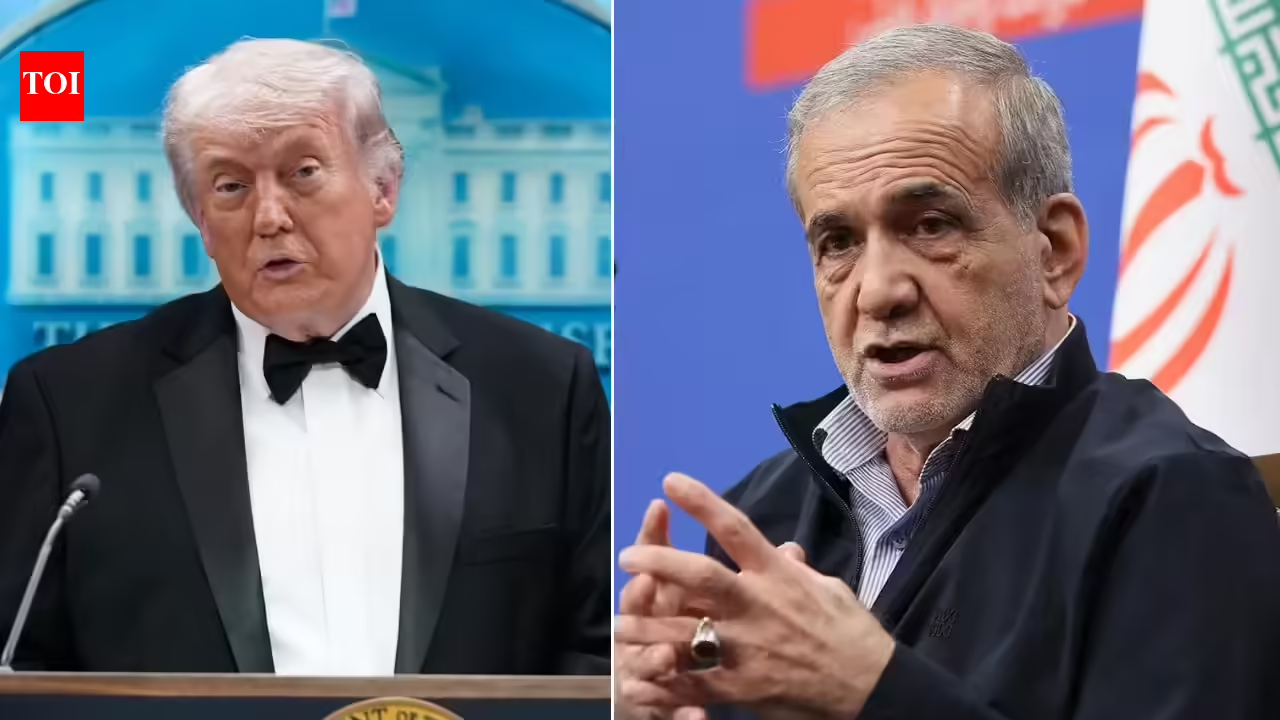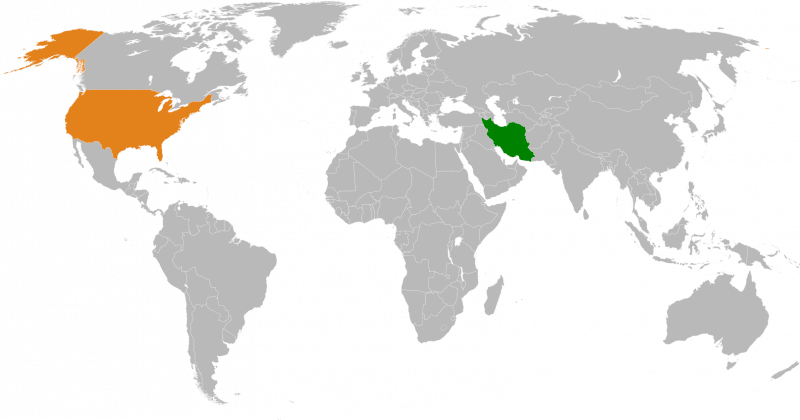
On June 14, Iranian and U.S. representatives signed a memorandum of understanding that is expected to bring an end to the conflict that has lasted since late February. Following the ceasefire reached in early April, Washington was left with little leverage over Tehran, which continued to profit from its control of the Strait of Hormuz. The surge in oil prices and the resulting relaxation of restrictions on Iranian oil exports allowed the Islamic Republic to sell crude at prices higher than before the war. The United States sought to address this problem by imposing a blockade on Iranian shipping, but delays in its implementation gave Tehran enough time to deploy sufficient tanker capacity to keep exporting oil for several more months. According to Antonio Giustozzi, a senior research fellow at the Royal United Services Institute (RUSI), ending the war and reopening the Strait of Hormuz would drive oil prices down without relieving Iran of its sanctions burden. Under the circumstances, Tehran remains unlikely to accept a peace deal that does not include significant concessions from Washington.Contents1.Iran took advantage of the slow U.S. response2.Oil surplus problem3.Financial downside of ending the warAlmost as soon as the ceasefire between the U.S. and Iran was agreed to on April 8, the Americans realised that they had little leverage left to force Tehran to make concessions at the negotiating table. Since the Iranians were still managing the Strait of Hormuz to their advantage, letting tankers out only if they agreed to pay a fee of $1 per barrel of oil, the Trump administration thought that the best strategy would be to impose a blockade of its own.Despite having a large fleet deployed in the Indian Ocean, the Americans initially did not seek to enforce a halt on Iranian shipping, probably because of expectations that the regime would rapidly collapse. For weeks after the start of the war, Iranian tankers continued exporting oil and cargo ships continued reaching Iranian ports, some of them even carrying weapons and components used by Iranian factories to produce weapons.Only on 13 April, five days after the ceasefire came into place, did the U.S. Navy impose a blockade, and even that took a long time to have any tangible effect. In fact, the blockade seems to have been quite an improvised move. In the first 24 hours, sources in the IRGC Navy say, a couple dozen Iranian ships got through, and another dozen followed them in the next 12 hours, including several that were under sanctions. Unloaded tankers trying to get back to Iran were targeted, rather than loaded tankers on their way out of the Persian Gulf — perhaps because the Americans wanted to avoid large oil spills or heavy loss of life. The Iranians threatened to end the ceasefire if any Iranian ship was hit.According to sources in the IRCG Navy, a couple dozen Iranian ships got through the American blockade in the first 24 hoursInitially, the Americans relied on threats to enforce their edict, but then they began to seize Iranian ships. The first one, the container ship Touska, was taken only on April 19, six days after the start of the blockade. In the following week, four more Iranian ships were seized before the U.S. Navy resorted to stronger forms of coercion. On May 6, the rudder of the Iranian merchant ship Hasna was hit by 20 mm cannon fire in the Gulf of Oman, and over the next two days two more Iranian vessels also came under attack. Then, after a three-week lull, ships sailing under shadow flags started being attacked too.When the U.S. Navy started hitting Iranian merchant ships, the Iranians started retaliating, launching missiles and drones at U.S. ships. These attacks appear mostly to have been intended as a warning, as they were not of a sufficient scale to saturate the defences of U.S. ships. However, the Americans had achieved their aim: once the threat of violence became credible, the U.S. Navy had much more success in turning ships around, and most captains obliged to follow American instructions despite being ordered by the Iranian authorities to resist such orders. Empty tankers could not make it back to Iran to be reloaded, and by June the blockade was more or less complete as far as ships entering or exiting the Persian Gulf were concerned.Iran took advantage of the slow U.S. responseNevertheless, the U.S. delay in implementing its blockade had given Iran precious extra time. In mid-April, Iran had about 170 million barrels of oil on tankers spread around east and south-east Asia, enough to keep selling oil for 4-5 months even if the blockade was fully implemented. But because the blockade was initially very porous, the amount of Iranian oil stored at sea kept growing, and by late April the trade intelligence firm Kpler was estimating the figure at 190 million barrels.The U.S. exemption from the sanctions still applied to Iranian oil, and the low supply caused by Iran’s blockade of Hormuz had pushed the price of Iranian oil back to market price levels — which by then were much higher than before the war. Throughout March, April, and most of May, Iran no longer needed to sell oil at discounted prices, although by late May they were again offering discounts to Chinese buyers due to declining Chinese demand caused by high stocks and low margins. Overall, Iranian oil revenue during these 12 weeks was much higher than it had been before the U.S.-Israeli campaign began. Iranian oil revenue during these 12 weeks was much higher than it had been before the U.S.-Israeli campaign beganThen, as enforcement of the blockade became more effective, the amount of Iranian oil stored on tankers at sea started shrinking. By the first week of June, it had declined to 147 million barrels, but still, considering the fact that by June China had reduced its purchases from Iran to around 1.1 million barrels per day, Tehran still has 4-5 months to go before it hits a financial crisis.Oil surplus problemThe most immediate problem Iran is facing is the fact that it needs to store the oil it produces but cannot consume or export. As Iran ran out of tankers to load, it started filling its storage tanks on the Kharg island terminal to capacity. By the end of April, a source in the Iranian oil trade was estimating that all storage tanks would be full within 2-3 weeks. After that, he believed that the only options would be shutting down the wells, which the Iranian government would like to avoid at all costs, so as to avoid possible damage, as well as the high costs implicit in restarting the wells.The tanks on Kharg Island were in fact full by May 13, but another source in the Iranian oil trade noted that some stopgap measures had been developed, such as ushering back into service 41 sea tankers that had been withdrawn from service. These were filled by the first week of June, but by then some old oil tanks on Kharg Island had been fixed and reactivated, adding 10 million extra barrels of storage (which were expected to be filled within 12 days).Another measure taken by Iran to manage the effects of the blockade has been organising alternative routes via land. One rail route to China via the Caucasus and Central Asia was opened, and it is capable of carrying about 150,000 barrels per day. In addition, a number of truck routes were opened to Turkey, Pakistan, and Afghanistan (though some of the oil moved on these routes appears to have been smuggled). Overall, these truck routes account for another 80-100,000 barrels daily. Such land routes might be developed further, but as noted by a source in the IRGC, it would take a long time to achieve significant results. For a substantial part of Iran’s pre-war exports to move by land, he estimated it would easily take one year.According to an IRGC source, there are still 270-300,000 BPD that Iran is able to export by sea from the Jask terminal in the Gulf of Oman, typically to India following a route close to the coastline. The total amount exported by Iran is currently in the range of 500,000-550,000 BPD, compared to 1.2-1.4 million before the blockade took effect and the 1.9 million that were being exported before the war began.Despite the U.S. blockade, Iran retained some of its ability to export oil by seaDifferent independent estimates by trade intelligence firms, based on shipping data, showed Iranian exports via sea routes at 209,000-260,000 BPD in May. These figures are quite close to those mentioned above, and the difference can be explained by the fact that Iran now moves oil by sea with ship transponders switched off. Indeed, according to the same IRGC source, plans were drafted for smuggling oil by sea using small ships and boats, although it is not clear whether such plans have been implemented.Financial downside of ending the warDespite all these efforts, by June it was clear that Iranian oil production levels had to be lowered. The initial plan to close some wells was dropped after oil engineers argued that this could cause serious damage, permanently reducing output. Instead, the engineers reportedly figured out how to reduce oil output by about 30% without shutting wells down, according to a source in the Iranian oil trade. From a total daily output of 3.5 million barrels, the total fell to about 2.4 million barrels in June. Of these, about 1.6 million BPD are consumed internally and, as discussed above, 500,000-550,000 BPD are exported. The 250,000-300,000 excess production is being stored for now, but eventually production may have to be cut further — that is, unless Iran is able to quickly expand the capacity of its land routes.Unless Iran is able to quickly expand the capacity of its land routes, it will have to further cut productionBy early June there were some 67 million barrels of Iranian crude and condensate in storage, according to Kpler estimates. This means that if the Iranians managed to eventually strike a deal with the Americans, they would have enough reserves to export oil at their previous full capacity of 1.9 million BPD for several weeks at least while they bring production back to full capacity. It is not clear how long it would take to restore full output levels, but the moment the two Hormuz blockades are lifted, oil prices are all but certain to start falling. Paradoxically, therefore, Tehran’s oil revenue might well end up being lower once the war definitely ends, especially if oil sanctions against Iran stay in place.This explains why Iran has been in no rush to end the standoff. Tehran needs to have oil sanctions lifted permanently if it is to benefit from an agreement, meaning that for the Islamic Republic, a bad peace looks more risky than war.
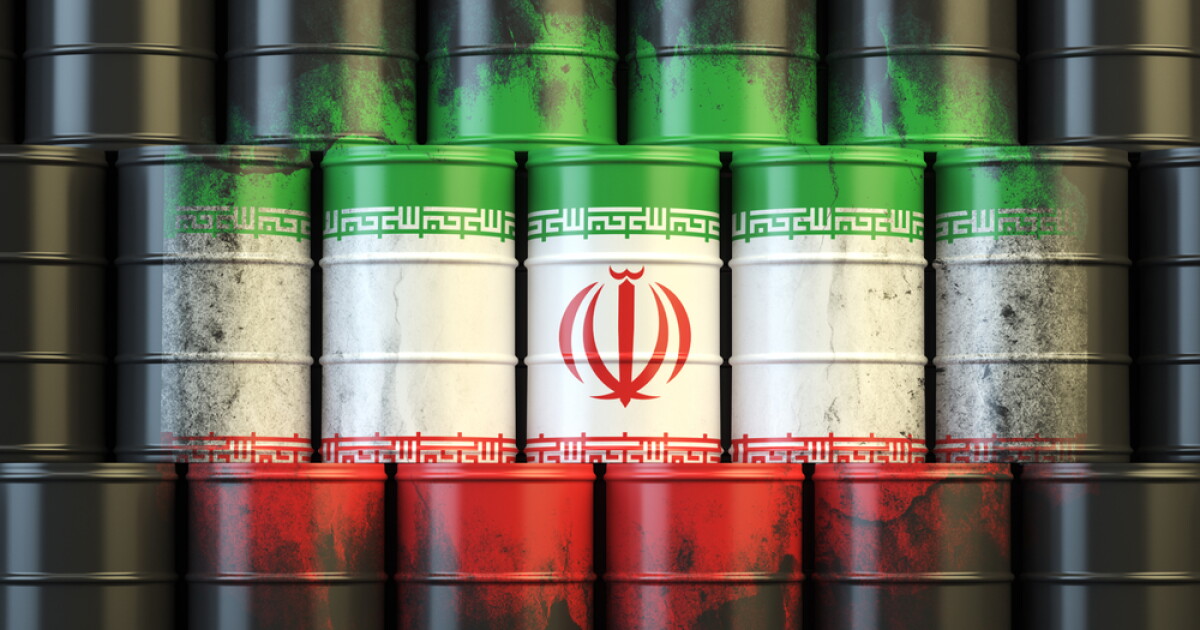
Hormuz windfall: High oil prices mean Iran has more to gain from prolonging the war than from accepting an unfavorable settlement
On June 14, Iranian and U.S. representatives signed a memorandum of understanding that is expected to bring an end to the conflict that has lasted since late…
1,808 words~8 min read