“In Nigeria’s context, Thatcher's statement underscores the importance of effective government communication strategies. Authorities must ensure that citizens receive accurate, timely information during security crises. When credible official information is lacking, rumors and misinformation can proliferate, heightening panic and eroding trust in public institutions. Effective communication should reassure the public while acknowledging the gravity of security threats.”
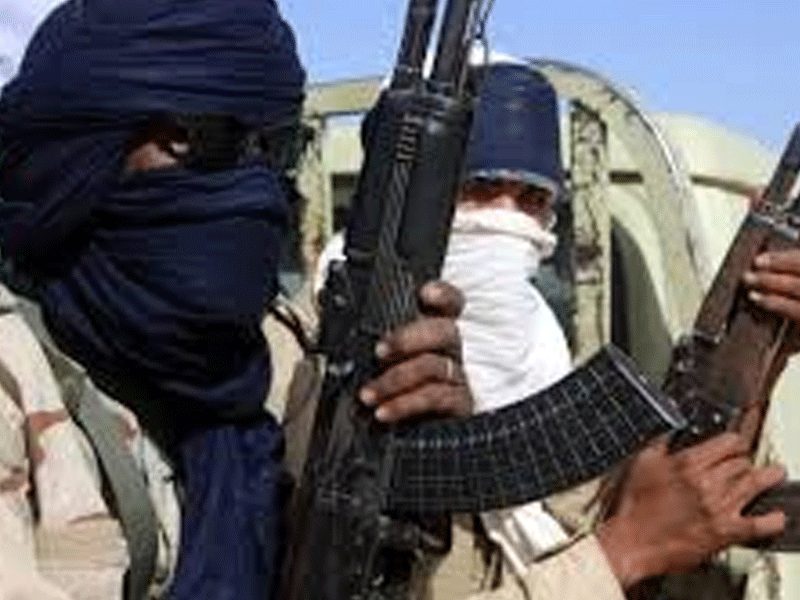
Former British Prime Minister Margaret Thatcher once said, "Publicity is the oxygen of terrorism." She argued that terrorists do not rely solely on violence; they also depend heavily on the attention their actions attract. The fear, panic, and extensive media coverage that accompany terrorist acts magnify their impact beyond the immediate victims. For a nation like Nigeria, which has faced challenges from insurgency, banditry, and various forms of violent extremism, Thatcher's observation offers a crucial lesson on how terrorism should be understood and addressed.
The primary objective of terrorism goes beyond the immediate intent to inflict harm or destroy property. At its core, terrorism aims to cultivate fear and instability, targeting not only individuals but entire communities and nations. It seeks to disrupt social order, provoke political change, and draw attention to specific ideologies or grievances. Terrorist actions are often orchestrated to elicit a reaction from governments or societies, amplifying their impact through viral dissemination. A single attack in a remote area can trigger widespread anxiety, especially when images, videos, and sensational headlines dominate news cycles and social media. In this context, publicity acts as a force multiplier for terrorism.