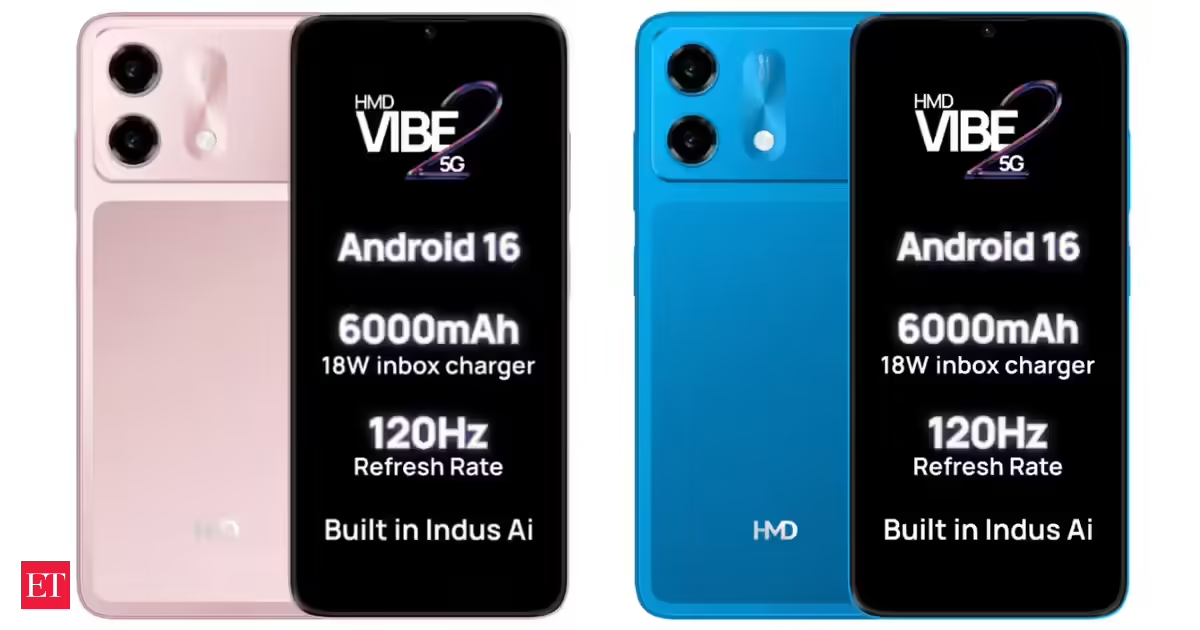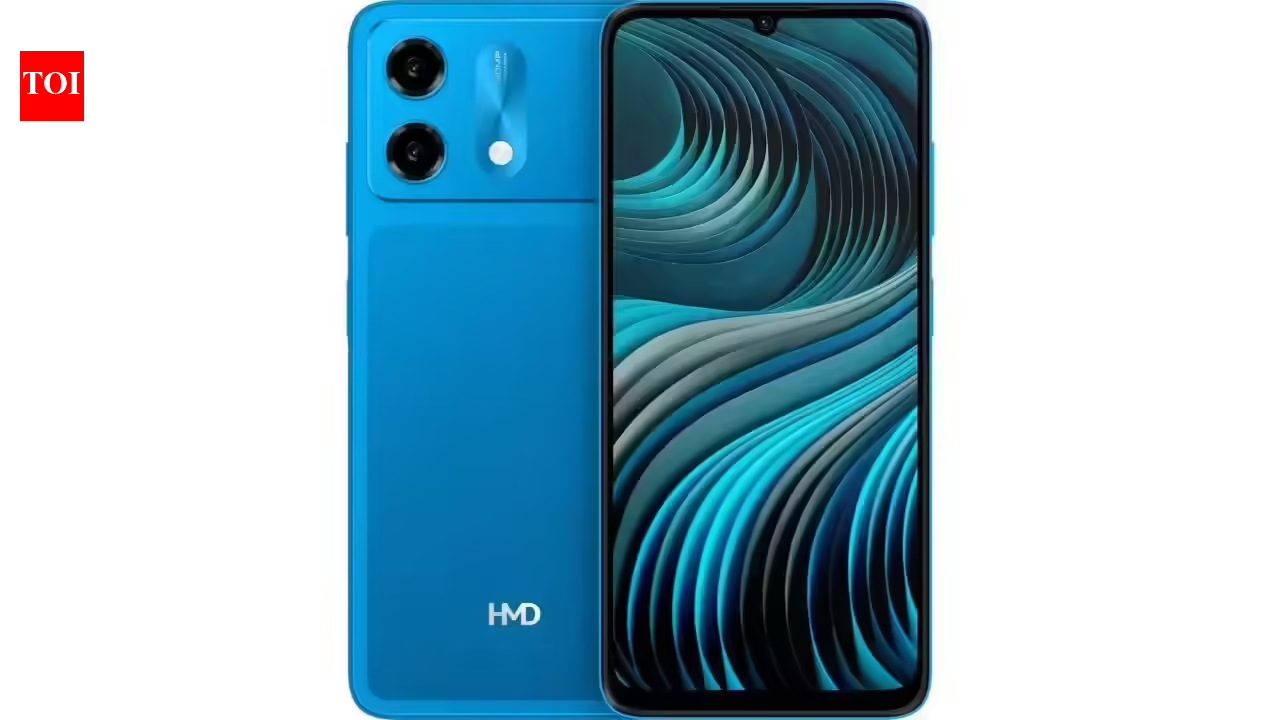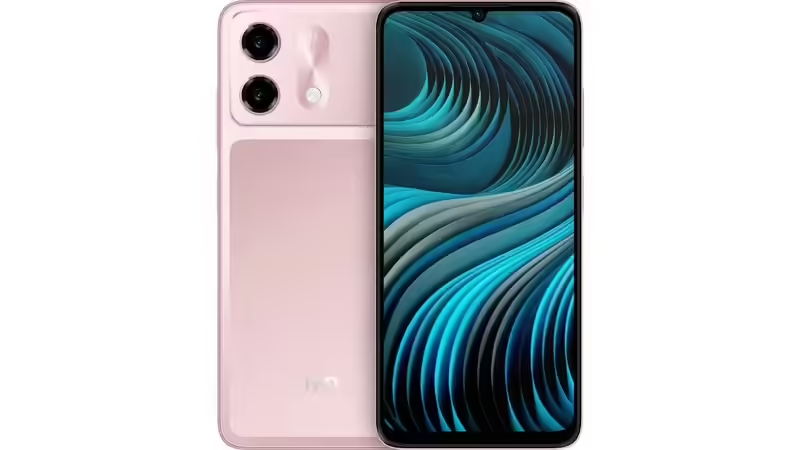
Critic Rating 3.53.8design3.6performance3.7display4.3battery3.5camera4.0value for moneyHMD wants you to look at the Vibe 2 5G and see an AI phone. At Rs 10,999, it is the first handset in India to ship with Indus by Sarvam AI baked in at the system level, and that is the line on every banner. Spend a week with it, though, and the assistant fades into the background while something far less glamorous does the real work - a 6,000mAh battery that refuses to die, and a 120Hz screen that has no business looking this fluid at the price. The marquee name sits above the title. The battery is the actor who actually carries the picture.Key TakeawaysThe HMD Vibe 2 5G starts at Rs 10,999 (4GB/64GB) and Rs 11,999 (4GB/128GB), launched on 21 May 2026; street prices have since climbed to around Rs 12,999.The 6,000mAh battery is the standout, comfortably clearing a day and stretching towards two on moderate use, held back only by a slow 18W charger.The Unisoc T8200 scores around 5 lakh on AnTuTu and stays cool under load, enough for daily apps and casual gaming, though 4GB of RAM caps heavy multitasking.Indus by Sarvam AI handles 22 Indian languages and code-mixed speech well, a genuine first, yet it reads as a useful extra rather than the reason to buy.HMD ships Android 16 clean, but caps support at two years of quarterly security patches with no major OS upgrades - the sharpest mark against it.The screen outruns its spec sheetRead the panel line first, and you brace for the worst. A 6.74-inch HD+ LCD at 720 × 1600, in mid-2026, when Full HD has crept down to phones costing the same - that is the kind of spec that sinks a review in the first paragraph.It mostly recovers in the hand. The 120Hz refresh rate carries the experience: scrolling through Instagram, flicking between Chrome tabs, thumbing down a WhatsApp thread, all of it moves with a slickness that shames several pricier LCDs stuck at 90Hz. Sharpness gives ground - text edges soften if you hunt for them, and side by side with an AMOLED, the colours look flatter and the blacks greyer. For streaming a cricket highlights reel or scrolling reels on the bus, the resolution stops mattering within minutes.Outdoor legibility surprised me more. Under a Delhi afternoon sun harsh enough to wash out cheaper screens, the Vibe 2 stayed readable for maps and messages. It trails the brightest panels in the segment, and direct glare forces a squint, yet it cleared the bar that matters: you can use it outside without cupping a hand over the glass.The waterdrop notch dates the front instantly. Punch-holes have reached this price band, so the teardrop reads like a 2022 carryover. A small thing, and a constant one, sitting at the top of every screen you look at.Heft, you stop noticing by day twoBudget phones telegraph their price the moment you pick them up. The Vibe 2 hides it better than most. The rear panel keeps a clean split-tone look, the camera island sits nearly flush rather than jutting out, and the frame feels more planted than the Rs 10,999 sticker suggests.It weighs around 210g, which lands on the heavy side, and on the first day, you notice it. That mass is the 6,000mAh cell asking for room, and by the second day, your hand stops registering it. IP64 covers dust and splashes, the side fingerprint reader is quick and sits where your thumb falls, and a dedicated microSD slot survives - a small mercy for anyone hoarding offline music and downloaded shows.Audio is where the cost-cutting shows. A single bottom-firing speaker handles calls and the odd YouTube clip fine, then thins out and distorts when you push the volume for music or a movie. Headphones or a Bluetooth speaker solve it, but the omission is felt.The full spec sheetSpecificationHMD Vibe 2 5GDisplay6.74-inch HD+ IPS LCD, 120Hz, waterdrop notchProcessorUnisoc T8200 (6nm), Mali-G57 MC2 GPURAM & storage4GB RAM; 64GB / 128GB; microSD expansionRear camera50MP main with AI + secondary sensor, LED flashFront camera8MPBattery & charging6,000mAh, 18W wired (charger in box)SoftwareAndroid 16; two years of security patches, no OS upgradesAIIndus by Sarvam AI, 22 Indian languagesBuildIP64, side fingerprint, single speakerPriceRs 10,999 (4/64), Rs 11,999 (4/128); intro Rs 9,499Around five lakh on AnTuTu, and what that buysThe Unisoc T8200 is the quiet centre of this phone, and it does more than its reputation implies. Built on a 6nm process, it pairs two Cortex-A76 cores at 2. 3GHz with six Cortex-A55 efficiency cores and a Mali-G57 MC2 GPU - a layout that, stripped of branding, traces back to the older T765. On AnTuTu, it lands around 5 lakh, which drops it into the same performance class as the Snapdragon 695, the Exynos 1280 and the Dimensity 6100+, and edges past the Snapdragon 4 Gen 2 that powers several rivals near this price.Numbers translate cleanly into use. WhatsApp, Instagram, YouTube and Chrome open and run with no stutter worth flagging, and the 120Hz panel makes the whole system feel quicker than the silicon underneath it. The ceiling arrives with RAM. At 4GB, the phone starts evicting background apps once you stack six or seven, so a heavy multitasker who jumps between camera, maps, a banking app and a game will watch things reload. That single 4GB tier matters: both variants carry the same memory, differing only in storage, so paying up for 128GB buys space, not speed.Gaming behaves the way the chip's class predicts. Lighter titles such as World War Heroes run smoothly, and BGMI and Call of Duty Mobile hold a steady line on low to medium settings. Push for high frame rates or maxed detail, and the Mali-G57 runs out of room. The genuine win sits in thermals - across long sessions, the Vibe 2 stayed cool to the touch, with none of the palm-warming throttle that turns budget gaming into a slideshow. For sustained, undramatic performance, that restraint counts for more than a benchmark line.Two connectivity gaps deserve a mention for a phone you might keep three years: it runs Wi-Fi 5 and Bluetooth 5.0 rather than the newer Wi-Fi 6 and 5.2 standards. Most buyers will never notice. A few, on crowded home networks, eventually will.Indus by Sarvam AI: the marquee name, the supporting roleStrip the AI marketing away, and the software is the Vibe 2's other quiet strength. HMD ships Android 16 close to stock, with little of the duplicate-app clutter and ad-laden notification trays that infest this price band. Menus stay legible, the launcher stays responsive, and the phone feels like Google built it rather than a carrier.Then there is Indus.Sarvam AI is the Bengaluru startup the government tapped as a sovereign-AI contender, building large language models tuned for Indian languages rather than retrofitting English-first systems. Indus, its assistant, is what HMD has wired into the Vibe 2 at the ,system level - a first for any phone sold here. It handles 22 Indian languages by voice and text, and the part that works best is code-mixing: ask it something in the Hinglish most Indians actually speak, half English and half Hindi in one breath, and it parses the intent without the stumble you get from assistants built for clean English commands. Translation, quick questions, voice queries in a regional language - these land.The honest read is that none of it changes the phone's gravity. Indus is useful, the localisation is real, and for a first-time smartphone buyer in a Tier-3 town who thinks in Bhojpuri or Telugu rather than English, an assistant that meets them in their own language carries weight a spec sheet cannot show. As a daily driver of behaviour, though, it sits closer to a thoughtful bonus than a deciding feature. You buy the Vibe 2 and discover Indus. You do not buy it because of Indus. HMD's pitch and the phone's reality point in different directions, and the gap is the most interesting thing about the device.The support policy undercuts the goodwill. HMD has confirmed the Vibe 2 receives two years of quarterly security patches and no major Android version upgrades - so the phone that ships on Android 16 stays on Android 16. For a buyer who churns handsets every two years, the cap is academic. For the value-conscious user who keeps a budget phone until it dies, it is a real cost, and it is the single line I would weigh hardest against everything the phone does well. A clean build, you cannot update ages faster than it should.A 50MP camera that earns its keep in daylightThe 50MP main sensor outperformed my expectations, with one firm boundary. In good light, it pulls in genuine detail and renders colours that look natural rather than the oversaturated punch budget phones often force - greens stay green, skin tones hold, and shots land social-media-ready with little editing. HMD leans on AI processing to do the lifting, and in daylight, that processing knows when to stop.After sunset, the story turns. Low light is where the sensor and the cheap optics show their price: noise creeps into shadows, fine detail smears, and the AI's attempts to brighten a dim room leave a watercolour softness across the frame. Night mode helps a little and slows you down a lot. This is a daytime camera, and judged as one, it satisfies.The 8MP selfie shooter is dependable for video calls and the occasional portrait, sharp enough in good light and predictably soft once the room dims. The secondary rear sensor is the usual budget passenger - present on the spec sheet, contributing little you would miss. Video tops out at modest resolutions, and stabilisation stays basic, so treat clips as casual captures rather than anything you would build a reel around. For a phone at this price, asking the camera to handle daylight memories and the odd video call is the right ask, and it answers.Two days, and the catch at the plugHere is where the Vibe 2 stops apologising. The 6,000mAh battery is the reason to buy this phone, full stop. Across a week of mixed use - social scrolling, YouTube, messaging, navigation, a few photos - it cleared a full day with charge to spare every single time, and on lighter days it walked into a second morning before asking for the cable. The battery anxiety that defines cheap phones simply went away. This is the innings that bats through to the close while the flashier features get out cheaply around it.The catch waits at the wall. HMD pairs that large cell with 18W charging, which in 2026 feels stingy, and a full top-up takes a little over two hours. A charger sits in the box, a courtesy too many brands have abandoned, so you spend nothing extra to be slow. Because the battery lasts so long, you reach for the plug rarely enough that the wait stings less than the spec suggests - though anyone moving from a 33W or 67W phone will feel every minute of it the first time the battery does run flat.How it holds up against Moto, Redmi and iQOOThe Vibe 2 enters a knife-fight of a price band, and its rivals each expose a different soft spot.PhoneApprox priceIts edge over the Vibe 2Where the Vibe 2 winsMotorola G45 5G~Rs 11,000-13,000Clean Android with a promised OS upgrade; Snapdragon 6s Gen 3Larger 6,000mAh battery; Indus AI; charger in boxRedmi 14C 5G~Rs 10,000-12,000Wider service network; HyperOS featuresCleaner software; cooler thermals; battery sizeiQOO Z10 Lite 5G~Rs 11,000Faster charging; gaming tuningStock-style Android; Indian-language AIMotorola is the closest fight, because the G45 5G offers the same clean-Android appeal and adds the OS upgrade HMD declines to give - that one policy difference is the strongest argument for spending elsewhere. Redmi out-muscles on brand reach and service centres, which matters when a budget phone needs warranty work in a smaller town, while conceding the lighter software. iQOO answers the battery with faster charging and a sharper gaming lean. Against all three, the Vibe 2's case rests on the same three pillars: the cleanest software in the group, the coolest head under load, and an AI assistant that speaks the buyer's first language.Who the Vibe 2 5G is actually forAt its Rs 10,999 launch price, the HMD Vibe 2 5G is an easy phone to recommend to the right buyer - someone who wants a dependable 5G handset that lasts two days, stays clean and cool, and treats AI as a welcome surprise rather than a reason to overspend. The climb to around Rs 12,999 on the street tightens that case; at thirteen thousand, the Motorola and Redmi alternatives press harder, and the no-OS-upgrade cap reads worse against rivals that promise one. Buy it near its launch price, and the maths works comfortably.I am keeping the score at 3.5/5. The battery, the thermals and the clean Android 16 build earn it; the slow charging, the HD-only panel, the single speaker and the closed support window keep it from climbing higher.The question that lingers has little to do with this phone and everything to do with the bet behind it. HMD has wagered that an Indian assistant, in Indian languages, on the cheapest phones, is worth building a brand around. Indus does not yet justify that bet on its own. Whether it does a year from now - as Sarvam's models sharpen and the next Vibe arrives - will decide whether system-level Indian AI becomes a budget-segment standard or a footnote HMD got to first.Frequently Asked QuestionsWhat is the price of the HMD Vibe 2 5G in India?It launched on 21 May 2026 at Rs 10,999 for 4GB/64GB and Rs 11,999 for 4GB/128GB, with a Rs 9,499 introductory price. Street prices have since risen to around Rs 12,999, so check the live figure before buying.Is the HMD Vibe 2 5G good for gaming?It handles casual and moderate gaming well, with titles like BGMI and Call of Duty Mobile running smoothly on low to medium settings. The Unisoc T8200 and Mali-G57 GPU run out of headroom at high frame rates, but thermals stay impressively controlled during long sessions.How long does the battery last?The 6,000mAh battery comfortably lasts a full day of heavy use and stretches towards two days on moderate use. Charging is the trade-off, with the 18W adapter taking a little over two hours for a full top-up.Does the HMD Vibe 2 5G get Android updates?It ships with Android 16 and receives two years of quarterly security patches. HMD has confirmed it gets no major Android version upgrades, so it stays on Android 16 throughout its life.What is Indus by Sarvam AI?Indus is an AI assistant from the Indian startup Sarvam AI, integrated at the system level on the Vibe 2 - a first for a phone sold in India. It supports 22 Indian languages by voice and text and handles code-mixed Hinglish queries well, useful for regional-language users.How is the camera on the HMD Vibe 2 5G?The 50MP main camera takes detailed, natural-looking photos in daylight that need little editing. Low-light performance is the weak point, with visible noise and softened detail, and the 8MP selfie camera is dependable in good light.end of article
HMD Vibe 2 5G Review: Indus AI Is the Pitch, Battery Is the Reason
HMD wants you to look at the Vibe 2 5G and see an AI phone. At Rs 10,999, it is the first handset in India to ship with Indus by Sarvam AI baked in at the system level, and that is the line on every banner. Spend a week with it, though, and the assistant fades into the background while something far less glamorous does the real work - a 6,000mAh battery that refuses to die, and a 120Hz screen that has no business looking this fluid at the price. The marquee name sits above the title. The battery is the actor who actually carries the picture.
2,528 words~11 min read