If you are building with tool-calling models, the most important design decision is often not the prompt. It is the loop around the model.
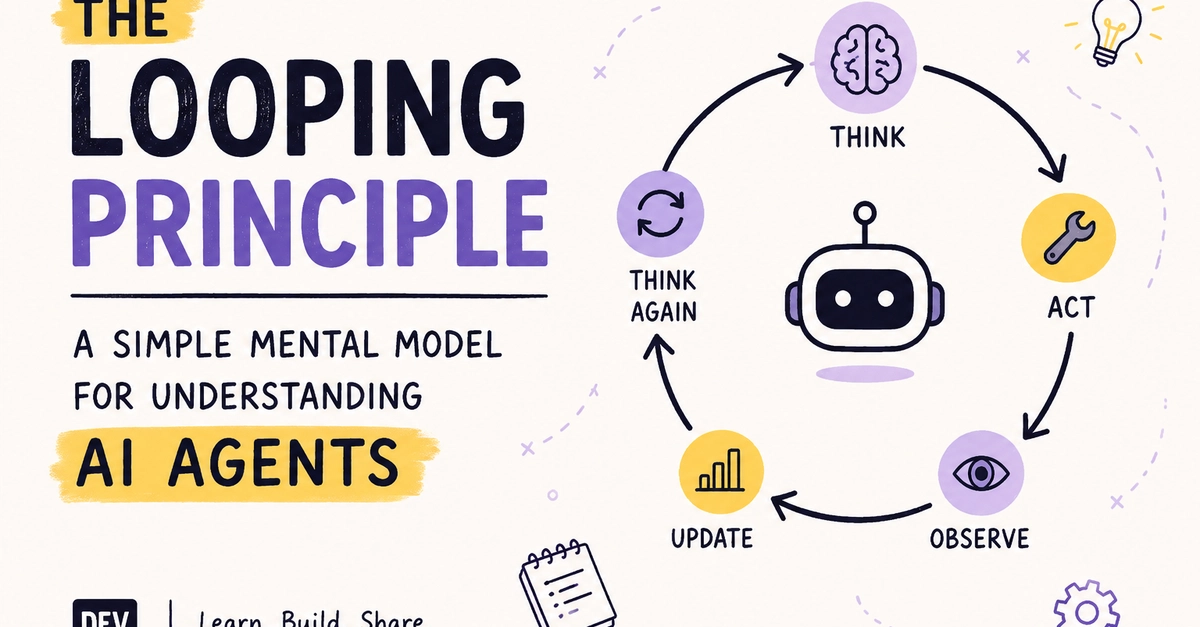
An LLM can decide it wants to use a tool, but it cannot execute that tool by itself. The surrounding application or SDK has to assemble context, inspect the model response, run tools, append results, and continue until a final answer is produced. That runtime cycle is the agent loop.
This article explains what the agent loop actually is, where the model stops and the harness begins, how tool calling works step by step, and which engineering tradeoffs show up once you move beyond demos.
TL;DR
An agent loop is the execution cycle that lets a model inspect context, request tools, observe results, and continue until it reaches a final answer.