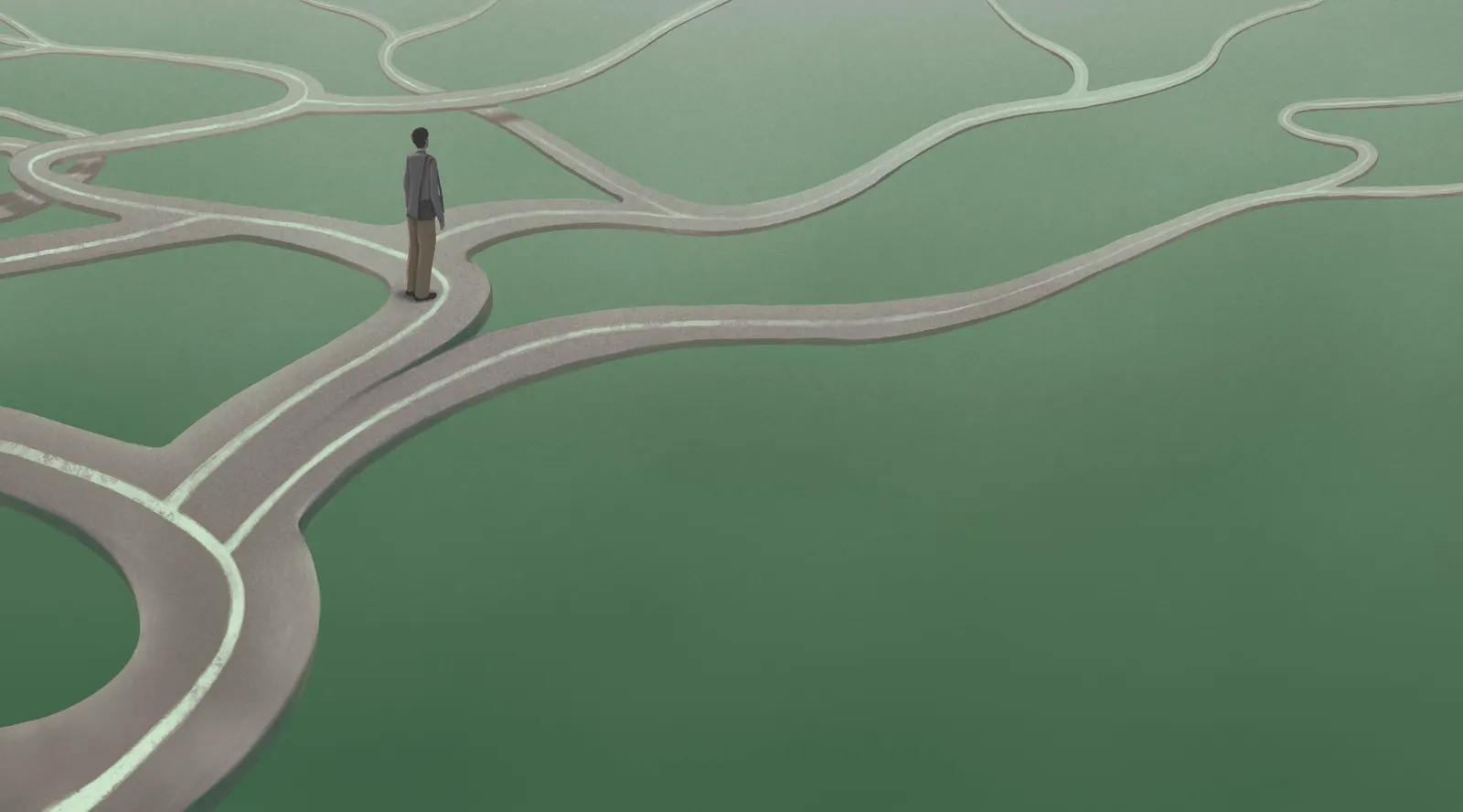
In today’s hyper-accelerated workplace, employees postpone choices because the stakes feel higher, the future feels less predictable and AI is reshaping industries faster than people can process the changes. Experts call the outcome "decision debt"—the psychological burden that accumulates when difficult choices are delayed too long.gettyFor years, burnout has been blamed on excessive workloads, endless meetings and the pressure to remain constantly connected. While those factors certainly contribute to workplace exhaustion, they may not tell the whole story. A quieter psychological burden is emerging beneath the surface of modern work—one that many employees carry without realizing it. It’s called “decision debt.”What Is 'Decision Debt’?Workers today are not simply overwhelmed by the amount of work they have to do. They are overwhelmed by the number of decisions they haven’t made. In a workplace shaped by economic uncertainty, rapid technological change and artificial intelligence, many employees find themselves postponing important choices because the stakes feel unusually high. The result is "decision debt"—the psychological burden that accumulates when difficult decisions remain unresolved for too long. Like financial debt, postponed decisions accrue interest. Questions linger in the background of your mind: “Should I change jobs?” “Should I trust AI tools? Should I take advantage of ”job dropping"?Should I speak up—or stay quiet?These decisions rarely disappear on their own. They continue to consume your cognitive and emotional bandwidth long after you stop consciously thinking about them. Over time, the accumulation creates anxiety, decision fatigue and a sense of paralysis that can look remarkably similar to burnout.Why Modern Work Makes Decisions Feel More DangerousHistorically, career decisions unfolded more gradually. Industries evolved at a slower pace, job paths were relatively stable and professional identities remained more predictable. Workers could reasonably assume that skills learned today would remain valuable tomorrow. That stability has disappeared.MORE FOR YOUToday's workplace is defined by continuous disruption. Artificial intelligence is transforming entire industries. Organizations are restructuring more frequently. Economic uncertainty persists. Return-to-office mandates continue to generate tension. Employees are expected to adapt to new technologies, shifting expectations and evolving business models almost overnight.As a result, decisions that once felt manageable now feel loaded with long-term consequences. Scientists have long recognized a phenomenon known as overchoice—the stress response that occurs when people face too many options at the same time.While we assume that more choices create more freedom, research suggests the opposite can occur. Excessive choice frequently produces indecision, anxiety and avoidance. And AI may be amplifying that effect. Workers now face a growing list of questions they never had to consider before. Will AI replace my skills? Am I falling behind? Should I automate more of my work? If I rely too heavily on AI, will I become easier to replace?Employees are being asked to make decisions about technologies they barely understand but fear ignoring. In uncertain environments, even relatively small choices can begin to feel existential. Neuroscience helps explain why unresolved decisions are so exhausting.The Brain Treats Uncertainty As ThreatThe brain prefers closure. When important questions remain unanswered, the nervous system often interprets uncertainty as a potential threat. Research on stress and cognitive load has shown that ambiguity activates many of the same neural pathways involved in threat detection and vigilance. Unfinished decisions continue to occupy mental real estate even when we’re not actively thinking about them.This may help explain why so many workers report feeling mentally drained before the workday even begins. Their cognitive resources are already tied up managing unresolved possibilities.“Decision debt” also fuels what leadership experts often describe as stress paralysis—the inability to move forward because every available option feels risky. Ironically, the longer decisions are delayed, the more emotionally overwhelming they tend to become.Executive Burnout Is Becoming Decision BurnoutThe problem may be especially pronounced among leaders. Executives now operate in environments that require relentless decision-making under unstable conditions. They must navigate rapidly changing AI capabilities, labor shortages, economic volatility, cybersecurity threats, political polarization and shifting employee expectations. At the same time, leaders know that mistakes can be amplified instantly across social media and digital platforms.This creates what organizational psychologists increasingly describe as leadership fatigue—a state in which continuous high-stakes decision-making gradually depletes emotional resilience and cognitive clarity.Many leaders are no longer suffering primarily from overwork. They are suffering from decision overload.The symptoms often hide in plain sight. Chronic decision fatigue can show up as procrastination, avoidance, irritability, indecisiveness, emotional numbness, compulsive information gathering or an overreliance on consensus. Leaders continue working hard, but forward momentum slows because every decision feels weighted with potential consequences. The result is a workplace trapped between urgency and hesitation.“Decision debt” may also be helping to fuel newer workplace behaviors such as doomjobbing—the habit of repeatedly scanning job postings despite having no immediate intention of leaving your current role.At first glance, browsing opportunities can feel productive. It creates the sensation that something is being done. Yet in many cases, you’re not actually moving toward a decision. You’re simply postponing one.But certainty rarely arrives. Paradoxically, the technologies designed to simplify work may be increasing decision fatigue. AI tools generate more recommendations, more alternatives and more possible paths forward than ever before. Workers can instantly compare options, rewrite plans, simulate outcomes and generate endless variations of a strategy.Yet more information does not always produce greater clarity. Sometimes it creates cognitive friction. And people become trapped optimizing decisions instead of making them.The hidden danger of “decision debt” is that the costs rarely appear all at once. They accumulate gradually through chronic mental fatigue, sleep disruption, reduced creativity, emotional reactivity, diminished focus and declining confidence. Eventually, you can become so cognitively overloaded that even simple choices—responding to emails, scheduling meetings or prioritizing tasks—begin to feel overwhelming. This may explain why so many employees describe themselves as simultaneously busy and stuck.As workplace acceleration continues, one of the most valuable professional skills may become the ability to tolerate uncertainty without collapsing into paralysis. The strongest leaders are not necessarily those with perfect foresight. They are those who can make thoughtful decisions despite incomplete information. They understand that waiting indefinitely for certainty often carries risks of its own.That requires emotional regulation as much as intelligence. If you can slow reactive thinking, filter noise and resist catastrophic forecasting you’re better positioned to maintain clear judgment under pressure. You avoid accumulating unnecessary “decision debt” as you recognize that delayed choices carry emotional costs too.Six Tips To Break ‘Decision Debt’Reducing decision debt doesn’t require reckless action. It requires recognizing that avoiding a decision is itself a decision. Experts suggest several ways to reduce decision overload: 1. Narrow unnecessary choices2. Establish decision deadlines 3. Limit information saturation4. Distinguish reversible decisions from irreversible ones5. Focus on personal values rather than perfect certainty 6. Reduce digital overstimulation before making important choicesYou may also need to stop expecting complete clarity in environments defined by constant change. The future of work will remain unpredictable. Artificial intelligence will continue reshaping careers, industries and professional identities faster than you might feel prepared for.But waiting forever for certainty may become its own form of burnout. In today’s workplace, unresolved decisions are no longer emotionally neutral. They accrue interest.
‘Decision Debt’: 6 Tips To Break The Epidemic Behind Career Burnout
Learn how to break the cycle of "decision debt"—the emotional burden that accumulates when difficult work decisions are postponed and remain unresolved for too long.
1,176 words~5 min read