People have died or gone mad on the icy continent, but artists, scientists and filmmakers keep going back. A new exhibition asks why.
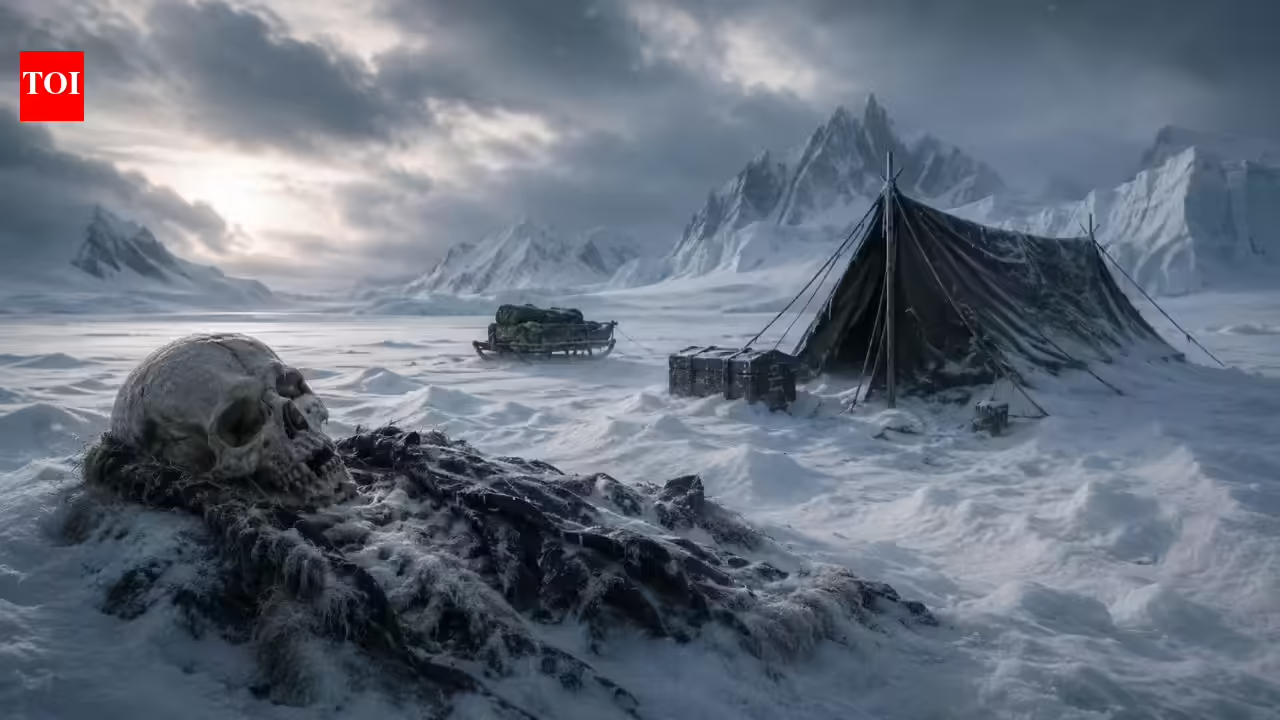
Antarctica isn’t just a place in John Carpenter’s 1982 film The Thing; it’s a death trap. The polar wilderness transforms into a desolate prison of ice, trapping researchers inside a station with an ancient shapeshifting alien. Try as they might, there’s no connecting to the outside world. Death is all but inevitable.
This is, of course, mere fiction. At least that’s what Philip Samartzis, a Melbourne sound artist, believed before venturing to Antarctica for the first time in 2010. Once he arrived, elements of the fantasy quickly felt real.
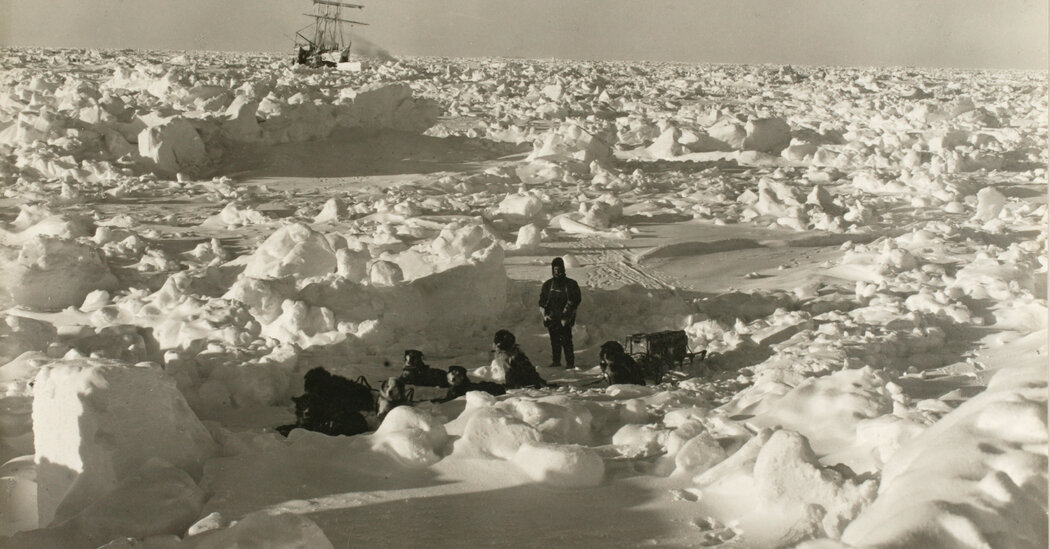
Cyclone-force winds, 36-hour blizzards, water so cold that if you fall in, you’re immediately “gone”. This is what awaited Samartzis when he twice visited Antarctica as an Australian Antarctic Arts Fellow. The program has sent more than 80 artists to Australia’s Antarctic and sub-Antarctic stations since 1984, including musician David Bridie, painter Jan Senbergs and children’s author Alison Lester.
So relatable was The Thing, Samartzis says, that the fellowship’s first orientation day ended with a screening of the film (which was actually filmed in Canada and Alaska and on refrigerated sound stages).