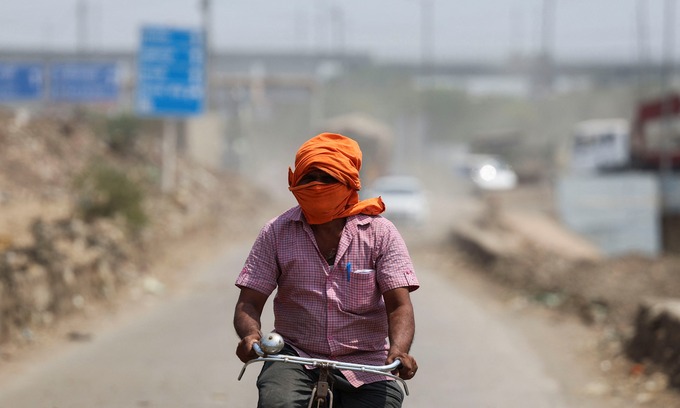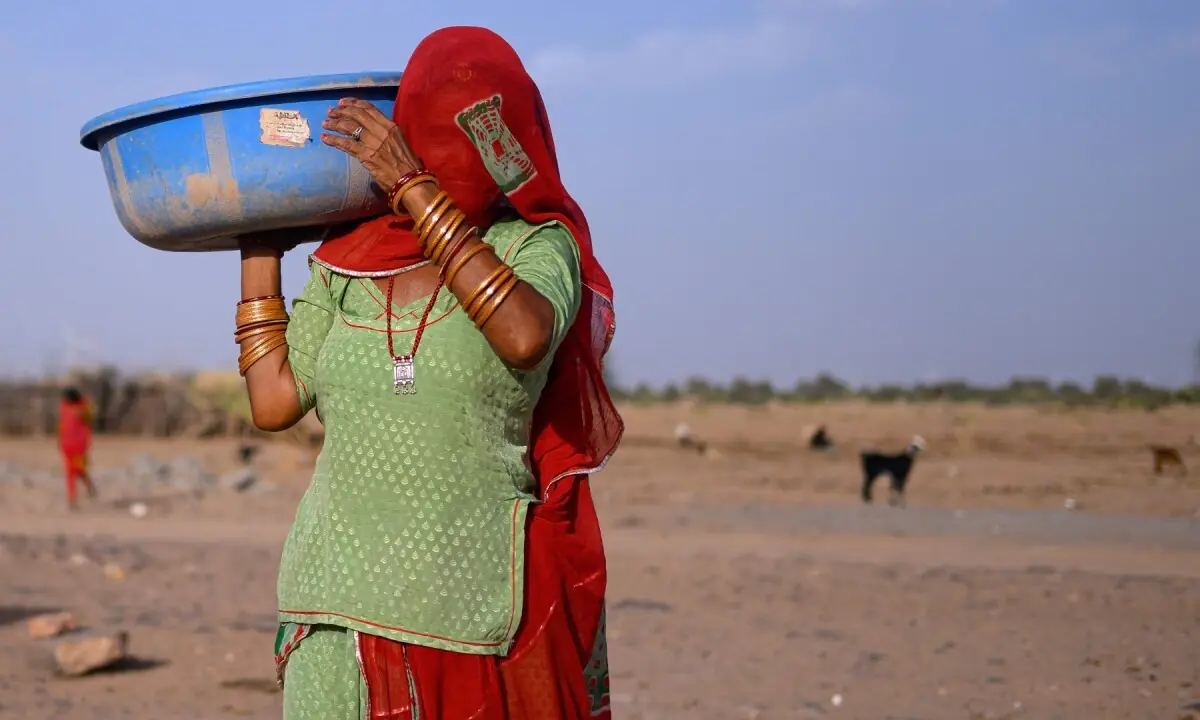
After dark, India’s power systems are facing their hardest test. By the time the evening news begins, the heat in Indian cities has still not eased. Apartments, offices, and shop floors, continue to hold the day’s temperature, keeping cooling demand elevated well after sunset. This is reshaping the operating logic for our power infrastructure. Women take cover under a scarf on a hot summer day amid heatwave. (PTI)Across much of India, very warm nights are rising faster than very hot days, especially in dense urban districts where built surfaces trap heat through the day and release it after dark. In Delhi, the summer of 2026 brought 45°C-plus daytime heat and May nights that ranked among the city’s warmest in more than a decade.That extends the stress window beyond the afternoon peak into hours when networks, transformers and dispatch decisions are already under pressure. The next test of summer reliability will come after sunset. Delhi is the sharpest illustration of a national pattern. Extreme heat has spread across the same districts that carry a large share of India’s population, economic activity, and infrastructure demand. About 76% of the population, already fall in high to very high heat-risk categories. In 2024, heat exposure stripped 247 billion potential labour hours from the economy. The income loss: $ 194 billion. These losses have found their way into productivity statistics. They arrive at the power system through longer cooling cycles, higher local demand, and sustained pressure on the distribution layer. India’s 2.5GW night time shortfall in May 2026, enough to power almost two million households, came to a total demand of 251GW. Reports of overload and fault-driven outages in Noida, Ghaziabad, Mohali, and Mumbai point to this reality. The central challenge in summer power is the evening load shape, a dual peak, with demand rising around solar hours and remaining elevated again between 9 PM and 11 PM. Last May, demand reached ~230 GW at 3 PM and still held at ~227 GW later in the evening. Solar can manage the day; after sunset, the burden falls entirely on storage, hydro, wind and thermal generation.That is the gap India’s clean energy strategy needs to close. The opportunity lies in extending clean power’s reach into the evening through storage, hybrids, stronger transmission, and flexible hydro and wind, and in timing. Time-of-day tariffs already incentivise shifting demand into solar hours. Pre-cooling, demand response, and efficient cooling can move load into cleaner windows, shrinking the fossil-heavy tail.A flatter peak and stronger evening supply give storage and hybrids more room, reduce coal-heavy balancing, and make the clean transition more resilient.Buildings are the hidden variable in India’s evening grid stress. In dense urban districts, roofs, walls, pavements, and neighbourhood layouts absorb heat through the day and release it slowly after sunset, turning every city block into a slow-burning load on the distribution network.Cooler roofs, reflective materials, shading, and better ventilation lower indoor heat and reduce the electricity required to maintain habitable spaces during the hottest hours. The evidence is already there: cool-roof interventions in Chennai’s Perumbakkam reduced roof surface temperatures by 9–12°C, lowered indoor temperatures by 0.5–1.5°C, and delivered electricity savings of up to 12%.India already has the pieces—IMD district-level warnings, grid operators tracking demand and reserves, DISCOMs managing local network stress. The opportunity is to run them as one system: A shared framework that connects forecast signals, clean energy dispatch, building performance and community response into a single picture of where the night will be hardest. Three bold shifts make would make this real.Seeing your risk earlier: Right now, stress becomes visible only when it arrives in the form of an overloaded feeder, a tripped transformer, an outage call. Integrating forecast signals with operational data creates a live picture of which districts, feeders and transformers are most likely to converge into crisis during the 9 PM–11 pm window, giving grid operators, and municipal authorities time to act before the system speaks for itself.Anchoring the night with clean power: The evening window is where clean energy’s reach is still incomplete. A shared operational picture means storage, flexible hydro and wind can be dispatched precisely into the hours of highest pressure. This is where the clean transition becomes an operational discipline, not just an infrastructure target.Closing the loop on demand: Supply is only half the equation. Cooler roofs, better-ventilated buildings and shaded urban infrastructure reduce what the grid has to carry before the evening even begins. Paired with cooling shelters, water access and hospital preparedness in the most exposed neighbourhoods, the operating system reaches all the way to the people at the end of the line, reducing the load and protecting those who feel it most when it fails.As nights grow hotter and summers run longer, the measure of infrastructure will have to shift with them. Cities and states that strengthen grids, reduce heat in buildings, and carry cleaner power deeper into the evening will be better prepared for the climate already here.India’s power system has learnt to survive the day. It now needs to learn to survive the night, when demand remains high, resilience is tested in real time, and the heat of the day is still lingering in the city. That is the next infrastructure advantage: systems that keep performing after dark.(The views expressed are personal) This article is authored by Vaishali Nigam Sinha, co-founder, ReNew.
The next heatwave will be won at night
This article is authored by Vaishali Nigam Sinha, co-founder, ReNew.
887 words~4 min read