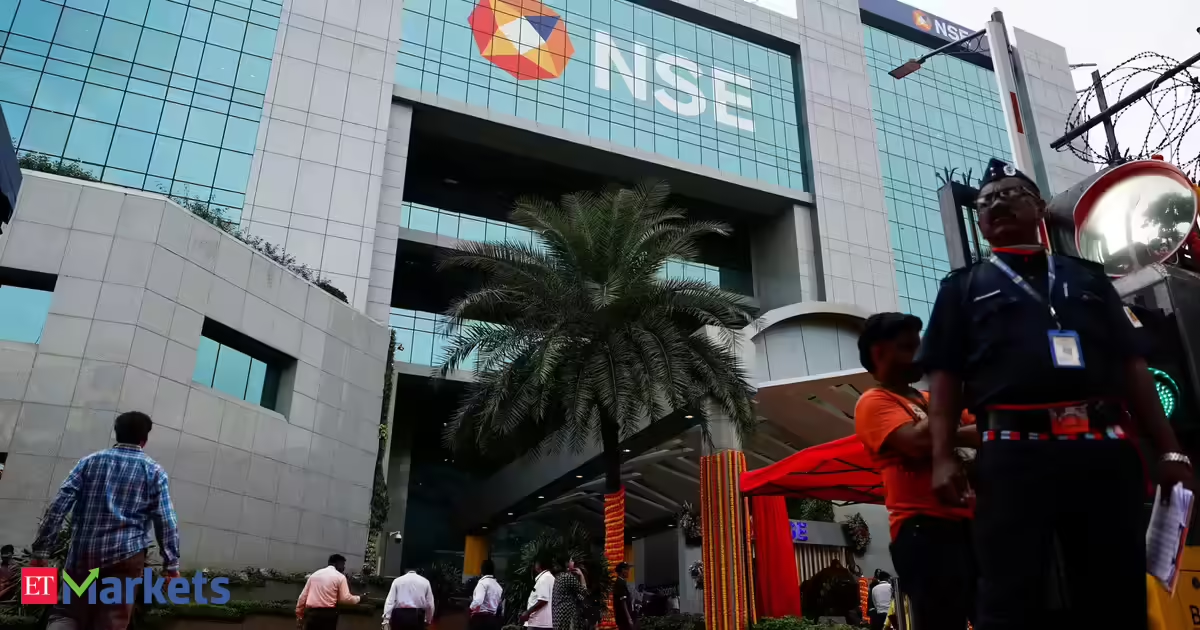
State Bank of India (SBI) is positioned to secure one of the most lucrative windfalls in recent years, as the National Stock Exchange (NSE)’s much-awaited mega Rs 30,000 crore IPO will monetise decades of patient capital with an astronomical 256,775% profit for the country’s largest lender.The proposed Rs 30,000 crore issue, which is structured entirely as an offer for sale (OFS) of up to 148.9 million shares representing nearly 6% of NSE's paid-up capital, is poised to become the largest-ever IPO in India. It eclipses the Rs 27,000 crore record held by Hyundai Motor India's 2024 listing, though Reliance Industries Ltd.'s Jio is also planning an IPO that could be larger but has yet to file papers. Because regulations prohibit a stock exchange from self-listing, the NSE will be listed on rival BSE.Also Read | NSE IPO: 10 key things investors need to know about India’s largest IPO in historyThe Rs 5,000 Crore JackpotFor State Bank of India (SBI), the listing represents an unprecedented valuation unlock. The lender is selling 24,750,000 equity shares, which it originally acquired between 1993 and 1999 at an average cost of just 80 paise apiece, representing an initial investment of Rs 1.98 crore (approx. Rs 2 crore).Based on Wednesday's unlisted market closing price of Rs 2,055 per share, which values the NSE at around Rs 5 lakh crore, SBI stands to gain roughly Rs 5,086.13 crore from the sale. That translates to an almost 2,568-fold gain, a figure that does not even account for the value increase of its remaining, unsold holdings.Beyond SBI, a cluster of public sector and foreign institutions are putting up parts of their stakes, yielding extraordinary asymmetric returns.The New India Assurance Company Ltd. and National Insurance Company Limited boast the lowest cost of acquisition at just 32 paise per share, positioning them for as much as 6,422 times returns. The Stock Holding Corporation of India is selling approximately 11 million shares acquired at a cost of 46 paise per share, tracking toward a 4,467-fold return.Temasek Holdings Pte, the Singaporean sovereign wealth fund, is shedding about 11.25 million shares via Aranda Investments for 33x return, while global investment bank Morgan Stanley is on track for an estimated 31-fold return on its investment.Also Read | NSE files DRHP for mega $3 billion IPO, SBI among 10 investors to sell stakeFor long-time shareholders, the IPO is more than just a liquidity event. It represents the end of years of uncertainty and provides a rare opportunity to monetise investments that have generated extraordinary paper returns while remaining largely illiquid.Many investors have been seeking an exit since NSE, the operator of the world’s busiest derivatives market, first attempted to go public in 2016 with a plan that was derailed by regulatory and legal hurdles.The pressure to list has built relentlessly as NSE’s value soared over the past decade, driven by expanding domestic capital markets and surging retail participation. The exchange now completely dominates domestic equity derivatives trading and has emerged as one of the world’s largest exchanges by contracts traded. Over the past month alone, NSE shares in the unlisted market have climbed by 3.28%.Even shareholders sitting out the offering stand to secure massive accounting gains through a sharp revaluation of their ownership.Life Insurance Corporation of India (LIC), the exchange's single largest shareholder with a stake of almost 11%, is not participating in the OFS. LIC was among the very first institutions to subscribe to NSE’s shares back in 1992 and will retain its position intact.According to the Draft Red Herring Prospectus (DRHP), up to 50% of the shares in the blockbuster IPO will be allocated to qualified institutional buyers (QIBs), not less than 15% will be reserved for non-institutional bidders, and 35% will be set aside for retail investors.(Disclaimer: Recommendations, suggestions, views and opinions given by the experts are their own. These do not represent the views of The Economic Times)
From Rs 2 crore to Rs 5,000 crore! How NSE IPO is a jackpot for SBI with 256,775% profit
State Bank of India anticipates a massive Rs 5,000 crore profit from the National Stock Exchange's upcoming Rs 30,000 crore IPO. This IPO is set to be India's largest ever. Many long-term investors are also poised for extraordinary returns on their initial investments. The NSE's listing on the BSE follows years of anticipation and regulatory hurdles.
646 words~3 min read