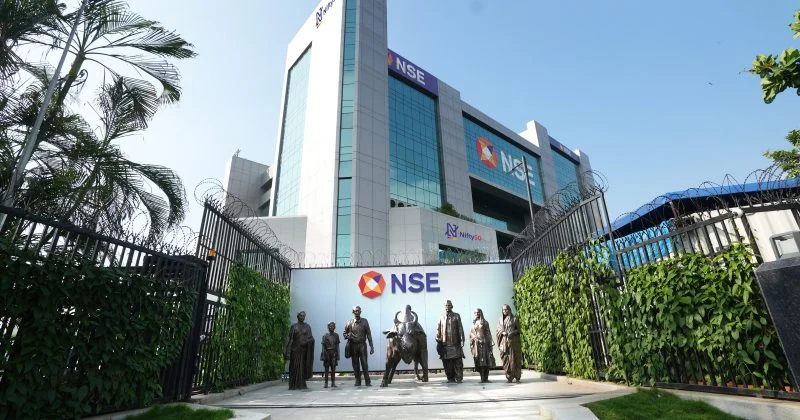
India's largest stock exchange, the National Stock Exchange (NSE), has taken a major step towards its long-awaited stock market debut by filing draft papers for an initial public offering (IPO). The issue is expected to be worth around ₹30,000 crore, making it the largest IPO in Indian history.The National Stock Exchange has filed draft papers for its long-awaited IPO, which could become the largest public issue in India. (REUTERS)The filing comes after years of delays stemming from regulatory hurdles and allegations, marking a significant milestone for India's capital markets. Here's what investors need to know.Also read: Biggest public offering in India: NSE to file for IPO at nearly ₹30,000 crore; LIC to stay putWhy is the NSE IPO significant?The NSE is India's largest stock exchange and one of the world's busiest derivatives markets. The exchange has been attempting to go public for nearly a decade, but the process was delayed due to regulatory and legal issues.With the filing of the Draft Red Herring Prospectus (DRHP), the listing process has moved into a formal stage. Market participants expect the issue to be among the largest public offerings ever seen in the country.How big is the IPO?According to multiple reports, the IPO is expected to raise around ₹30,000 crore, which is almost 6% of the paid-up capital. Up to 148,905,525 Equity shares of face value ₹1 will be listed. Based on valuations in the unlisted market, NSE is estimated to be worth about ₹5 lakh crore.If the IPO succeeds, the issue will surpass the previous record-breaking listings of Hyundai Motor India Ltd's ₹27,859 and become the largest IPO in India's history.Will NSE receive fresh funds from the issue?The proposed public issue is expected to be entirely an Offer for Sale (OFS). This means existing shareholders will sell a portion of their holdings, while the exchange itself will not receive fresh capital from the IPO.Among the shareholders expected to participate are several domestic and international investors, including institutions such as State Bank of India, Canada Pension Plan Investment Board, affiliates of Morgan Stanley, Temasek, Bank of Baroda, Stock Holding Corp. of India, General Insurance Corp of India, The New India Assurance Co, National Insurance Co. and United India Insurance Co.Why was the IPO delayed for so long, and where will it be listedNSE first explored listing plans in 2016, but regulatory concerns and investigations, including issues linked to the co-location matter, delayed the process.The exchange received a no-objection certificate (NOC) from the Securities and Exchange Board of India (SEBI) earlier this year, clearing a major hurdle for the listing process.The filing of draft papers now signals that the exchange is moving ahead with preparations for its public market debut.Since a stock exchange cannot list its own shares on its own platform, NSE's shares are expected to trade on its rival, BSE, after the IPO. The listing will allow public investors to buy and sell NSE shares through the regular stock market mechanism. MUFG Intime India Private Limited will be the registrar.Also read: SEBI set to clear the way for NSE IPO in as early as JanuaryHow strong are NSE's finances?According to Reuters, NSE reported total income of about ₹187 billion and a net profit of ₹103.02 billion for the financial year ended March 2026. The exchange remains one of the most profitable financial market infrastructure institutions in the country.Its dominant position in equity and derivatives trading has helped it maintain strong earnings and a large investor base.What happens next?After filing the DRHP, NSE will need to complete the regulatory review process before announcing the IPO timeline, price details and subscription schedule. The final launch date has not yet been announced.For investors, the IPO will represent a rare opportunity to buy shares in India's largest stock exchange, an institution that sits at the centre of the country's financial markets.With its expected ₹30,000 crore size and nearly decade-long wait for listing, the NSE IPO is likely to be among the most closely watched public offerings in recent years.
NSE's ₹30,000 crore IPO explained: Why it matters and what investors should know
The National Stock Exchange (NSE) has filed for its initial public offering (IPO) worth ₹30,000 crore, marking India's largest-ever IPO. | Business News
663 words~3 min read