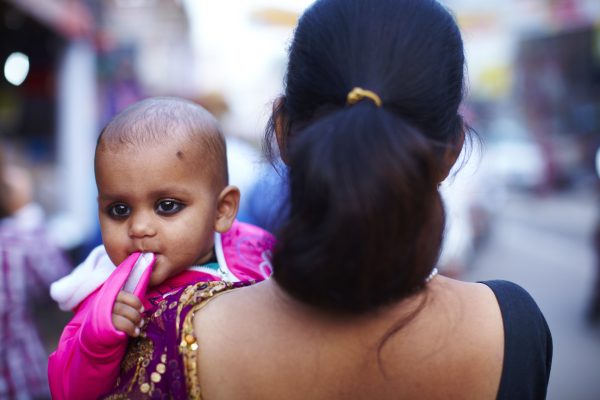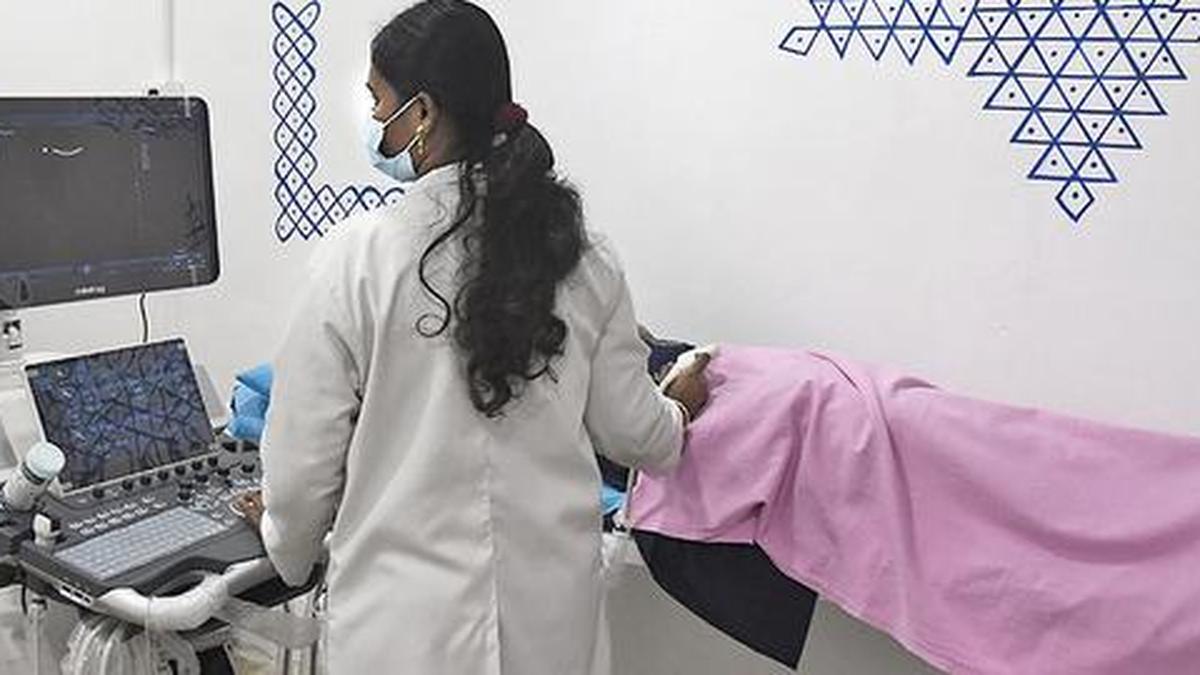
Less than 10% of Indian respondents said they would prefer to have three, four or more children
| Photo Credit: JOTHI RAMALINGAM B
On May 16, Andhra Pradesh Chief Minister N. Chandrababu Naidu announced a one-time incentive of ₹30,000 for the third child and ₹40,000 for the fourth. He said that these incentives were a part of the State’s new population management policy to encourage population growth.On the surface, the incentives to have bigger families may sound sensible with the latest National Family Health Survey (NFHS-6) report for the year 2023-24 placing the State’s fertility level at 1.8, which is below the replacement level of 2.1. However, a closer look warrants questions on at least three fronts: whether such an incentive is adequate for families to have more children; what the key reasons are for the dropping fertility rate; and whether such an intervention is necessary now.A comparison of this one-time cash incentive against basic expenditures shows that it cannot offset the childcare costs, a concern that is prompting families to rethink having more children.The government’s incentive is about twice the average cost of hospitalisation for childbirth in India, and a far smaller multiple of the cost in Andhra Pradesh. In fact, it is almost the same as the cost of hospitalisation for childbirth in the State’s urban area. In a State where more than 50% of births happen in private hospitals and about 52% of all deliveries happen through Caesarean sections, this incentive will just offset the hospitalisation cost in rural areas (Chart 2). It is also inadequate to cover the cost of C-sections in private hospitals in urban areas.For a family of five (assuming there are two adults and three children), this incentive is about 1.5 times their Monthly Per Capita Expenditure (MPCE) in rural areas and almost similar to the MPCE in urban areas, as per the Household Consumption Expenditure Survey for 2023-24. This means that the incentive could just help the families meet their consumption needs for one month, provided the same was not already spent in hospital during childbirth.Cannot afford childrenMoreover, the question around family planning has moved from whether families ‘should’ have more children to whether they can afford to. The United Nations Population Fund’s (UNFPA) ‘State of World Population Report 2025’ shows that financial limitations are the prime barrier to having children.Other barriers included housing limitations, followed by unemployment (or job insecurity), and the lack of quality and affordable childcare options. In many of these indicators, the share of Indians pointing to these concerns was much higher than the average share across the 14 countries that were surveyed for the report.The survey further pointed out that a larger share of Indian men and women preferred having either one or two children.Less than 10% of Indian respondents said they would prefer to have three, four or more children, which is almost on a par with the share of Indians who preferred having no children.It is noteworthy that the below-replacement fertility rate in Andhra Pradesh and across India does not mean that the population decline is imminent. The population will continue to increase, then stabilise and eventually begin to decline, which, for India, is likely to happen only in 2063 as per estimates.For instance, although Japan and South Korea’s fertility rates dropped below the replacement level in the late 1970s and the early 1980s respectively, their populations — which are less than 10% of India’s — began to decline only around 2010 and 2020.The data for the charts were sourced from the Household Consumption Expenditure Survey 2023-24, Household Social Consumption: Health 2025, NFHS-6, Our World in Data and the UNFPA Published - June 18, 2026 10:00 am IST