Nigeria is experiencing a cholera outbreak driven not just by the rainy season, but by deep-seated systemic failures. The recurring nature of these deadly waterborne outbreaks points directly to a double-edged crisis: critical preventive gaps and an increasingly fragile public health infrastructure, public health officials have warned.
At the heart of the country’s vulnerability is the absence of the Oral Cholera Vaccine (OCV) within the nation’s routine immunisation schedule. While universally recognised as a vital tool for outbreak containment, the vaccine remains completely unavailable in public health facilities, leaving households to seek it from private providers at high cost.
The waterborne disease has re-emerged in parts of Northern Nigeria, causing fatalities and infecting thousands, especially in Plateau and Borno States, while other states are ramping up surveillance and preparedness to prevent outbreaks.
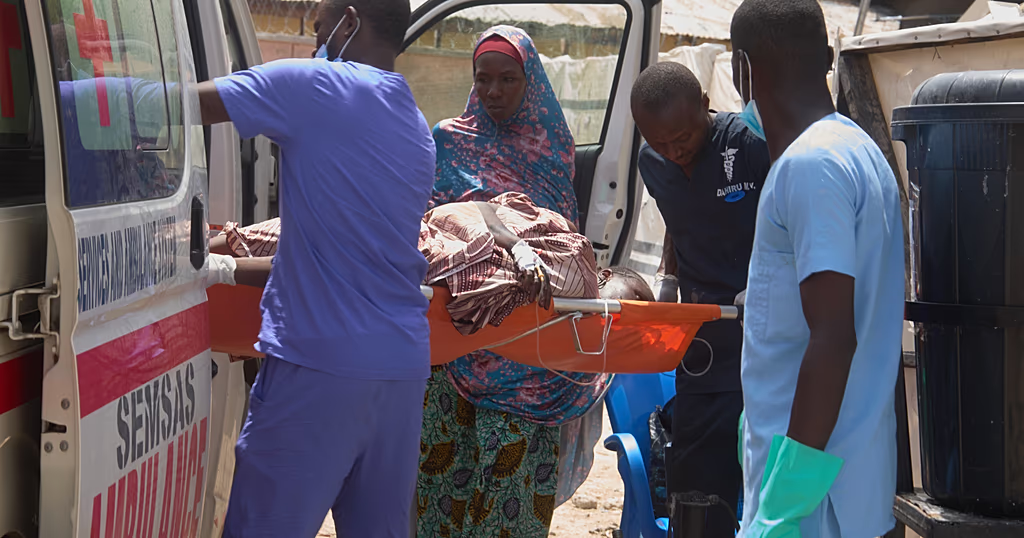
In Borno State, it has become a serious and rapidly escalating health emergency, starting in early May in Maiduguri and quickly spreading to several areas; over 74 people have so far died, while infecting nearly 8,000 people within weeks, a Médecins Sans Frontières report (commonly known as Doctors Without Borders) revealed last week.