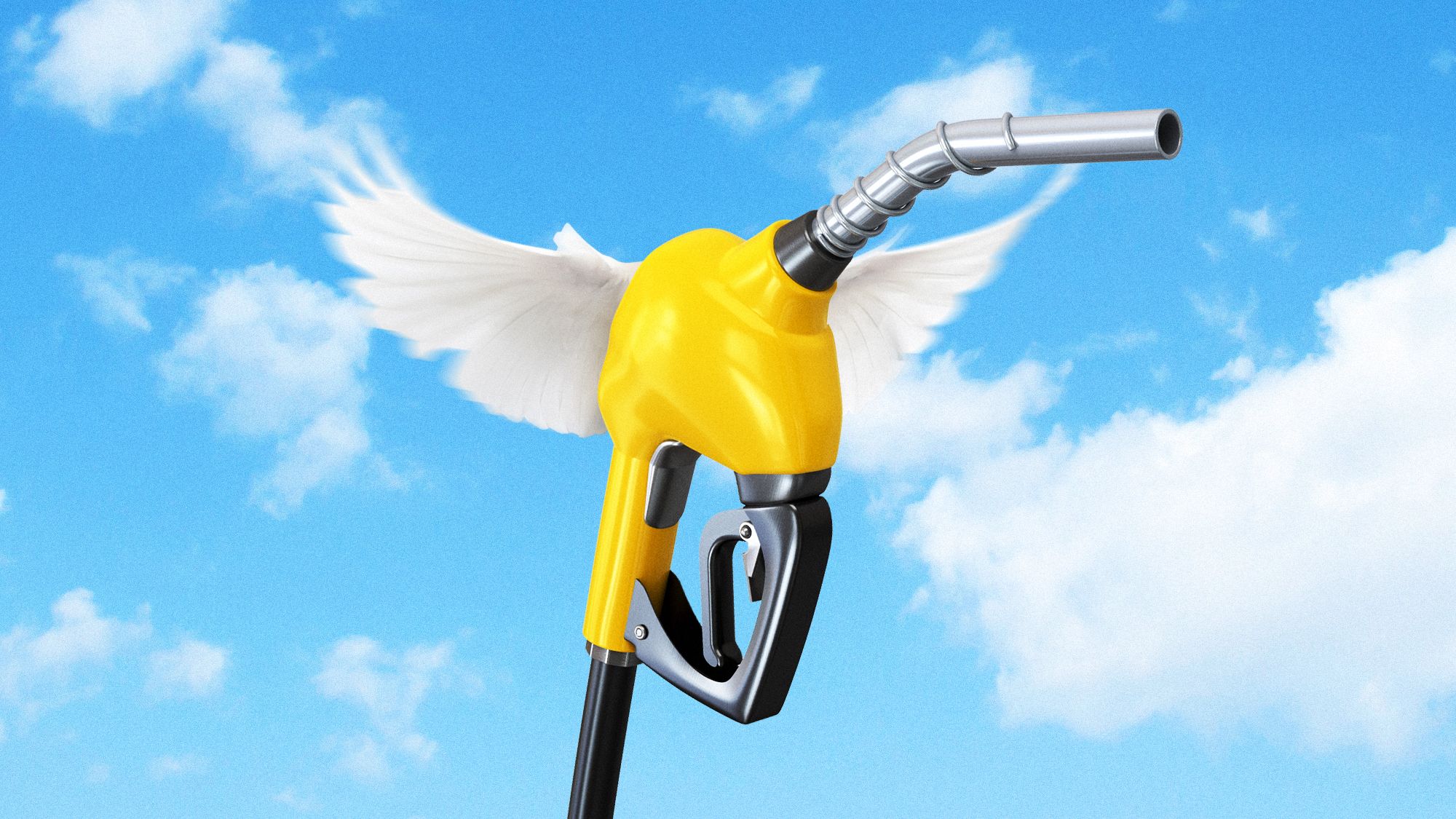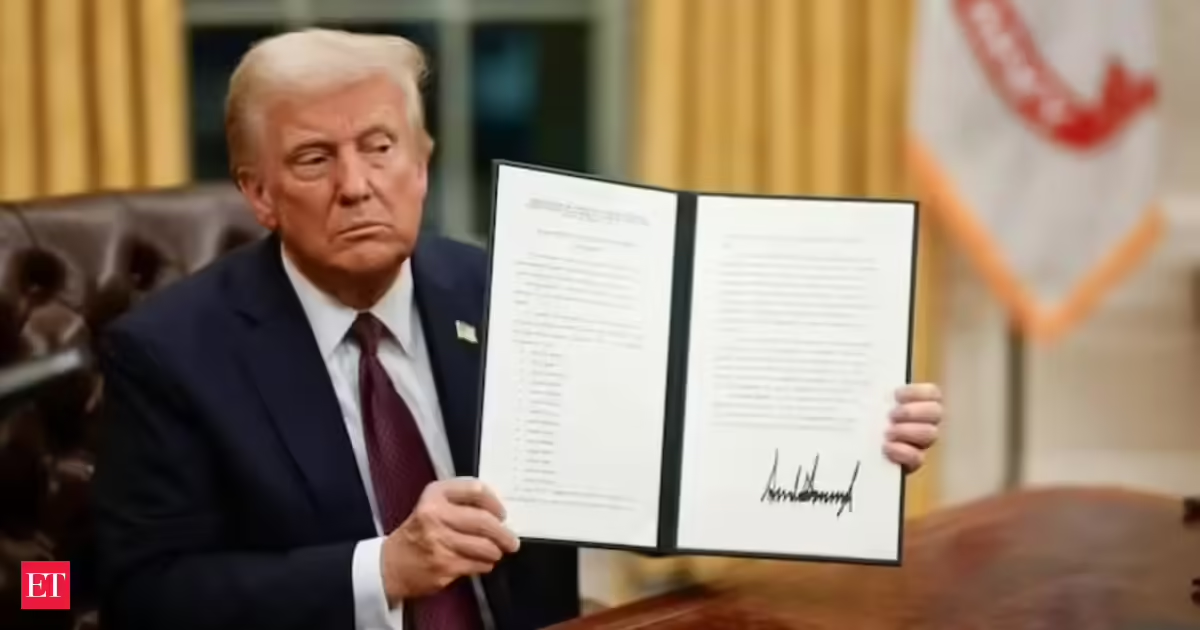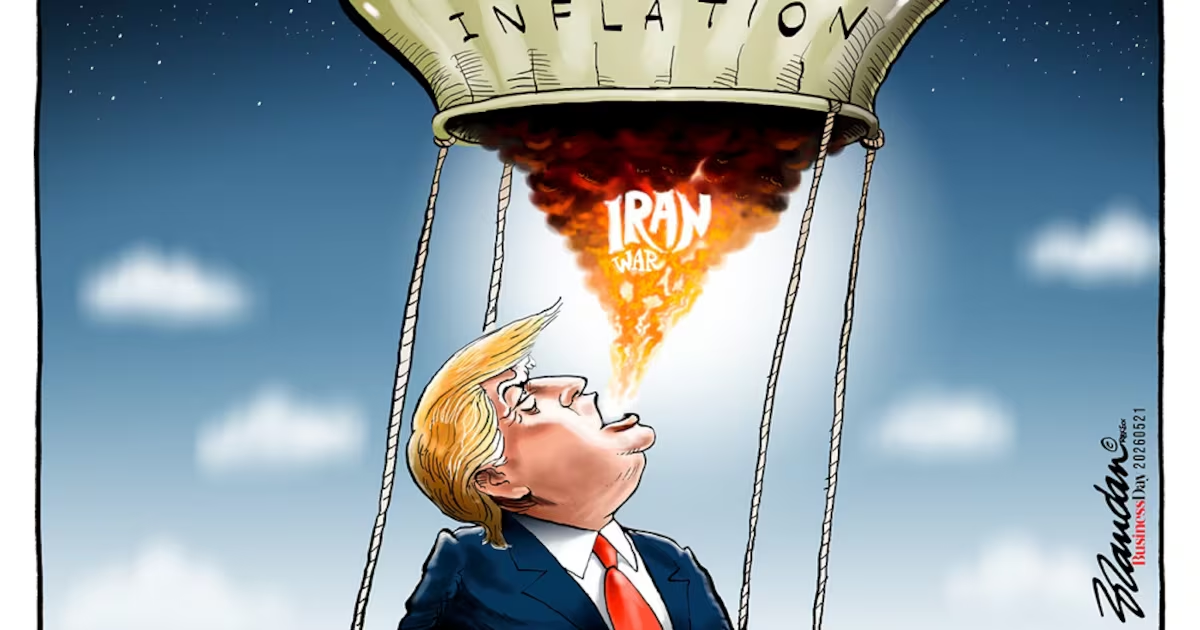
There can be only a few reasons why US President Donald Trump’s war on Iran has not caused the catastrophic oil/energy crisis that was expected to surpass the shock of 1973. While the price of oil has risen sharply and inflicted great pain on motorists and food prices around the world, it has not even approached the increase of nearly 300% it did in 1974. After Trump launched his attacks on February 28 oil topped out at about $120 a barrel, a rise of 83%. Petrol prices here have risen sharply but look to be falling quickly again now that the US and Iran have reached a ceasefire deal that might reopen the Strait of Hormuz. Either global demand for oil has been throttled by policy or the markets constantly pricing in a short war, or countries with large stockpiles have run them down rapidly during the past four months, or demand for oil has been naturally destroyed by new renewable technologies and the rise of electric vehicles, which accounted for 20% of car sales last year. Or the oil price is so inelastic new producers such as Canada and Angola are able to fill the supply gaps. But let’s not count our chickens before they hatch. Details of the peace deal between Iran and the US remain unofficial, but what has leaked so far is disaster for Trump. He has inflicted huge infrastructural damage on Iran, but not on the fanatics who run the country. If anything, hardliners there will emerge even more powerful. “Many presidents have tried to make peace with Iran,” he says now, but “all have failed except me”. Trump’s ignorance is reason enough to worry about any deal he may put his signature to. This one is supposed to be signed on Friday, and while its headline success is that the oil tankers trapped in the Strait of Hormuz may now be able to leave, the fact is that it was completely open before he and Israel attacked. Trump is fixing what he broke. How is that now a victory? The Iranian regime is intact, its people still subjugated, its nuclear programme may be damaged but its stock of highly enriched uranium is untouched. It seems the deal, from what we already know, does not affect its proxies hostile to Israel ― Hamas, Hezbollah and the Houthi in Yemen. It will receive up to $300bn in reparations from the Gulf neighbours it attacked in response to the US strikes and billions more in frozen assets. And as far as the Iranians are concerned, they will now control access to the Strait, perhaps along with Oman. All the Americans get is to go home ― its relationships with its traditional European and Asian allies badly bruised, its tactical weapons arsenal seriously depleted, the chances of it attacking again, no matter how badly the Iranians may behave, almost zero, and the Israelis enraged. The deal is simply a ceasefire to allow talks about talks. The two sides will then have 60 days to fully negotiate the future of Iran’s uranium and its nuclear programme, full right of passage for shipping into the strait, the reparations and unfreezing of sanctioned assets. That’s not nearly enough time and, probably worse for Trump, he has left Israeli Prime Minister Benjamin Netanyahu angry at not being included in negotiating the deal. This will have consequences back in the US and the Middle East. The whole affair will, if anything, hasten Chinese efforts to ensure they are even more free from destructive American pressure ― be it on AI or oil. If there’s more than one way to get oil out of Iran the Chinese will simply build it. South Africa must also be smart now. The last thing we need as the government tries to normalise relations with the US are senior military figures or ANC leaders dashing off to Iran to commiserate. The mullahs we talk to murder their own people. Instead, we should be sprinting away from oil and the absurd and highly corruptible plans to introduce natural gas into our energy mix. We have no experience with liquefied natural gas and no control over its prices. We are poor, but our industrial future, if we are to have one, must involve the rapid introduction of the manufacture of electric vehicles for export and incentives to buy them for use at home. We have a solid base for the next 25 years of coal-fired base-load power. The future must be renewables and, in careful measure, clean nuclear power. And we have the time and space to do it all openly and democratically, rather than behind the backs of the public. • Bruce is a former editor of Business Day and the Financial Mail.
PETER BRUCE | Trump’s Iran deal leaves allies angry and fanatics in charge
Israel sidelined as ceasefire weakens US alliances and empowers Tehran hardliners
794 words~4 min read