cyber-crime
Latest Interpol review shows how scams continue to dominate, and AI-enabled attackers prove too hot to handle for cash-strapped regions
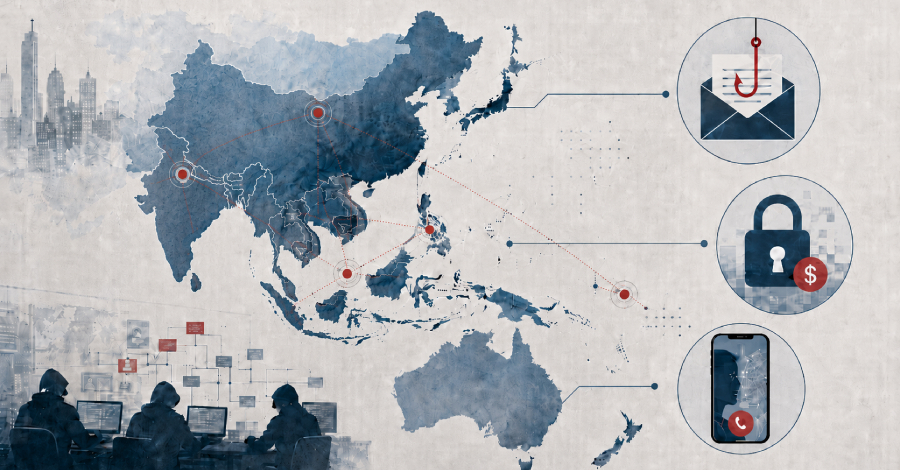
Cybercrime now accounts for more than 30 percent of all offenses across the Asia and South Pacific (ASP) region, according to the latest figures from Interpol.The international cop shop said on Wednesday that the region has seen “a dramatic increase” in the number of recorded cybercrimes, driven largely by an uptake of digital infrastructure, new technologies, and the increasingly organized nature of criminal networks.Interpol’s latest ASP Cyberthreat Assessment Report states that online scams and phishing attacks dominate cybercrime in the region. Data taken from 2024-2025 shows that phishing campaigns have matured beyond the spray-and-pray mass emails of yesteryear and now resemble the more sophisticated techniques deployed elsewhere in the world.
Targeted spear phishing is more common nowadays, and the growing use of AI helps even low-skilled script kiddies to apply a layer of authenticity to their attacks.
The region’s problem with organized scamming gangs that run camps where hundreds of people are compelled to commit crimes is especially pronounced and well-documented.A United Nations report published last year described scam call centers across Southeast Asia as an epidemic that is metastasizing across the region “like a cancer.”These compounds can be found across countries such as Cambodia, Laos, Myanmar, and the Philippines, and often see vulnerable individuals trafficked into the scam centers to work under poor conditions – or even as slaves.Interpol cited Singaporean research, which estimated the regional scam industry generates close to $40 billion each year.AI tools, especially those capable of generating convincing deepfake imagery, have also proven popular with cybercriminals across ASP, just as they have beyond the region.In 2024, the same scam compounds were found using deepfake imagery to support romance scams.In February 2024, an employee at a multinational business in Hong Kong was duped into authorizing a $25 million payment because the faces of company execs were convincingly deepfaked on a video call.A similar case was also reported in Singapore in March 2025, when a finance director at a different multinational was tricked into transferring more than $499 million following a Zoom call in which fraudsters assumed the identities of company chiefs, including the CEO and CFO.