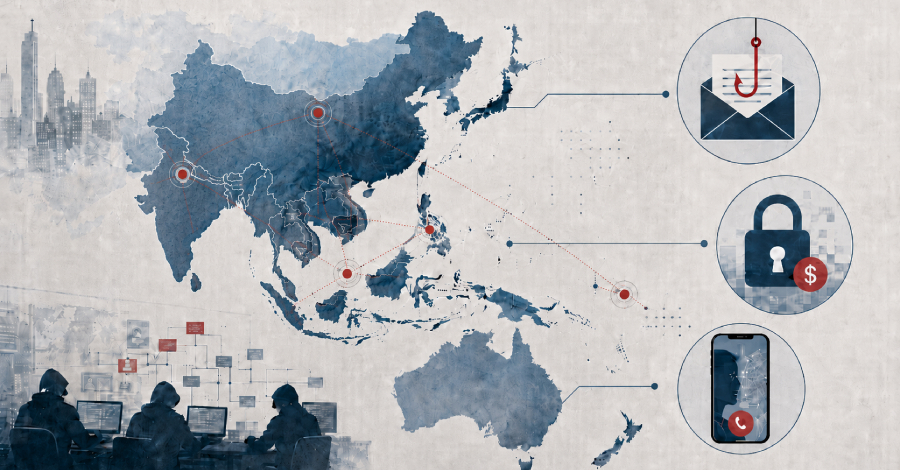
The figure that reframes the problem is a share, not a sum. In more than half the countries Interpol surveyed for its latest Asia and South Pacific cyber-threat assessment, cybercrime now accounts for around 30% of all crime recorded nationally.
That is the line that turns scams and phishing from a category of nuisance into a structural feature of the regional crime economy. When nearly a third of recorded offences happen through a screen, cybercrime is no longer a specialism. It is the main event.
The report, published this week, describes a region where rapid digitalisation, new tools and increasingly organised criminal networks have combined to drive crime online faster than enforcement can follow.
Phishing and related scam techniques have become the most widespread and most financially damaging form, with a third of the countries surveyed reporting more than 10,000 cases each. The pattern is consistent enough across borders to suggest coordination rather than coincidence.
The 💜 of EU techThe latest rumblings from the EU tech scene, a story from our wise ol' founder Boris, and some questionable AI art. It's free, every week, in your inbox. Sign up now!That coordination has a physical geography. In Cambodia, Laos, Myanmar and the Philippines, transnational organised-crime groups have built extensive scam centres, compounds that operate at industrial scale and, by Interpol’s account, frequently rely on forced labour.