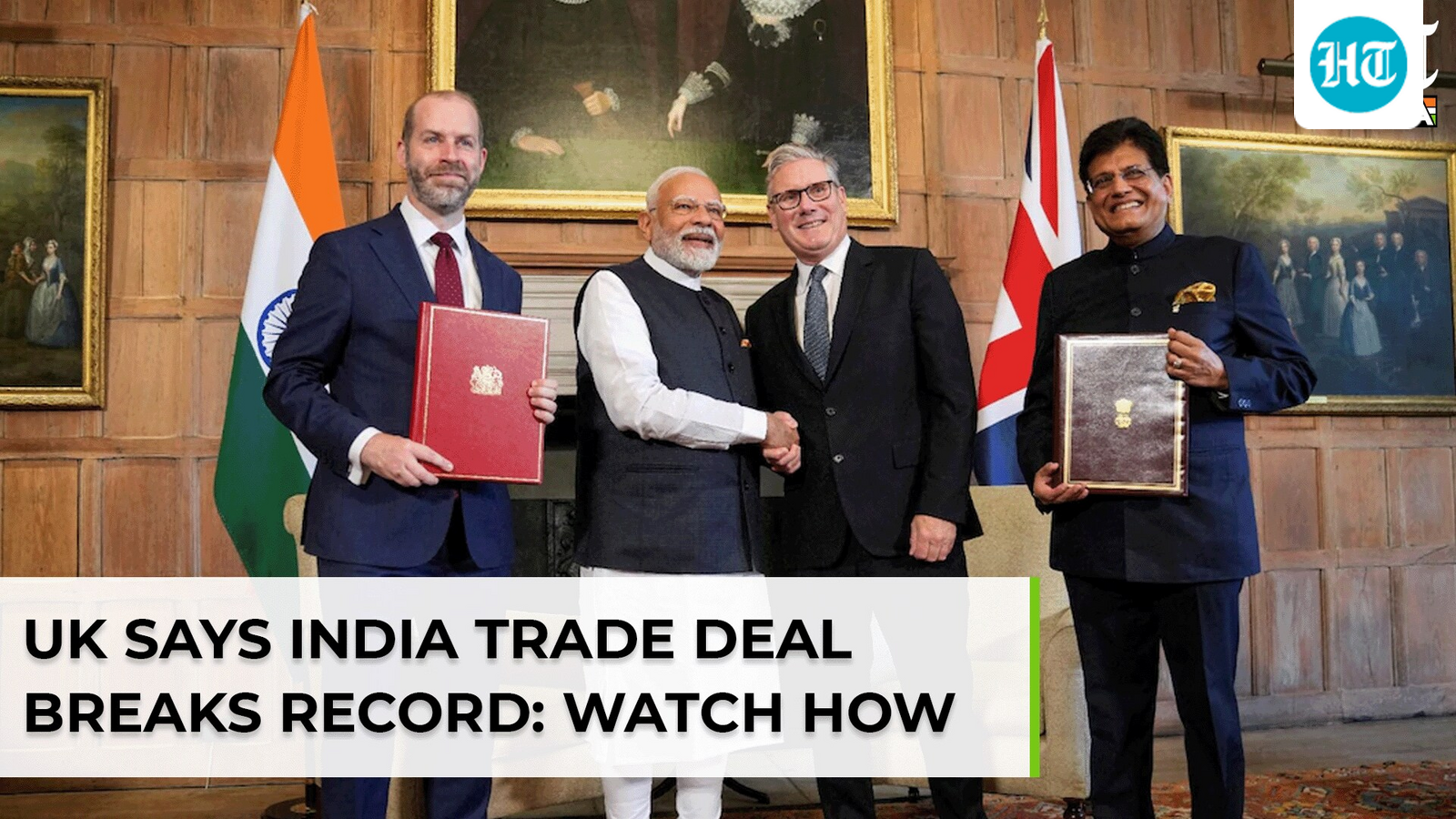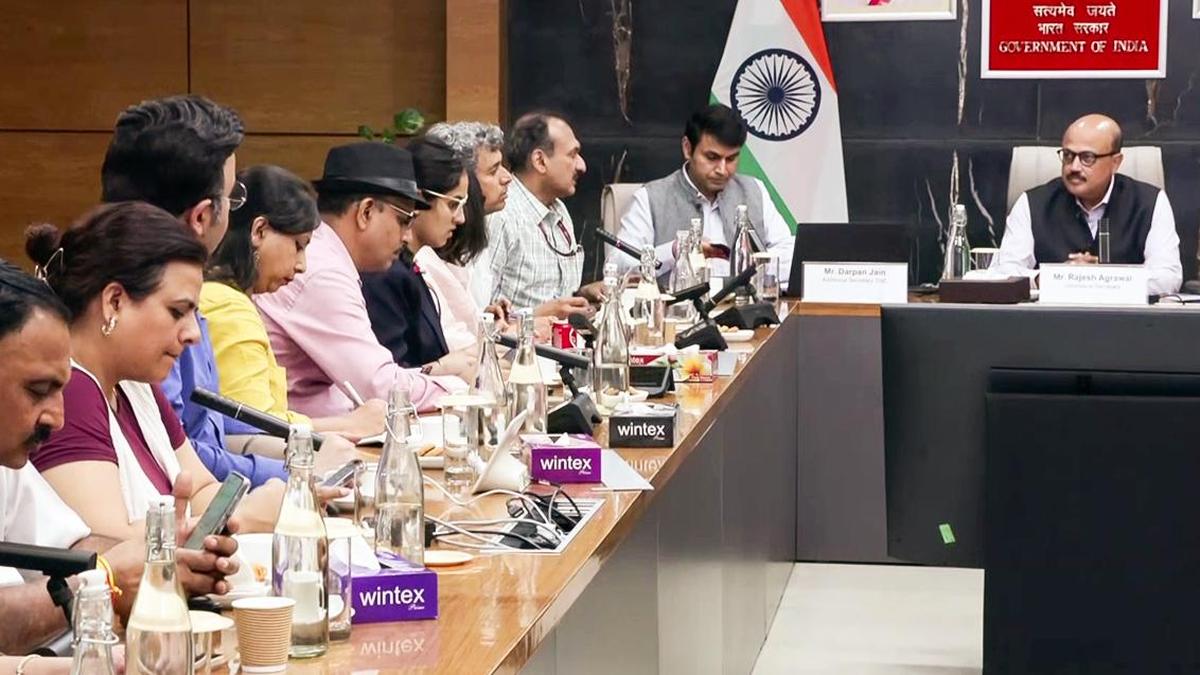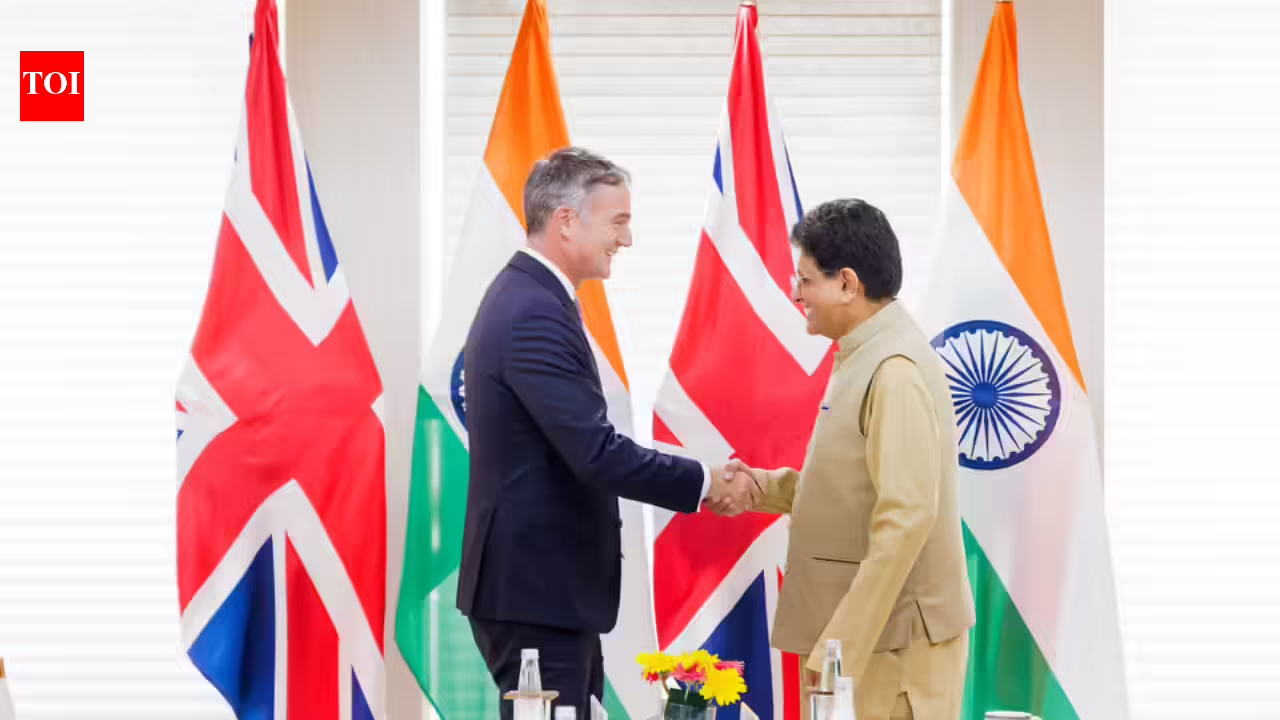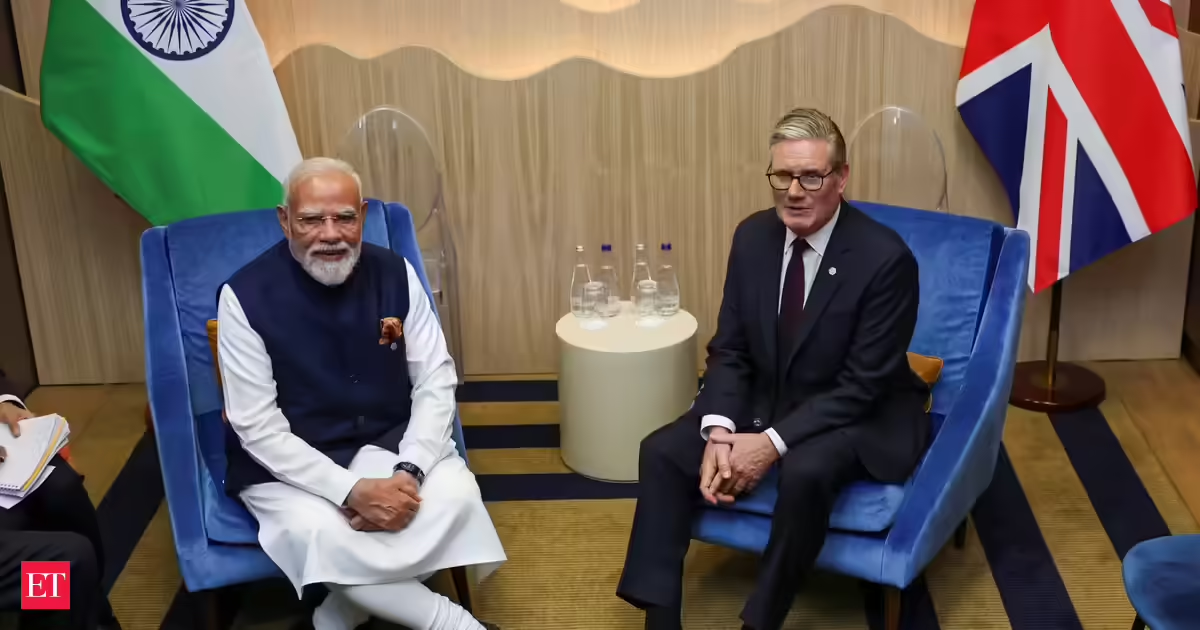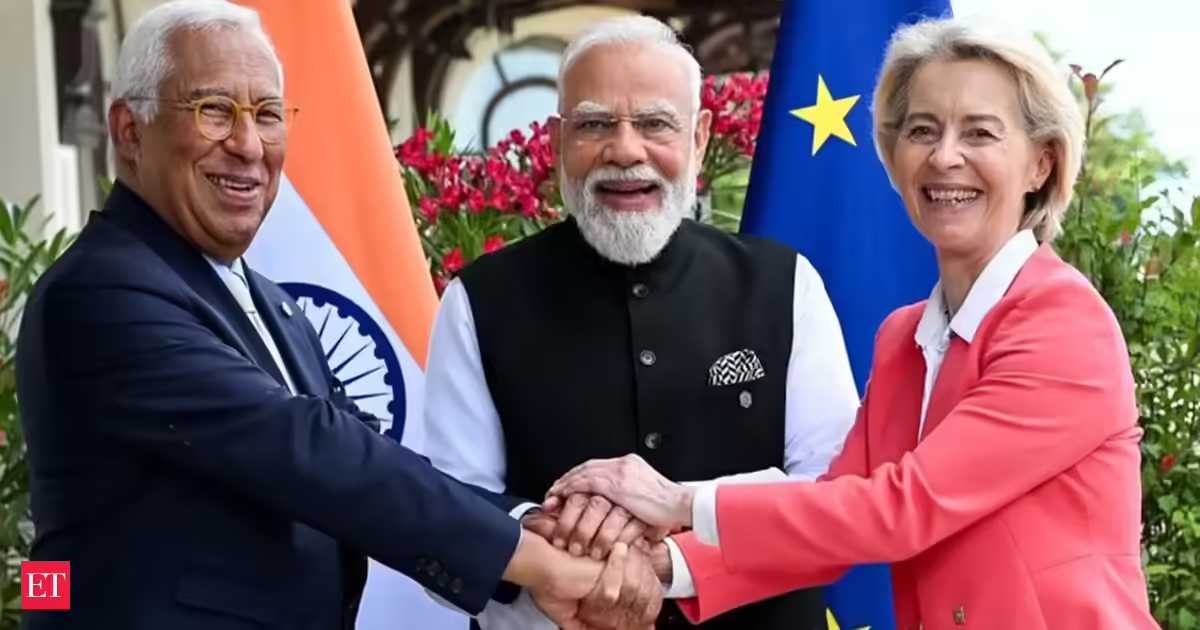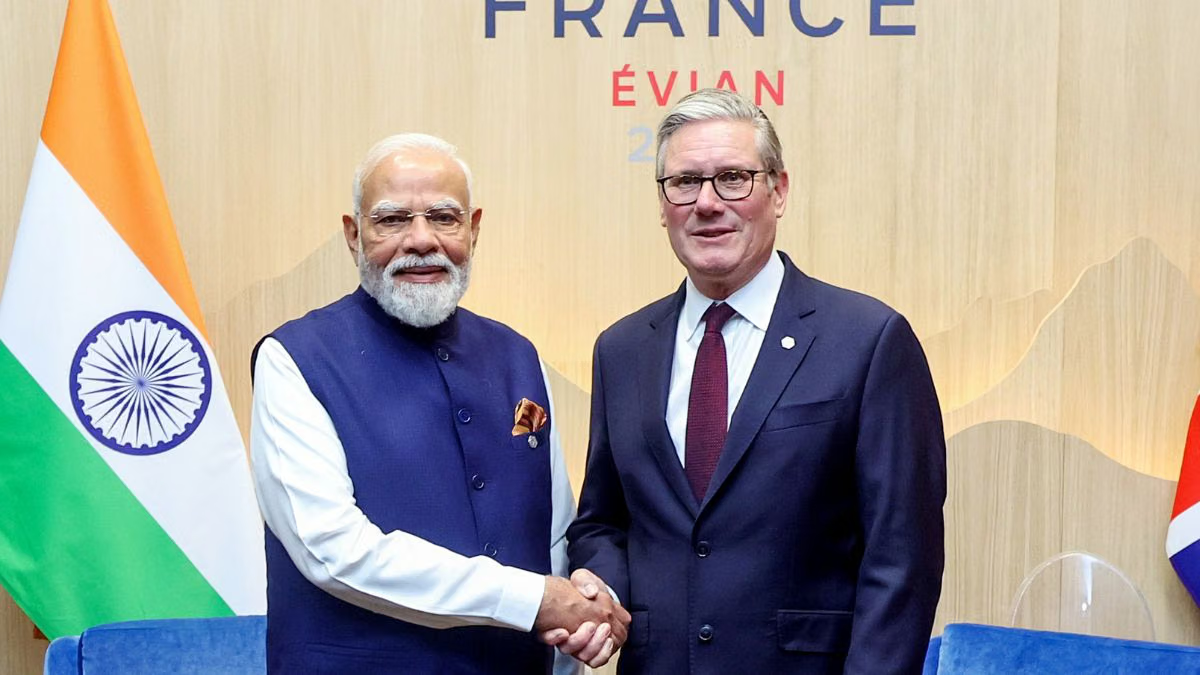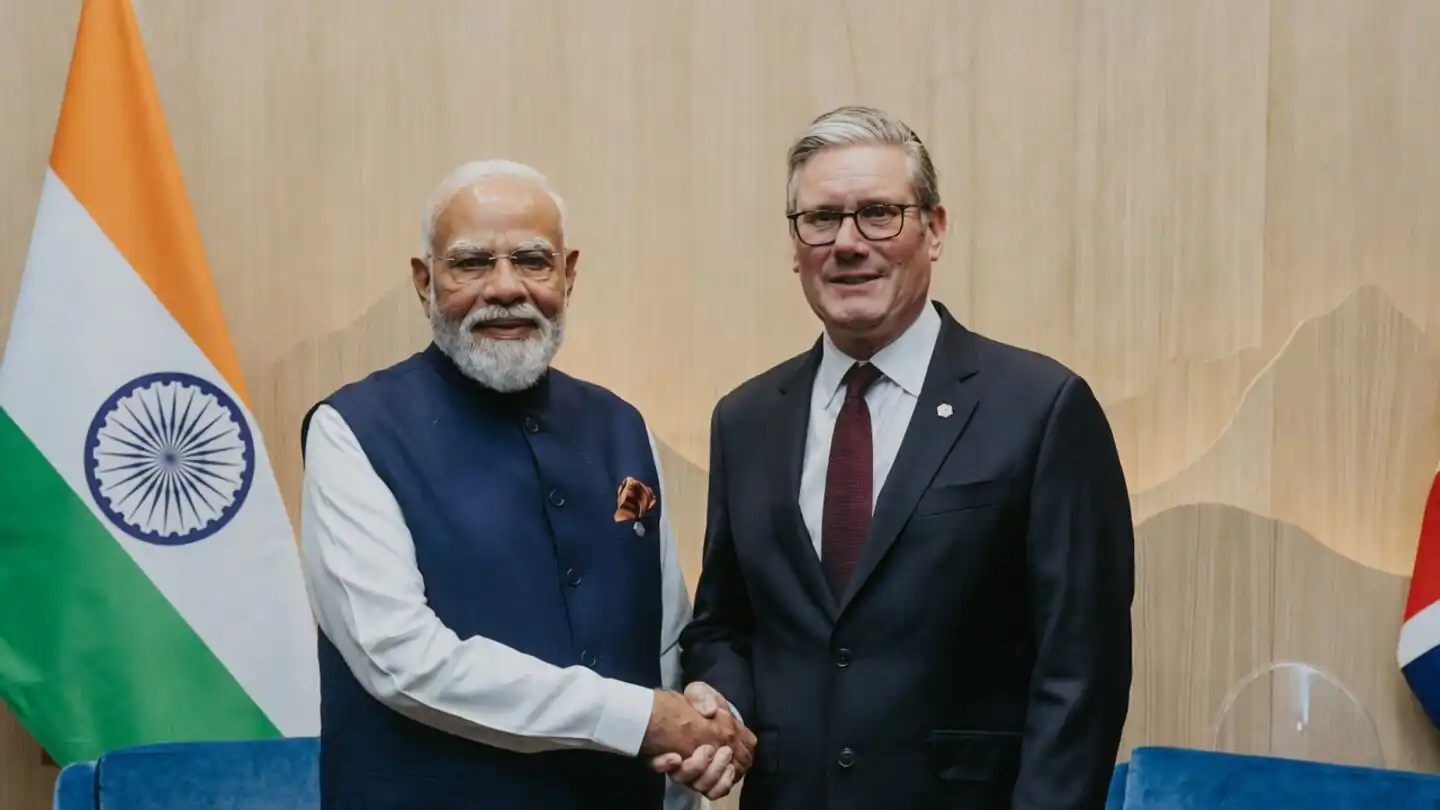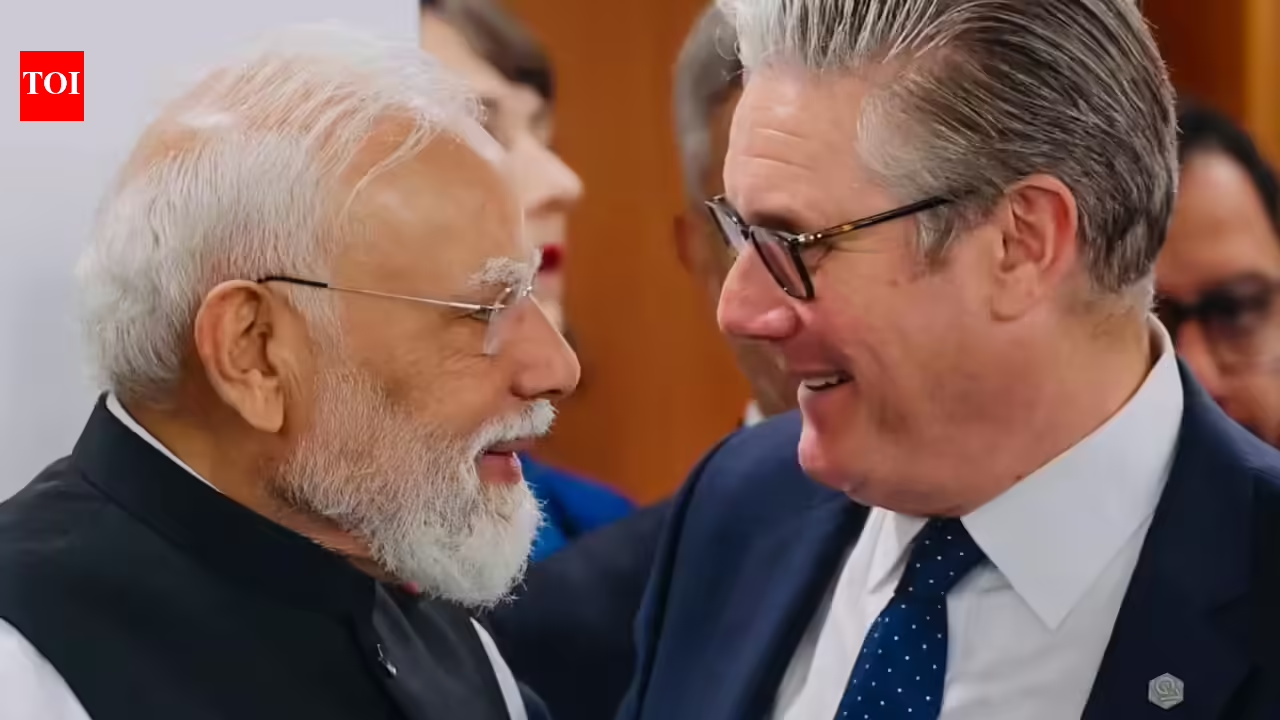
India and the UK announced Wednesday that their bilateral Comprehensive Economic and Trade Agreement (CETA) will enter into force on July 15, with Prime Minister Narendra Modi and his UK counterpart Keir Starmer jointly confirming the date in what London described as the fastest implementation of a trade deal following signature in British history.The deal is projected to expand bilateral trade by £25.5 billion a year in the long run and lift UK GDP by £4.8 billion and Indian GDP by £5.1 billion annually. It liberalises 99% of UK tariffs and 90% of Indian tariffs. (DD)Modi, in a social media post, called it “a historic milestone for India-UK relations” and said the agreement would “significantly boost bilateral trade and investment” and open opportunities for Indian farmers, workers, MSMEs, startups and innovators.“In a major stride for India’s global economic engagement, India and the United Kingdom today announced that the CETA will enter into force on 15th July 2026,” India’s commerce ministry said in a statement.Implementation of the FTA, which was signed on July 24, 2025, was delayed first by regulatory approvals and later by London’s move to protect its domestic industry by imposing steel safeguard measures. This became a sticking point as the UK’s move would have allowed duty-free access to only 60% of Indian steel by volume in Britain from July 1. After negotiations, London agreed to raise the duty-free quota for India to 85%.Also Read | ‘Forward-looking highway’: India, UK seal maritime, crucial mineral pactsThe commerce ministry confirmed the development, saying both sides had “successfully reached a landmark consensus to safeguard and promote bilateral steel trade.”The issue was resolved after India cautioned British negotiators that any such afterthoughts could force New Delhi to reconsider tariff concessions it offered to the UK under CETA on products such as Scotch whisky.“Following constructive deliberations regarding the UK’s upcoming steel measures effective July 1, 2026, both sides mutually agreed to protect commercial interests, minimize market disruptions, and ensure an overall balanced and stable trading environment for exporters,” the ministry said. “85% of India’s exports are out of the Steel measures. On the lines under the Steel measures India’s interest has been protected through a mix of CSQ [country specific quota], residual quota and access under Authorised Use Scheme (AUS),” it added.The deal is projected to expand bilateral trade by £25.5 billion a year in the long run and lift UK GDP by £4.8 billion and Indian GDP by £5.1 billion annually. It liberalises 99% of UK tariffs and 90% of Indian tariffs.The British High Commission (BHC) called it “the most comprehensive trade deal India has ever brought into force.”Tariff reductions take effect across a wide range of sectors from day one. Scotch whisky duties drop from 150% to 40%; automotive tariffs fall from 100% to 10% under a quota; and cosmetics tariffs of up to 22% are eliminated either immediately or in stages.The UK will also cut tariffs on Indian clothing, footwear, and some food products — reductions that, the BHC said, could translate into cheaper prices and more choice for British consumers.Commerce Secretary Rajesh Agrawal had said on Monday that a team of Indian trade officials was in London working through issues that had emerged after signing, chief among them British steel safeguard measures and the UK’s Carbon Border Adjustment Mechanism (CBAM).“We are bringing our landmark trade deal with India into force as quickly as we can because we want businesses in both India and the UK to immediately feel the benefits of 99% of UK tariffs and 90% of Indian tariffs being liberalised,” UK Business and Trade Secretary Peter Kyle said. “Trade is going to be cheaper, quicker, and easier for businesses on both sides.” The deal, he said, would take a £48 billion bilateral trading relationship “to the next level.”Alongside CETA, the Agreement on Social Security — referred to as the Double Contribution Convention (DCC) — will also come into effect on July 15, the commerce ministry said.The DCC extends the period from 36 months to 60 months during which UK nationals working in India, and Indian professionals in the UK, contribute to their home social security systems without incurring dual liability.The arrangement, applicable to highly skilled professionals on pre-existing visa routes, mirrors similar conventions the UK has with South Korea, Japan, and Canada.The India-UK operationalisation comes amid a burst of trade diplomacy for New Delhi. On the sidelines of the G7 Summit in Evian, Modi met European Council President António Costa and European Commission President Ursula von der Leyen on Wednesday to push for faster progress on the India-EU FTA — concluded less than five months ago — with both sides indicating the agreement would be signed by year-end.Costa and von der Leyen described it as the “mother of all trade deals” and said the two sides would also accelerate work on an investment agreement and advance the India-Middle East-Europe Economic Corridor (IMEC).A day earlier, also at Evian, Modi and Canadian Prime Minister Mark Carney agreed to conclude FTA negotiations by year-end and announced the launch of a General Security of Information Agreement — a framework to enable the sharing of sensitive defence intelligence — as both leaders expressed satisfaction at the pace of bilateral reset after several troubled years.
'Fastest implementation': India-UK free trade agreement to take effect July 15
Implementation of the FTA, which was signed on July 24, 2025, was delayed first by regulatory approvals. | India News
871 words~4 min read