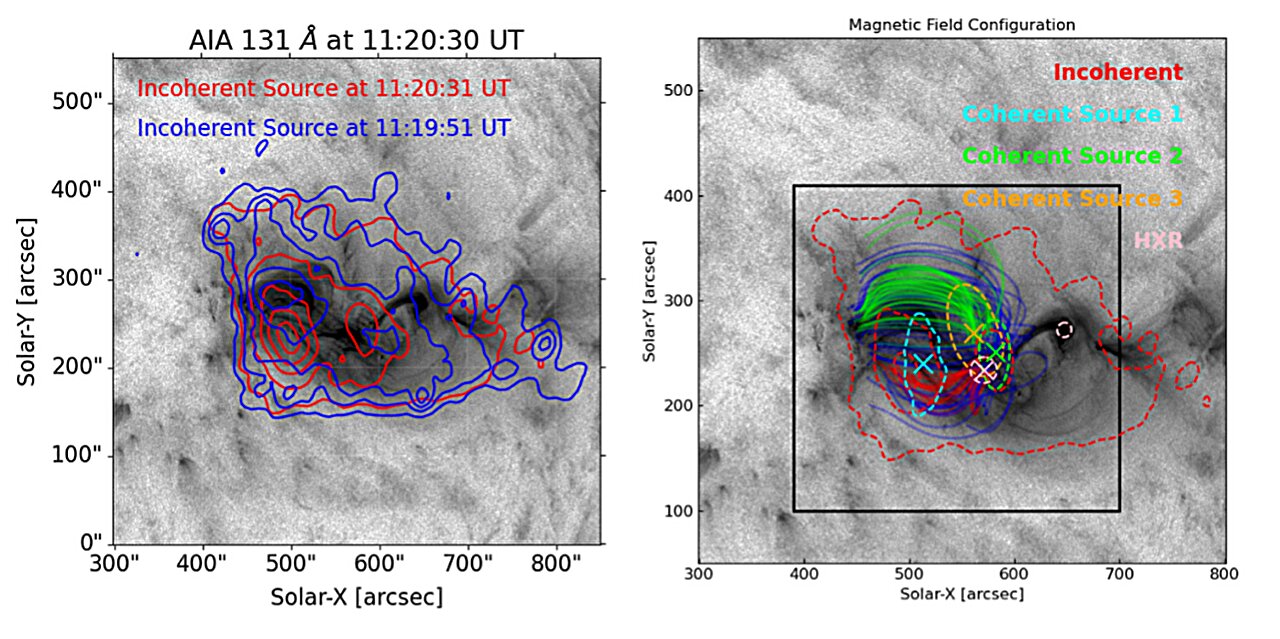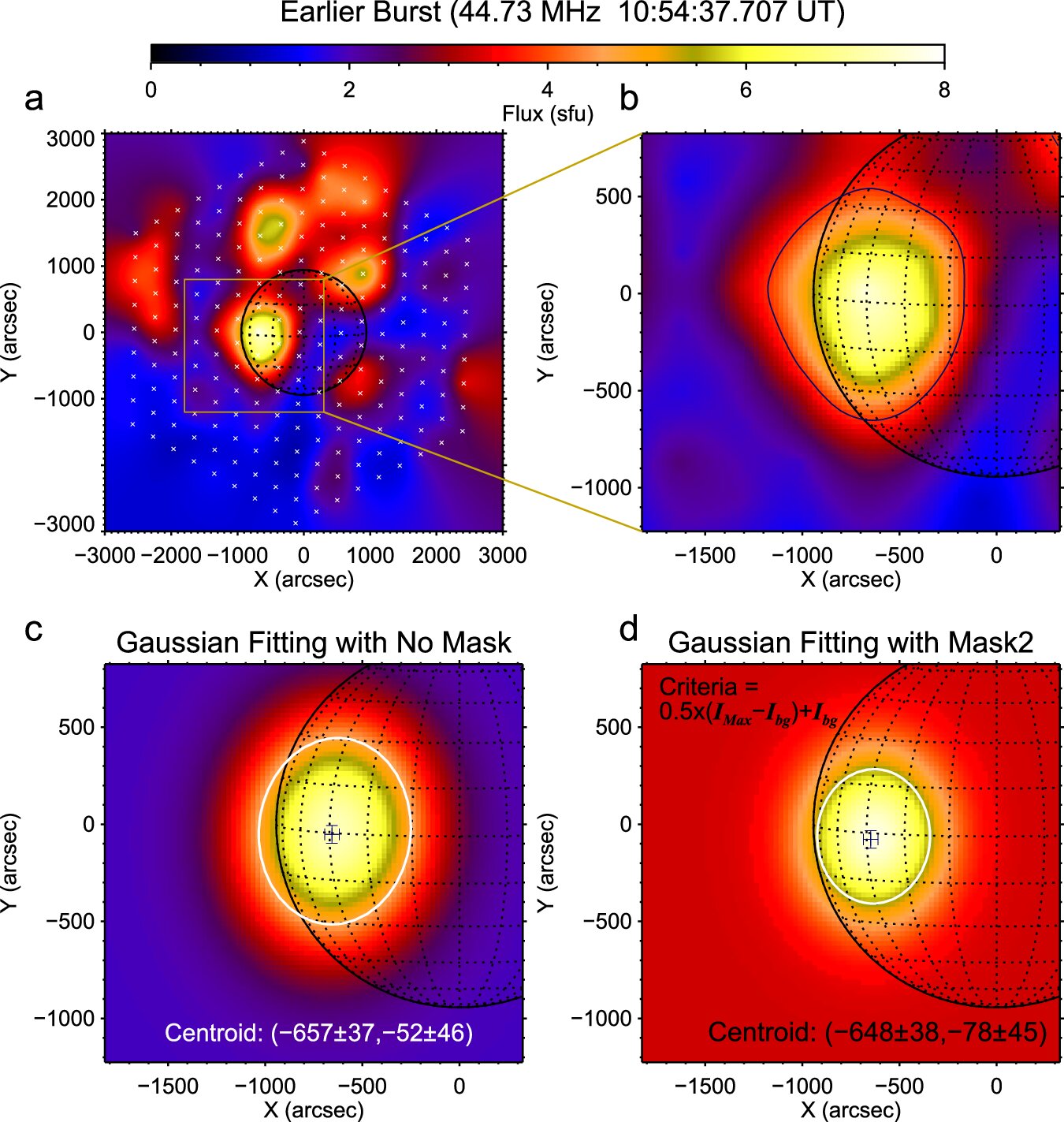
LOFAR image of the earlier burst at 10:45:38 UT and 44.73 MHz and 2D Gaussian fit results. Credit: Nature Communications (2026). DOI: 10.1038/s41467-026-74137-2
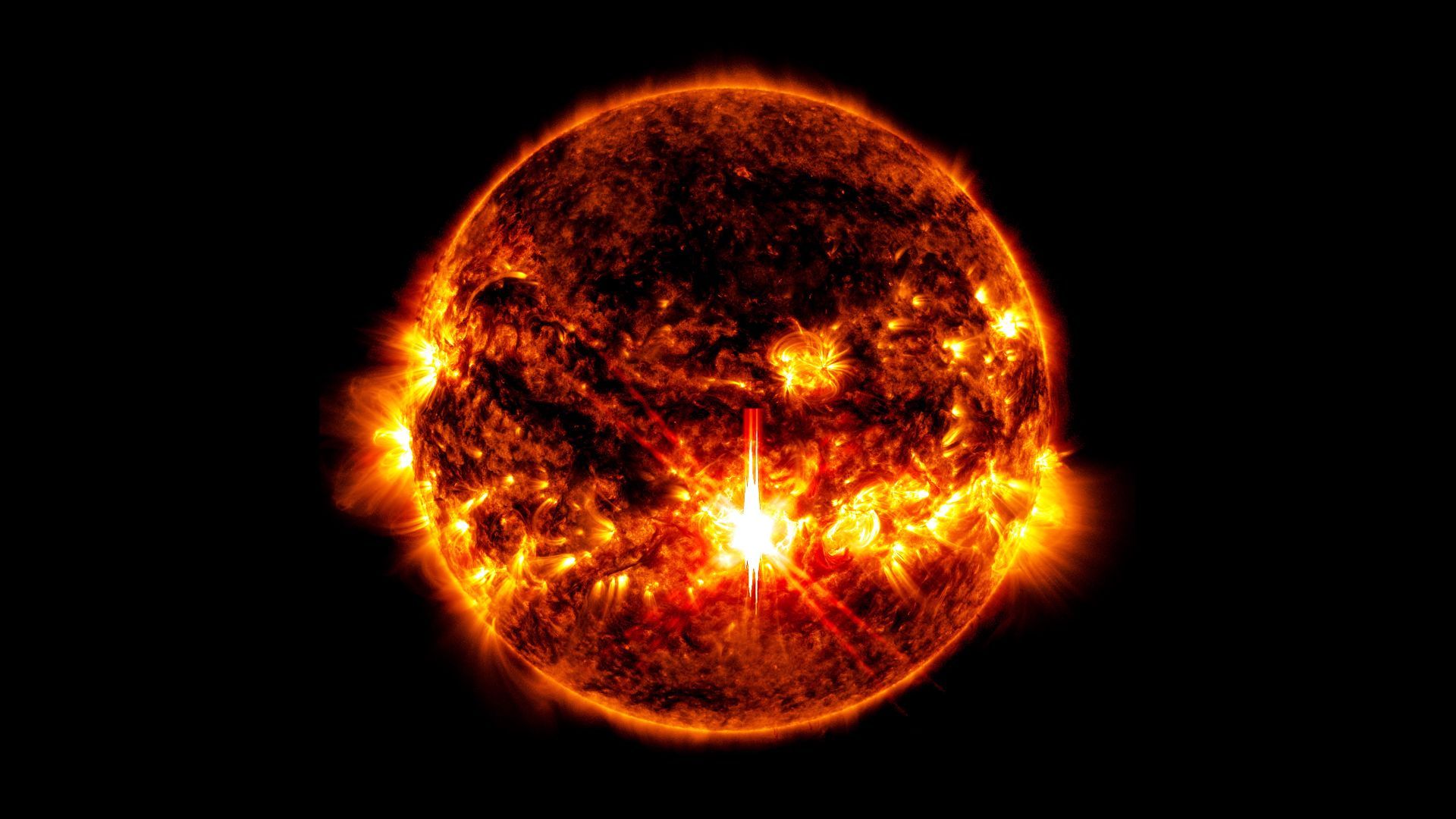
The solar atmosphere is a turbulent and magnetized environment, with the release of magnetic energy readily manifesting as emission across the electromagnetic spectrum. Solar radio emission dominates the radio sky, with the brightest solar radio bursts generated via the plasma emission process. The emission has a complex frequency-time structure with many features that are yet to be understood.
Using the LOw Frequency ARray (LOFAR) radio telescope, researchers have detected "repeating spike-like burst pairs"—brief flashes of radio energy that occur in pairs, separated by a characteristic delay of about four seconds. The findings reveal a new diagnostic of turbulent plasma processes high above the sun's surface, providing a powerful tool for probing the sun's magnetic environment and particle acceleration.
The research is published in the journal Nature Communications.
Solar radio bursts are known to exhibit complex fine structures, but the newly discovered signals stand out. Each event consists of two nearly identical, narrowband radio spikes occurring at the same frequency: a short-lived "earlier" (E) burst followed by a weaker, delayed (D) "echo-like" burst approximately 4 seconds later.