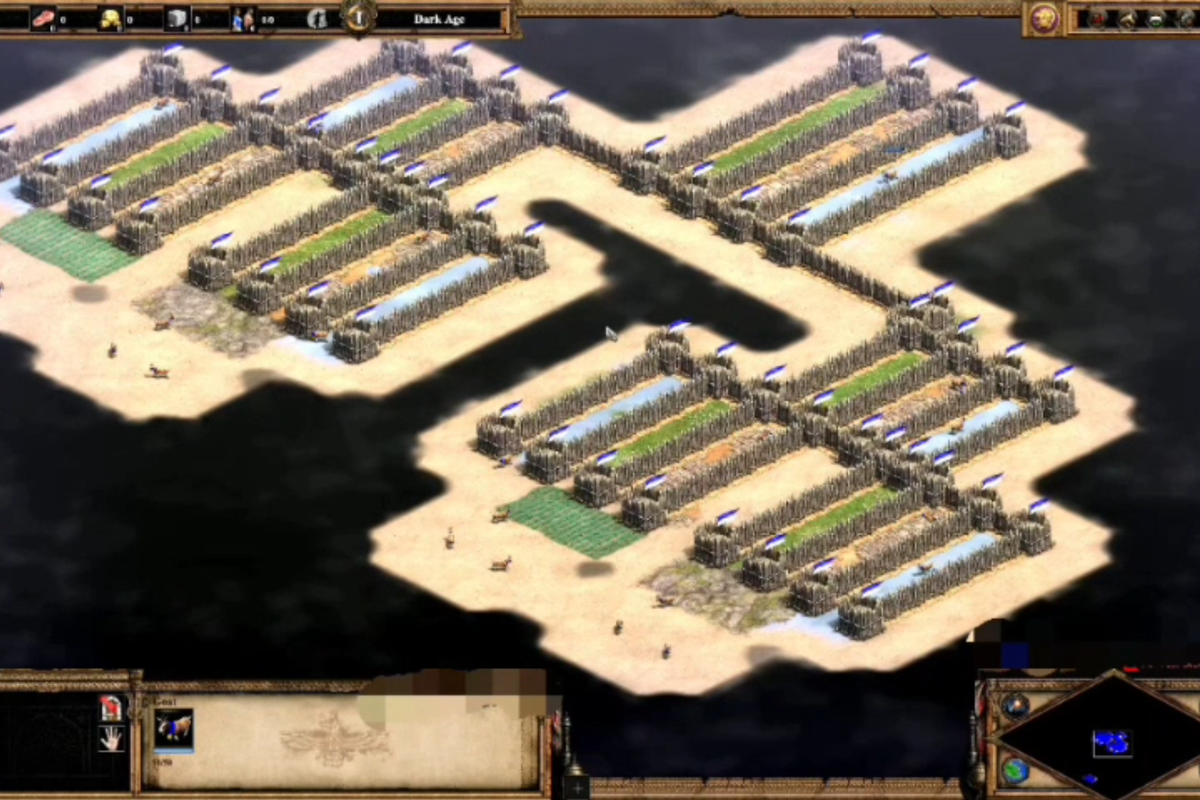
Adrian de Wynter, a researcher at Microsoft and the University of York, has built a working neural network inside the map editor of the legendary strategy game Age of Empires II. It sounds like a joke, but it's actually a serious critique of the methods used in much of the AI research on language models.
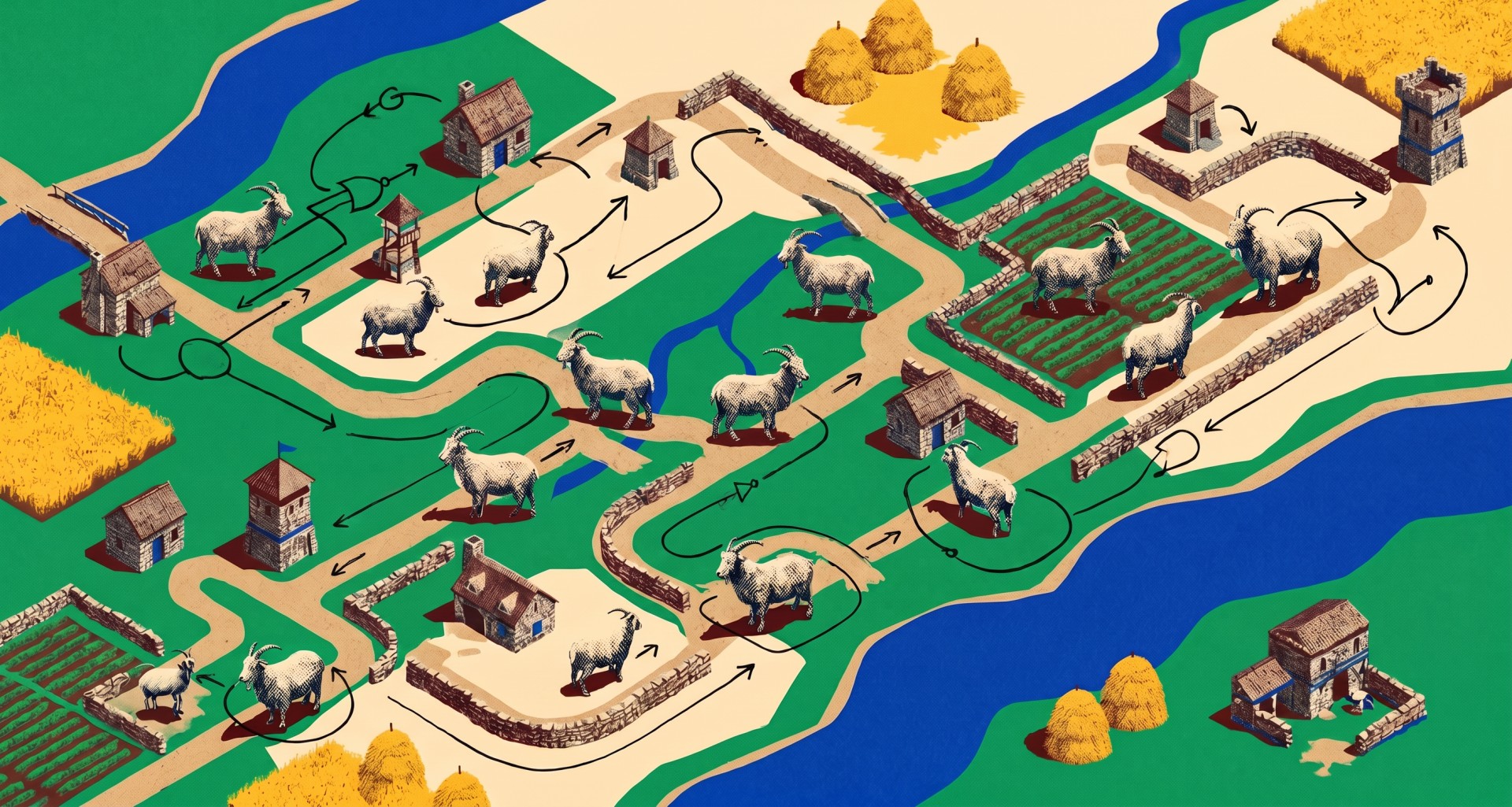
The design is completely absurd. Goats act as bits: a goat standing on grass equals 0, a goat standing on a bridge equals 1. De Wynter builds the logic gates using the scenario editor's scripting tools, and ice ramps with waiting goats keep the calculations from getting jumbled. The finished mini-network consists of two XNOR gates and one AND gate. It learns the logical AND function.
The NAND gate in the AoE II editor shows how a basic logic building block can be assembled from in-game objects. | Image: Adrian de Wynter
In the appendix, de Wynter goes further. He shows that, in theory, any computer could be replicated using an idealized version of the game, meaning the game is as powerful as a full-fledged computer.
What makes this possible is a quirk of the game's mechanics. The in-game market lets you trade resources for gold, and the price caps at 9,999. According to the paper, this allows for a perpetually running economic cycle where buildings serve as memory cells and active farms represent the current computational state.