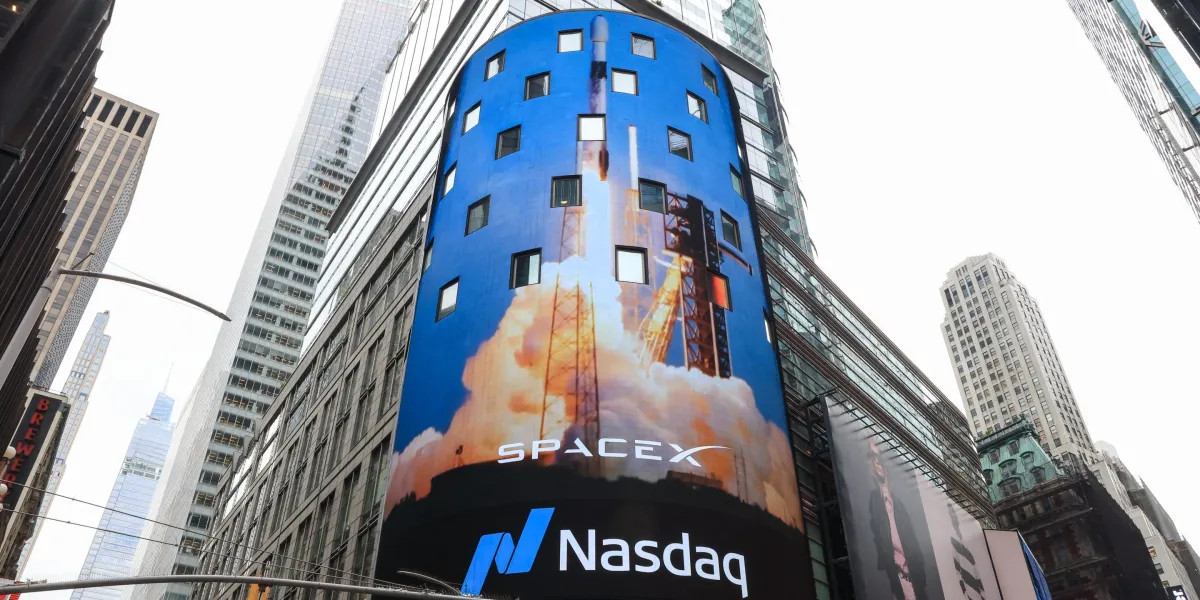
Skip to Content News Archives Economy Energy Oil & Gas Renewables Electric Vehicles Mining Commodities Agriculture Real Estate Mortgages Mortgage Rates Finance Banking Insurance Fintech Cryptocurrency Work Wealth Smart Money Wealth Management Investor Personal Finance Family Finance Retirement Taxes High Net Worth FP Comment Executive Women Puzzmo Newsletters Financial Times Business Essentials More Innovation Information Technology FP500 Podcasts Small Business Lives Told Tails Told Shopping Financial Post Store Obituaries Place a Notice Advertising Advertising With Us Advertising Solutions Postmedia Ad Manager Sponsorship Requests Classifieds Place a Classifieds ad Working Profile Settings My Subscriptions Saved Articles My Offers Newsletters Customer Service FAQ News Economy Energy Mining Real Estate Finance Work Wealth Investor FP Comment Executive Women Puzzmo Newsletters Financial Times Business Essentials HomeFinancial TimesInvestorRetail investors may be the 'fish at the poker table' as companies like SpaceX face a capital demand shockMohamed El-Erian: Blockbuster IPOs are part of an ongoing structural shift toward unprecedented capital raisingAuthor of the article: You can save this article by registering for free here. Or sign-in if you have an account.The need for "retail money" is evident in how the SpaceX IPO book was specified and the speed with which index providers are fast-tracking its inclusion. Photo by Cheng Xin/Getty ImagesWhen I began my career in economics and later finance, the “sources and uses of funds” exercise was an analytical anchor. Whether assessing a country’s balance of payments or evaluating how markets meet sovereign and corporate needs, maintaining an analytical handle on capital supply and demand was essential. It helped identify structural imbalances before they led to market disruptions, enabling policy and portfolio adjustments.Subscribe now to read the latest news in your city and across Canada.Exclusive articles from Barbara Shecter, Joe O'Connor, Gabriel Friedman, and others.Daily content from Financial Times, the world's leading global business publication.Unlimited online access to read articles from Financial Post, National Post and 15 news sites across Canada with one account.National Post ePaper, an electronic replica of the print edition to view on any device, share and comment on.Daily puzzles, including the New York Times Crossword.Subscribe now to read the latest news in your city and across Canada.Exclusive articles from Barbara Shecter, Joe O'Connor, Gabriel Friedman and others.Daily content from Financial Times, the world's leading global business publication.Unlimited online access to read articles from Financial Post, National Post and 15 news sites across Canada with one account.National Post ePaper, an electronic replica of the print edition to view on any device, share and comment on.Daily puzzles, including the New York Times Crossword.Create an account or sign in to continue with your reading experience.Access articles from across Canada with one account.Share your thoughts and join the conversation in the comments.Enjoy additional articles per month.Get email updates from your favourite authors.Create an account or sign in to continue with your reading experience.Access articles from across Canada with one accountShare your thoughts and join the conversation in the commentsEnjoy additional articles per monthGet email updates from your favourite authorsSign In or Create an AccountorThis approach was sidelined during a long era of abundant liquidity. In the run-up to the 2007-8 great financial crisis, capital markets functioned as all-out liquidity and credit factories, delivering wave after wave of financing that pushed leverage and debt to unsustainable levels. When that regime collapsed, it was replaced by a prolonged period of extraordinary central bank balance sheet expansion and floored interest rates. Even as this regime hits an inflation wall, endogenous private-sector liquidity has been rushing back in.Canada's best source for investing news, analysis and insight.By signing up you consent to receive the above newsletter from Postmedia Network Inc.A welcome email is on its way. If you don't see it, please check your junk folder.The next issue of Investor will soon be in your inbox.We encountered an issue signing you up. Please try againI suspect that evolving realities now warrant a return to the “sources and uses” discipline to minimize the adverse consequences of large imbalances between global demand for capital and the supply of it. The longer it takes for market participants and policymakers to acknowledge this shift, the greater the risk to orderly pricing and market functioning.The demand shock is arriving at remarkable speed, including last week’s SpaceX initial public offering. This blockbuster is part of an ongoing structural shift towards unprecedented capital raising that is still building momentum with Elon Musk’s company soon to be joined by the likes of Anthropic PBC and OpenAI Group PBC at eye-popping valuations.Given the ongoing technological arms race, these massive raisings may well prove to be relatively early-stage capital injections, with more funding rounds to follow. They are also headliners in a vast aggregation of smaller, tech-focused capital raisings.All this comes at a time when governments across the advanced world are seeking funding for large structural budget deficits, more defence expenditures and refinancing maturing debt at significantly higher interest rates. Corporations also are likely to increase their capital market activities. Re-orienting a company for AI is not cheap. As the competitive implications are too consequential to ignore, an increasing number of non-tech firms are being pushed into capital spending plans driven by the fear of missing out.Matching all this surging demand with supply of capital at a reasonable cost is trickier. While some government funding is likely, the overall size is restricted by high debt and large deficits. Institutional investors possess “dry powder” in available funds, but the reliable vanguard of global capital — specifically sovereign wealth from the Gulf — faces shifting priorities in the short term.Faced with these supply issues, investment bankers are seeking “retail money.” This is explicitly evident in how the SpaceX IPO book was specified and the speed with which index providers are fast-tracking its inclusion. It is part of a broader industry desire to expand retail pipelines into historically institutional domains such as private credit. It’s an initiative fraught with tension between democratization of investment opportunities and the worry that retail investors are being cast as the “fish at the poker table” — brought in to enable more sophisticated investors to monetize at high valuations. Both sides can summon historical precedent to justify their case.Then there is the reallocation question: Will retail and institutional investors liquidate some holdings to make room for new issues? This prospect should not be dismissed. It is symptomatic of a broader phenomenon of “robbing Peter to pay Paul” that manifests not only in the reallocation of capital but also in borrowing from the future to fund the present.At a time of uncertain geoeconomics, too many segments of the global economy are exhausting buffers. This begins with the ongoing depletion of energy inventories and extends to dwindling household savings, overstretched consumer credit and the leveraging of both corporate and sovereign balance sheets.While admiring the capital markets’ ability to fund borrowers at ever-bigger magnitudes, one should not dismiss the risk of an eventual capital crunch. If the supply of long-term funding does not expand to meet multifront demand, the price of capital must rise structurally, exposing the fragility of highly leveraged sectors. In this world, the long-neglected discipline of “sources and uses” will be part of the dividing line between market resilience and systemic disruption.The writer is the Rene M Kern professor of practice at Wharton School, chief economic adviser at Allianz and chair of Gramercy Funds Management.© 2026 The Financial Times Ltd Join the Conversation This website uses cookies to personalize your content (including ads), and allows us to analyze our traffic. Read more about cookies here. By continuing to use our site, you agree to our Terms of Use and Privacy Policy.
Retail investors may be the 'fish at the poker table' as companies like SpaceX face a capital demand shock
Mohamed El-Erian: Blockbuster IPOs are part of an ongoing structural shift toward unprecedented capital raising. Find out more
1,263 words~6 min read