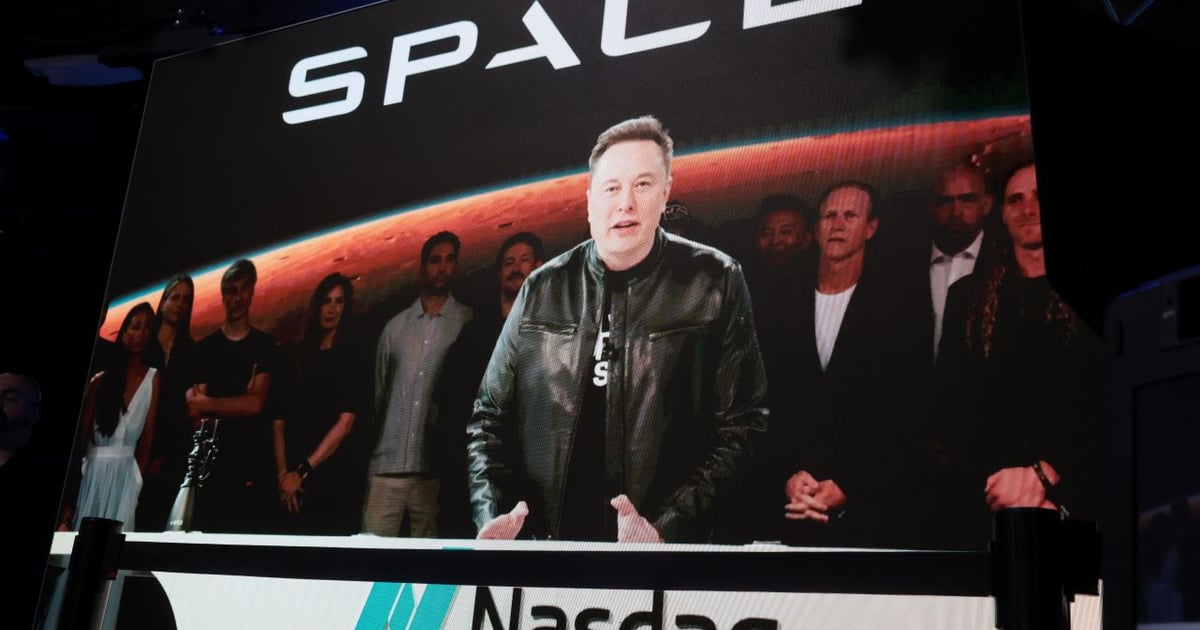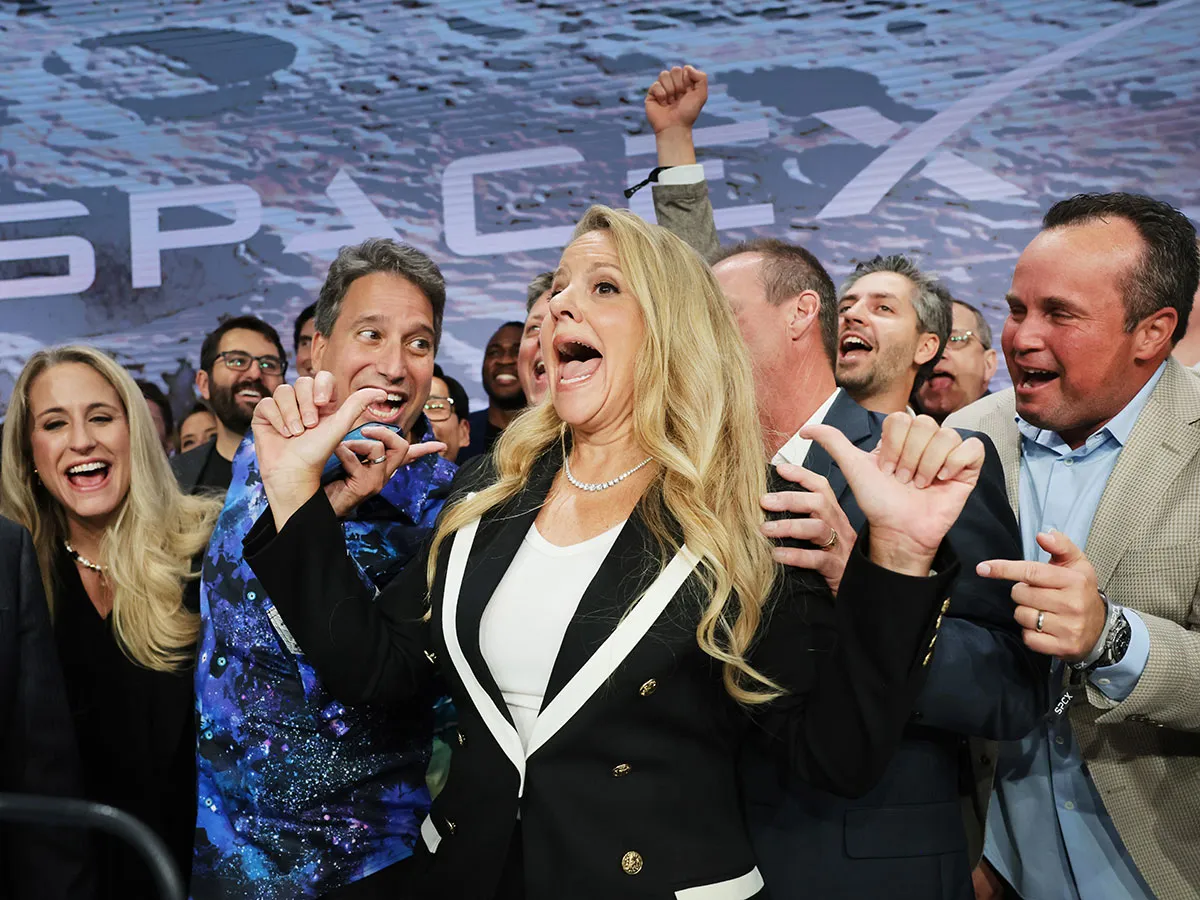
Skip to Content News Archives Economy Energy Oil & Gas Renewables Electric Vehicles Mining Commodities Agriculture Real Estate Mortgages Mortgage Rates Finance Banking Insurance Fintech Cryptocurrency Work Wealth Smart Money Wealth Management Investor Personal Finance Family Finance Retirement Taxes High Net Worth FP Comment Executive Women Puzzmo Newsletters Financial Times Business Essentials More Innovation Information Technology FP500 Podcasts Small Business Lives Told Tails Told Shopping Financial Post Store Obituaries Place a Notice Advertising Advertising With Us Advertising Solutions Postmedia Ad Manager Sponsorship Requests Classifieds Place a Classifieds ad Working Profile Settings My Subscriptions Saved Articles My Offers Newsletters Customer Service FAQ News Economy Energy Mining Real Estate Finance Work Wealth Investor FP Comment Executive Women Puzzmo Newsletters Financial Times Business Essentials HomeInvestorSpaceX IPO just launched the summer of AI. Can investors afford to sit it out?The exuberance will be hard to ignore, even as concerns grow that markets are fast approaching bubble territoryLast updated 1 hour ago You can save this article by registering for free here. Or sign-in if you have an account.SpaceX president Gwynne Shotwell celebrates with family and other SpaceX employees at the Nasdaq Marketsite in Times Square during the launch of the SpaceX initial public offering on the Nasdaq Friday. Photo by Spencer Platt/Getty ImagesThere’s an old adage on Wall Street that investors should “sell in May and go away,” but this summer, many stock market watchers have other ideas.Subscribe now to read the latest news in your city and across Canada.Exclusive articles from Barbara Shecter, Joe O'Connor, Gabriel Friedman, and others.Daily content from Financial Times, the world's leading global business publication.Unlimited online access to read articles from Financial Post, National Post and 15 news sites across Canada with one account.National Post ePaper, an electronic replica of the print edition to view on any device, share and comment on.Daily puzzles, including the New York Times Crossword.Subscribe now to read the latest news in your city and across Canada.Exclusive articles from Barbara Shecter, Joe O'Connor, Gabriel Friedman and others.Daily content from Financial Times, the world's leading global business publication.Unlimited online access to read articles from Financial Post, National Post and 15 news sites across Canada with one account.National Post ePaper, an electronic replica of the print edition to view on any device, share and comment on.Daily puzzles, including the New York Times Crossword.Create an account or sign in to continue with your reading experience.Access articles from across Canada with one account.Share your thoughts and join the conversation in the comments.Enjoy additional articles per month.Get email updates from your favourite authors.Create an account or sign in to continue with your reading experience.Access articles from across Canada with one accountShare your thoughts and join the conversation in the commentsEnjoy additional articles per monthGet email updates from your favourite authorsSign In or Create an AccountorAfter North American indices surged to record highs in the first half of the year on the back of soaring interest in artificial intelligence technology, stocks are now poised to have one of their most eventful summers in recent memory.That kicked off Friday with the biggest IPO of all time, a US$75-billion public offering for Elon Musk’s Space Exploration Technologies Corp. that valued the company, which includes the social media site X (formerly Twitter) and Musk’s artificial intelligence effort, at more than US$1.7-trillion. Early trading on Friday pushed that valuation above US$2-trillion.Canada's best source for investing news, analysis and insight.By signing up you consent to receive the above newsletter from Postmedia Network Inc.A welcome email is on its way. If you don't see it, please check your junk folder.The next issue of Investor will soon be in your inbox.We encountered an issue signing you up. Please try againWith major artificial intelligence competitors Anthropic PBC and OpenAI Group PBC also making preliminary filings to go public as soon as later this year, AI exuberance has become hard for investors to ignore, even amid lingering concerns the AI rally has pushed markets into bubble territory.“SpaceX is a pivotal market event and not just a company story,” said Theresa Shutt, chief investment officer at Harbourfront Wealth Group, adding that she would be wary of betting against artificial intelligence this summer, calling it a game-changer. “I think the average investor has to pay a bit of attention and, with the AI theme, it’s not going away.”Massive market gains this year have been driven by explosive growth in AI and AI-adjacent companies, which are spending trillions of dollars on data centres and microchips to keep up with demand for processing power.Hyperscalers, the large cloud-computing companies that have been responsible for building out AI infrastructure, are boosting the performance of chip makers such as Nvidia Corp., Advanced Micro Devices, Inc. and Intel Corp., and memory storage manufacturers such as Micron Technology, Inc. and Sandisk Corp.The S&P 500 is up about eight per cent year to date, while the tech-heavy Nasdaq is up over 11 per cent and the Dow Jones Industrial Average is up nearly six per cent.Shutt said the “picks and shovels” companies behind AI infrastructure have emerged as clear winners this year. For instance, semiconductor companies Sandisk and Intel have surged more than 4,700 and 500 per cent, respectively, over the past 12 months.The IPOs are expected to give more investors an opportunity to play the rapidly advancing sector.“(These are) going to give average retail investors a little bit more access to some emerging technology, perhaps the most exciting technology in decades,” said Philip Petursson, chief investment strategist at IG Wealth Management, prior to Musk’s IPO. “This is a broad market rally, not only in the United States, but in Canada and other areas around the world.”Petursson said he has seen similar rallies in the past, in the late 1990s and the post-COVID era, but this year’s momentum looks different.It has been costly for investors sitting it out in hesitation because of negative headlines warning of a bubble, he said.“The leading companies in these spaces are profitable, have strong balance sheets (and) they’re self-funding for the most part,” he said, characteristics that set them apart from the dot-com era. Tesla and SpaceX CEO Elon Musk gestures as he steps on stage during a Donald Trump rally in 2024. After the SpaceX IPO, Musk is now the world’s first trillionaire. Photo by ANGELA WEISS / AFP via Getty ImagesWhile SpaceX sought a valuation of US$1.75 trillion, analysts are predicting valuations of up to US$1 trillion for Anthropic and OpenAI, which could go public as early as this year.Shutt said that high investor demand for SpaceX — interest in the IPO was double the US$75 billion available — could be a double-edged sword for markets, because investors may need to liquidate other strong tech performers, such as Apple Inc. and Microsoft Corp., to raise cash.That could either “re-ignite AI exuberance” or “lead to another sell-off,” she said.Shutt also feels the ongoing enthusiasm around AI differs from the dot-com bubble, with many of the companies reporting positive cash flow and diversified revenue streams.“The amounts of money that they’re spending on (capital expenditure) is mind-boggling, but for that race for compute, it’s required,” she said.But IPOs don’t always yield positive results, especially when they have a lot of hype behind them, Shutt said. “Over time, they tend to lose value. It’s rare that they continue to just trade upwards.”Whether investors should get in on the big IPOs depends mainly on their individual investment goals, time horizons and risk tolerances, said James Learmonth, co-chief investment officer and portfolio manager at Harvest ETFs, Harvest Portfolios Group Inc.“These companies are all still in their hyper-growth phase, which means they are likely going to be spending aggressively for the foreseeable future in order to grow, and that may leave them in an uncomfortable position for a while,” he said.“But for an investor with a long enough time horizon and a willingness to accept the potential for some volatility, I think they can be attractive areas.”With 30 to 40 per cent of the S&P 500 in tech, Shutt said most investors will have some exposure to AI or AI-adjacent stocks, but she recommended restricting exposure to between 10 to 15 per cent of your portfolio.“While AI is still expected to stay hot, investors must protect themselves against concentration risk,” said Shutt. She advised investors remain diversified across sectors, asset classes and geographies. A view of the Nasdaq MarketSite after the opening bell on Friday. Photo by TIMOTHY A. CLARY / AFP via Getty ImagesLearmonth said Harvest is still optimistic about equities and AI over the year, though it remains uncertain whether another market correction could occur.“Corrections happen all the time; they’re a normal part of every bull market, and actually they tend to be healthy,” he added. “We look at it as still being a buy-a-dips kind of environment.”Nevertheless, the stratospheric valuations for some of these companies is driving concern that an even bigger collapse may be inevitable.“(Last year), we were in a bubble formation, and that bubble has only gotten bigger,” said David Rosenberg, founder and president of independent research firm Rosenberg Research & Associates Inc.The cyclically adjusted price-to-earnings (CAPE) ratio of the S&P 500, a metric often used to measure stock market valuation, has been hovering over 40 — levels last reached before the dot-com bubble imploded in 2000, Rosenberg said.“What unnerves me the most is the fact that the top 10 stocks in the S&P 500 back at the last tech bubble peak was less than 30 per cent share of the total market cap,” he said. “Today, it’s over 40 per cent so it’s a much more concentrated market.”Over the past 10 days, investors have been given a glimpse of the downside scenario. Last Friday, the S&P 500 fell 2.6 per cent, erasing about $1.8 trillion of in value mere days after notching a fresh record high of over 7,600 points.Since then, it has been a choppy week amid ongoing concerns around inflation and geopolitical uncertainty. But though the S&P 500 hasn’t returned to its recent peak, it is still sitting at historically high levels.Many see the selloff last week as “overdone,” Shutt said, adding that economic growth remains resilient, and inflation has been more moderate than anticipated.“The market is also seeing some real monetization coming from AI with Google Cloud’s backlog nearly doubling” and Anthropic posting a revenue run rate of US$37 billion, Shutt said. “This is the ‘show me the money’ phase and the AI names appear to be delivering.”Harvest has been advising clients to take a barbell approach, where they invest in higher-growth areas such as information technology and AI, as well as more defensive areas and sectors trading at historically low valuations, such as health care, Learmonth said.“For investors that are looking to generate cash flows from their portfolio, a high level of volatility can make covered call strategies, for example, a very attractive way to generate high income while also remaining invested in markets.”Rosenberg said that any number of surprises could occur over the summer that could cause a dramatic reversal in stock market gains. If peace talks between the U.S. and Iran fall apart and oil prices surge to $150 a barrel, or if the U.S. Federal Reserve and Bank of Canada start raising interest rates over inflation concerns, these events could severely shock the market.And there is the possibility that the patterns of the 2000 tech bubble repeat and investors start to see cancelled orders and disappointing earnings coming out of the sector and begin questioning the return-on-investment assumptions behind the boom, Rosenberg said.He recommended investors favour utilities, consumer staples and Canadian and U.S. bonds.“I would be going long the equal-weight S&P 500 and shorting the cap-weight S&P 500,” he said. “The last time that we had a technology bubble bust back in 1999 to 2002, you would have made almost 20 per cent in your portfolio by just having that hedged barbell strategy.”In an email this week, Petursson told Financial Post that corporate earnings are still expected to come in strong and IG Wealth is not currently concerned a crash is coming, though “a correction triggered by higher inflation and bond yields is increasing in probability.”“Balancing the two, we remain bullish over the course of the next year and aware of the risk of a correction over the next few months,” he said, adding that a correction can also create attractive market opportunities.Given this potentially transformative moment in markets, investors may not be able to afford to sit it out this summer — whether that means keeping an eye out for warning signs or getting in on the gains.“Seasonality can impact market performance, but don’t invest just on that alone. You have to look at the big picture.” said Petursson, who feels it would be costly for investors to sit on the sidelines, though he advised caution following last week’s selloff.“Any chance that you have an opportunity to own an emerging technology with such a dominant position in the market, it’s worth considering.” Join the Conversation This website uses cookies to personalize your content (including ads), and allows us to analyze our traffic. Read more about cookies here. By continuing to use our site, you agree to our Terms of Use and Privacy Policy.
SpaceX IPO just launched the summer of AI. Can investors afford to sit it out?
SpaceX’s IPO this week could either 'reignite AI exuberance or lead to another selloff, says one investment strategist. Find out more
2,197 words~10 min read