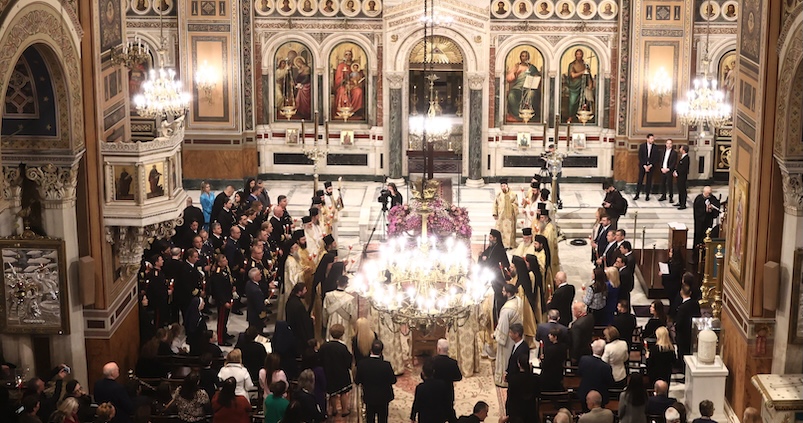
There are two possibilities regarding the steep raises foreseen in the Finance Ministry’s latest omnibus bill for the salaries of the Greek archbishop and the Church’s metropolitan archbishops: Either the government thought the measure would not come to the public’s attention, or it accepted that it would, but the impact would be regarded as negligible and forgiven.
Here’s what it probably thought: Sure, the raises may come to as much as 95%, sending the top clerics’ salaries shooting up to €4,671.90 before deductions, but the country doesn’t have that many bishops – just 81 in total – so the impact on the state budget is small.
If this impact is small, though, why don’t other equally small raises pass? To teachers, doctors, scientists and other professionals working in critical positions and under very difficult circumstances, where they help society as a whole in a tangible way rather than their flock in a metaphysical one. Maybe the reasoning is that the bishops’ contribution to the country is so valuable, the state has a duty to reward them. In that case, it would be good to inform the taxpayers who bankroll the Church – whether they like it or not – how the expense of doubling the bishops’ salaries was calculated. Was it with some kind of reliable tool measuring their productivity?