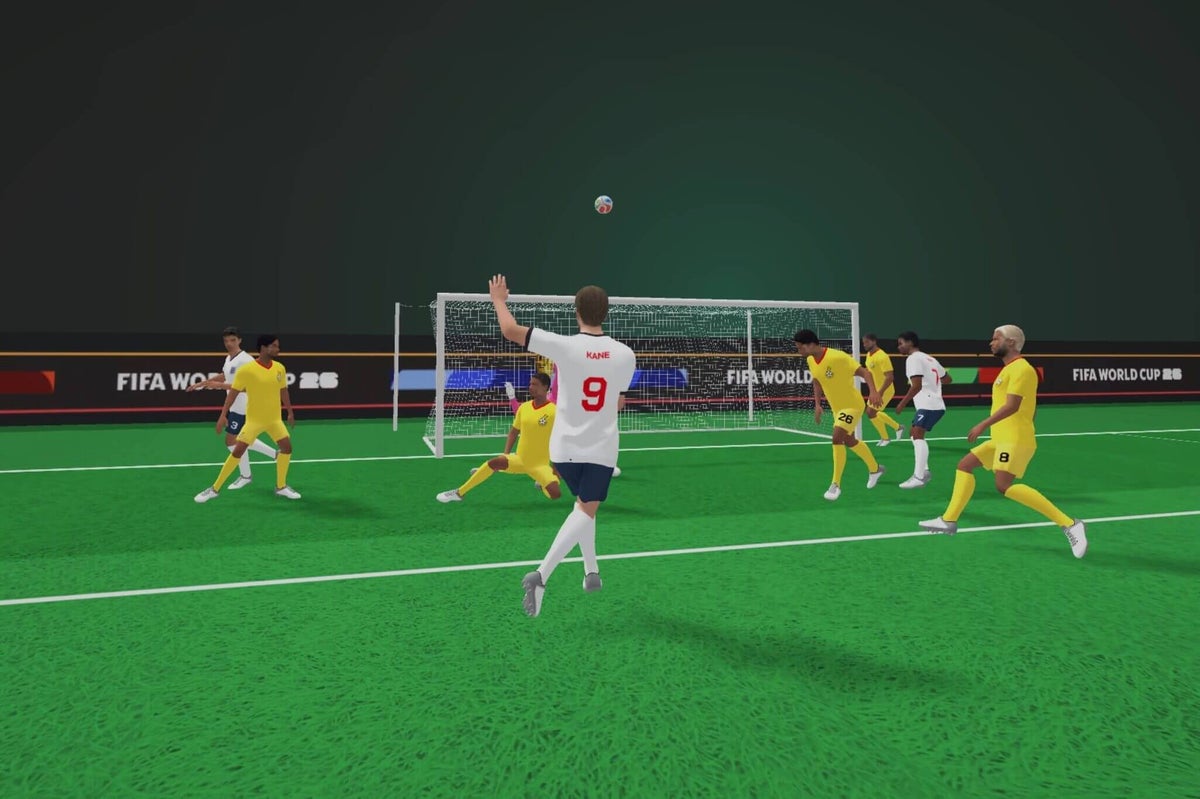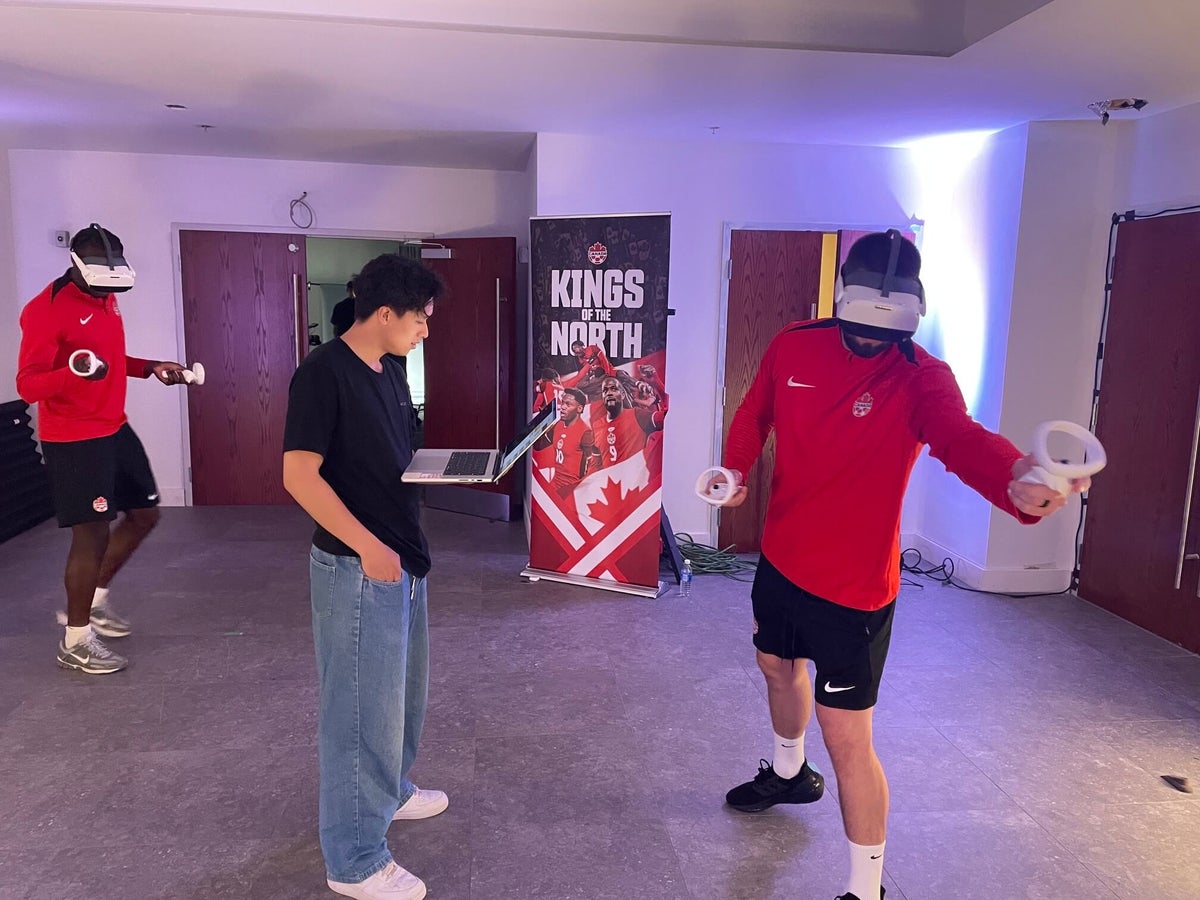
Get free access to the most comprehensive World Cup coverage in The Athletic app.VANCOUVER — Paolo Ceccarelli furrows his brow and tells me to flip off my dark blue baseball hat before lifting a large white headset over my mess of hair. My new grey strands give Canada’s goalkeeper coach a clue: using virtual reality headsets for video games is not something I am used to.Just before the headset is activated, I hear a Canada men’s national team player laugh and then mutter as he passes by.“Good luck.”When the headset is strapped on and the virtual reality program loads in front of my eyes, it’s clear I need all the luck I can get.It is June 2025. Canada’s national team have gathered for a training camp, ostensibly ahead of upcoming games on the calendar. But truthfully, everything Canada has done from the minute Jesse Marsch took over as head coach in 2024 was to prepare for a home World Cup.Starting in 2025, part of that preparation involved what I was doing: Canada began using a virtual reality program specifically tailored to them. In their virtual world, Canada is trying to improve their reaction time and better execute Marsch’s brand of lightning-fast soccer.How Team Canada uses virtual reality to trainJoshua Kloke and Jeshua KiddCeccarelli has taken the lead with training players on the headsets and cataloguing their scores and allowed me to try the program.It feels simple enough at first. Once the headset is strapped on, a living room environment is shown. Calm fell over me in my new surroundings. I forgot people were continuing to move about in the real world around me.With the headset comes two controllers that feel like the handle of a gun. Different types of circles with different patterns pop up on the headset.I was shown which side — left or right — I must move different circles and different patterns in those circles to. You can move them by extending either your left or right arm and clicking a button on their handheld controllers. It becomes a full-body exercise.When the game begins, different circles with different patterns appear. Players must match the circles to the correct side while also clicking their controller correctly. If a circle is empty, for example, players must learn to move their hands in the opposite direction to complete that task. The program trains itself to follow your eyeballs and then tries to trick players by moving the circles.The time to move circles properly reduces as the game goes on. I felt as if I was being challenged by the program. Truthfully, I felt a swagger by the end of the 10 minutes. Until I was told my score paled in comparison to most players. Players receive higher scores not just if they move the shapes to the right areas but if they do so quickly.Still, after I took off the headset, a rush of adrenaline streamed through my body. I noticed myself jabbing at the buttons in the hotel elevator with more zip and did not feel like sitting still once I returned to my hotel room. That rush did not wear off for hours afterwards.And that rush is exactly what Canada hopes their players get from the virtual reality training. The next challenge is to transfer it onto the field.After a spirited start to the tournament with a 1-1 draw against Bosnia and Herzegovina, Canada now hope their virtual reality training will help lead to their first ever World Cup win against Qatar.Watch a Marsch-run Canada training session and you’ll hear a lot of the same phrases. They are meant to create urgency without panic.Players aren’t told to move or run, but to “sprint”. And perhaps one of Marsch’s most-used phrases with players?“Two things at once.”Marsch soccer is fast soccer.When it doesn’t work, Canada can look frantic and disconnected. When Canada’s pacey approach works, they look capable of progressing into the World Cup knockout rounds, as evidenced by how they dominated Bosnia in the second half of their opening game.To succeed on Marsch’s high-tempo team, players must showcase rapid reaction time. There is little room for a cerebral player who cannot move as quickly as his brain does.Marsch also knows players can sometimes tune out his words. Those concerns were amplified by Marsch only seeing his players every few months before the World Cup.So when Rajan Pillay first watched Canada’s aggressive and reaction-driven play under Marsch, he realized he could help them.Pillay describes himself as a “proud Canadian” first but his other title, co-founder and director of REACT Neuro, is more appropriate to helping Canada achieve their goals. Pillay approached Canada to use REACT Neuro.“We want (Canada) to win the World Cup,” Pillay said, seated on a couch in a lobby of Canada’s hotel last summer. “Anything that we can do to support them to win, that gives them the edge over their competitor.”As Pillay speaks, he is interrupted by random beeps and Canada’s players shouting either in frustration or excitement nearby. Those players are wearing virtual reality headsets and cannot see Pillay.But they are benefitting from his vision.“People do a lot of video analysis,” Pillay said. “Now, we’re giving them data, we’re training their brain, we’re training their accuracy, we’re training their reaction time. That’s going to be an unbelievable experience for them.”Marsch hopes his players’ reaction time and quickness will have improved by the World Cup thanks to the virtual reality.“The first thing that we’re encouraging guys to do is get up (in the morning) and do it,” Marsch said, slapping his hands together for effect. “It challenges your cognitive abilities, the left and right brain combinations.”It’s not uncommon for teams to harness technology to provide an edge during important moments. England’s national team wear specially-designed foam shoes Nike believe “help athletes feel calm, focused and present.”Pillay said the program first took shape 10 years ago when he met with “prominent Harvard professors who dedicated themselves into finding the cure and prevention for all types of neurodegenerative diseases.”“It’s AI-driven technology,” he said, “to see how we can increase performance by applying right technique, right types of training for your brain, because your brain can be trained.”Canada’s work with the REACT Neuro virtual reality program started in earnest in June 2025. During a training camp in Halifax, Nova Scotia, students from Harvard University were sent to Canada’s team hotel to introduce players and staff to the equipment and the program. They set up shop in an open space between meeting rooms. As players filtered out from small meetings focused on set pieces or specific positions, they tried out the technology.At first, players were curious, even skeptical. From diet to sleep to training, players are often being sold on a new edge. Some shook their head when they were first handed the headsets.They may have encountered virtual reality headsets in gaming, like the Meta Quest system. They may have wondered: “Are we doing video games with the national team?”But they quickly bought in once they found out they would be scored. It was the idea of competing between teammates that hooked them.“What was your score?” one player shouted to another after finishing. “Nah, I can top that. Let me go again.”Players became hooked. And the benefits emerged.Flash back to Canada’s March friendly against Tunisia, when multiple Canadian defenders lost their focus. In the blink of an eye, their errors led to a swift Tunisia counter-attack.What Tunisian winger Elias Saad didn’t know as he sprinted towards Canada’s six-yard box?Liam Millar was up to date with his virtual reality training.Liam Millar is one of the Canada players to feel the benefit of VR training (Cole Burston / AFP via Getty Images)The Canadian winger had gotten on his bike and caught up to the Tunisian counter-attack from his own half. Millar used his swift reaction time to turn his body and anticipate where the pass was headed. Millar slid and blocked Saad’s shot. The match ended 0-0.Marsch has never looked more animated than during Millar’s game-saving block. That’s because Millar had trained for this, at the behest of Marsch himself.“It’s helped,” Millar said of the virtual reality program, “subconsciously.”“You’re turning, you’re looking at the peripheral vision and just practicing this work by doing all this (virtual reality) stuff,” Millar added. “I think (Canada’s virtual reality program) really helps in those moments where you’re checking your shoulder and you need to be able to scan and be aware of what’s close to you in that moment.”Millar knows that rush I experienced. His hands run wild as he excitedly describes the program. His alert description speaks to the intensity the program is trying to bring out of players.“The ball comes up, it’s filled, not filled, you have to go left, you go right, right?” he said. “But eventually, the levels get much harder and it’s color-organized and there’s multiple balls. And it’s not just in one place: it’s high, it’s this way, that way, all different things.”Who Will Win The 2026 World Cup?Canada want to play a high defensive line, making Millar’s action the kind that could come in handy in the World Cup.“It’s all about your peripheral vision,” Millar said, his words darting with enthusiasm and speed. “What can you see in your peripheral? How well can you focus? And that has to do a lot with being on the pitch: when you get on the half-turn, for example, you’re checking your shoulder, right? You’re checking your shoulder and you use peripheral vision to see what’s behind you. You’re not fully like focused on what exactly is there.”Watching players take part in the VR program, it brings players’ true selves out. Niko Sigur, one of the team’s ultimate competitors, would often sit staring ahead, eyes narrowed as he awaits his turn on the headset. Stephen Eustaquio was quick to ask questions of the operators about how he can improve his own scores. Richie Laryea would rib other players during their turns before giving a maximum effort with the headset on.Canada players using VR headsets to work on their reaction times (Joshua Kloke/The Athletic)Pillay said REACT Neuro has worked with other professional sports teams but declined to state who they are. On REACT Neuro’s website, it lists the New England Patriots, the Boston Bruins and the Boston Celtics as partners.After first routinely using the program in training camps through 2025, Marsch and Canada Soccer sent players headsets of their own to use through 2026. They were asked to use the virtual reality headsets multiple times a week. Scores have been logged and the coaching staff take note of how players are performing.“If you use it properly and use it constantly, you feel sharper and in terms of decision-making and being aware of everything going around you,” midfielder Nathan Saliba said. “I think it does help quite a lot.”Improved reaction-time could lead to healthier players through the World Cup.“Technology can be used for enhancing performances but also preventing injuries,” Pillay said. “Your movement of eyes is how you improve your reaction time.”The program has been tailored to Marsch’s demands on the team. They have gotten more difficult over the past year in the hopes of even quicker reaction time at the World Cup.“Now they’re individualized, so they’ve been able to track everything and look at the results, and they can see what processing time, peripheral vision, reaction time, motor-skill movement,” Marsch said. “They have an individual program for everybody and everybody’s going to be able to do it every day.”“We want to play fast, we want to push the tempo, and that means making decisions quickly and hopefully, making the right decisions quickly,” Canada defender Derek Cornelius said. “Normally, when you speed things up, your accuracy and your ability to make a good decision can decline. So that’s why I think Jesse got in touch with (REACT Neuro).”Laryea, with a seven-year-old son at home, finds himself pulled in other directions in the morning. He sometimes leaves his virtual reality training until later in the day. Then, doing it makes him feel “fatigued”. Laryea admits when he does enter virtual reality in the morning, “it gets your brain switched on.”Quietly, this was part of Marsch’s plan. Want to have success at the World Cup? Buy into the plan and the resources available to you, strange as they may first have seemed.“Even if (virtual reality training) helps us get two percent better, two percent is better than zero percent,” Laryea said.Laryea said his performance in training sessions with his club side, Toronto FC, improve when he does his VR training in the morning. Any improved performances, eventually, could help Canada towards their goal of getting out of the World Cup group stage.“It’s a way to challenge your mind to be under stress,” Cornelius said, “and still try and make the right decision.”
Canada is using virtual reality to get a World Cup edge. Here’s how it works
Jesse Marsch has his players using VR to improve their reactions time. The Athletic put on a headset and gave it a shot.
2,135 words~10 min read