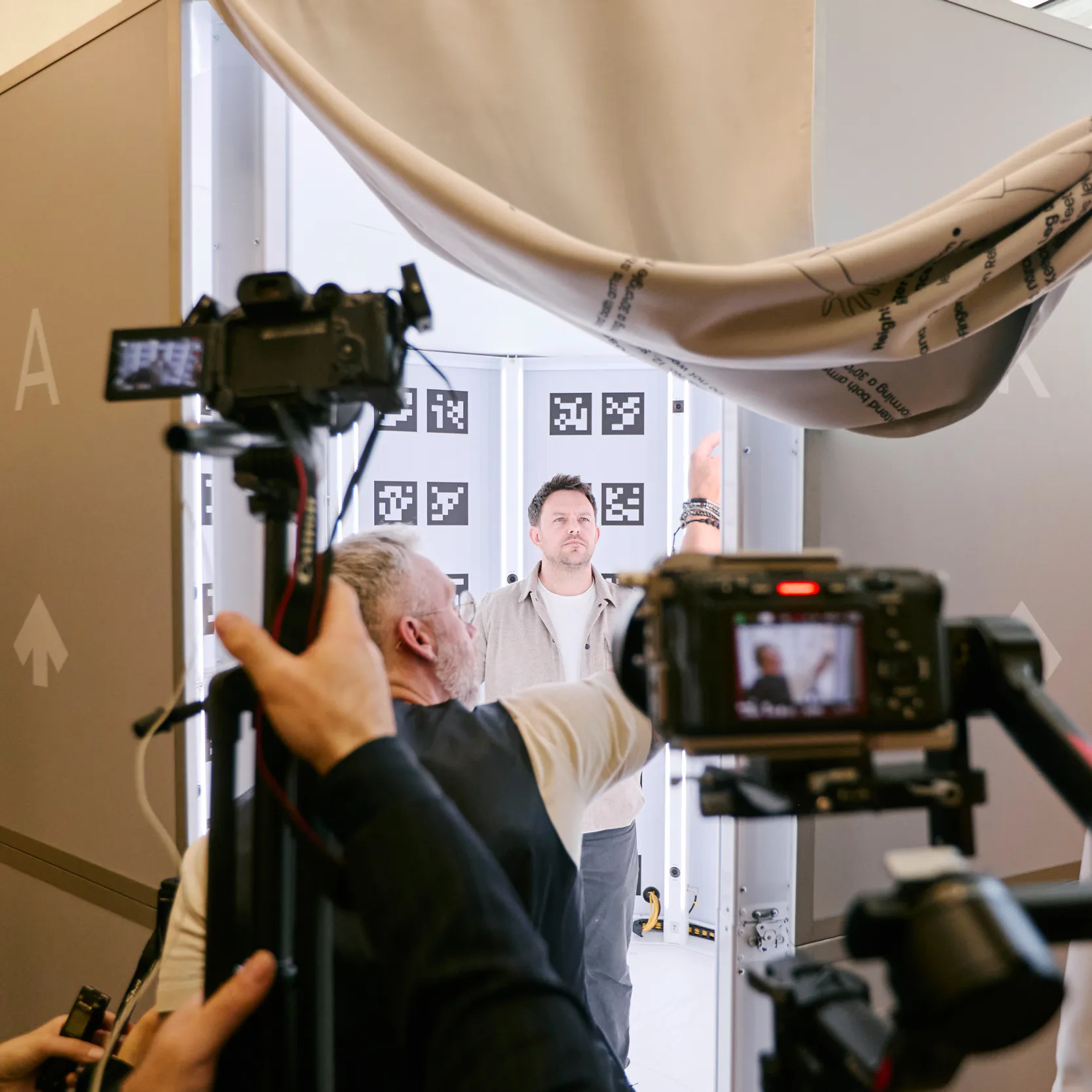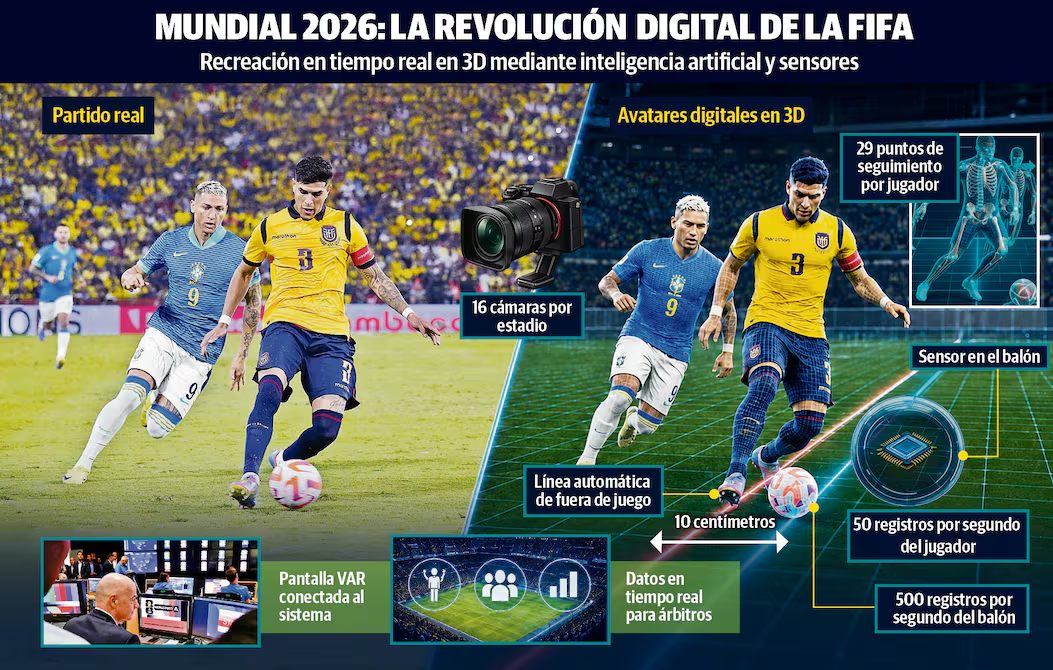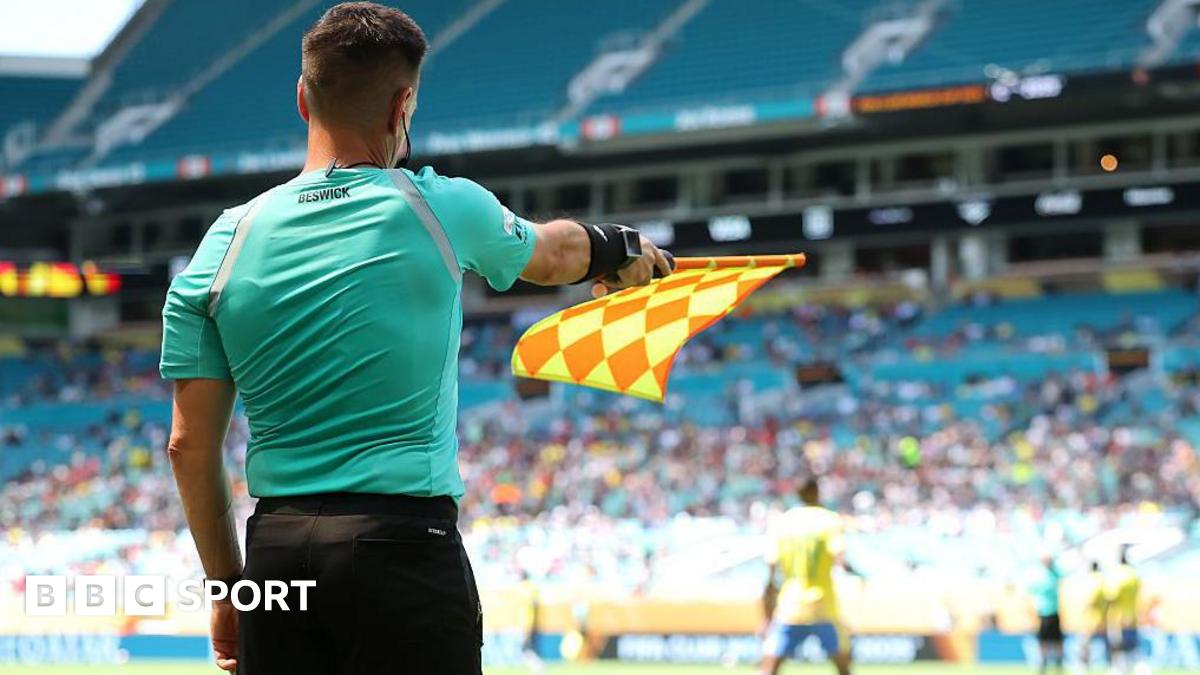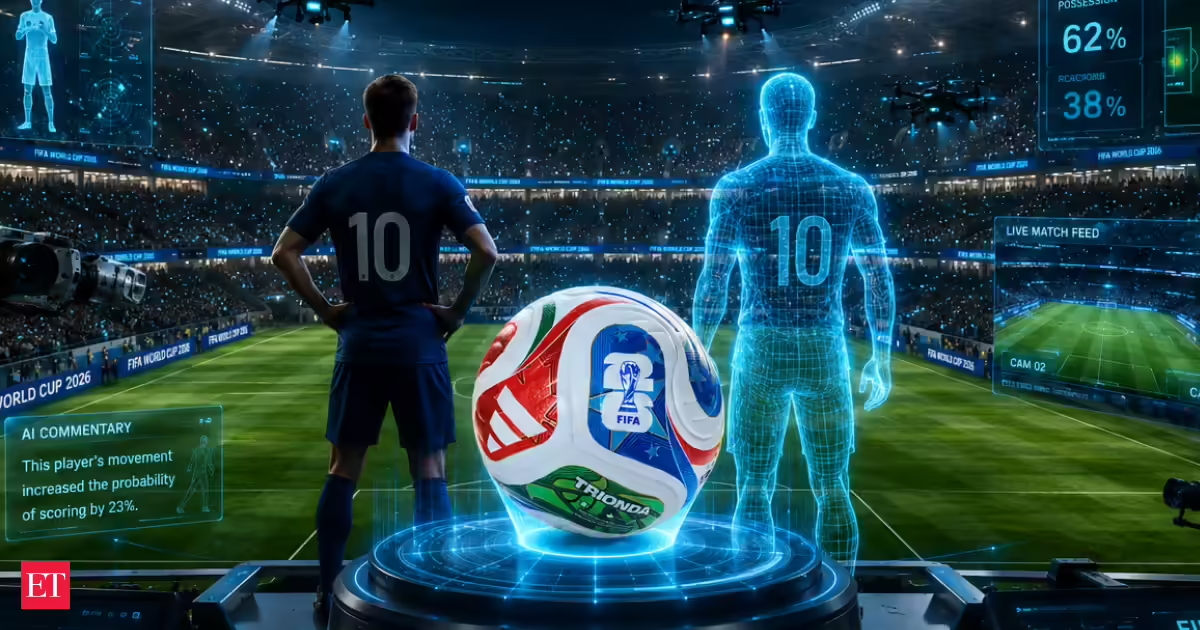
If you’re watching the World Cup this summer, you might see something new during instant replays: a video-game-like 3D model of a player, frozen mid-stride, showing exactly where his foot was when the ball was kicked. That's not fun graphics. According to FIFA and Lenovo's announcement ahead of the tournament, every player has been digitally scanned to create an accurate 3D model that will be used in the new AI-enabled offside system. For American fans watching a World Cup on home soil for the first time in decades, here’s a breakdown of the tech that’s about to change how the beautiful game is officiated.Meet your digital twinEvery player sat through a quick body scan before the tournament started. Each scan takes about a second and, according to FIFA and Lenovo, it makes highly accurate measurements of body parts, allowing the system to track players reliably even when they are moving fast or are partially blocked from view.Why is this important? The old system was based on generic one-size-fits-all player outlines to judge close offside calls. Now the outline is what the actual human being on the pitch looks like, right down to their exact build and proportions. Lenovo's global CIO, Art Hu, put it simply: no two footballers have the same physique, so each player's exact dimensions are now factored into the call.FIFA and Lenovo unveiled the AI-powered avatars that will officiate this summer's matches. Image Credits: LenovoMore eyes on the field than everThe optical tracking side has also leveled up, according to a Wired report. Hawk-Eye, the company behind the camera-based system, now uses 16 high-resolution cameras per stadium, up from 12 in 2022, capturing more than 2 dozen skeletal tracking points on each player during the match. That extra coverage means fewer blind spots in assessing where a foot, hand or shoulder was at the exact moment the ball was played.A smarter ball with a brain inside itThe official match ball is no longer just a ball. The Adidas Trionda, named after the three host nations of Canada, Mexico and the US, is a 13-gram smart ball that replaces the old multi-panel design with only four thermally bonded panels. Sensors inside the ball track its exact location and spin 500 times a second, according to Wired, noting the precise moment of every touch.Then the data is paired with the player avatars. The system can additionally use the exact kick point from the ball’s sensor and the limb positions of the 3D avatars to resolve offside calls in seconds rather than minutes.Meet the Trionda, the World Cup ball with a sensor-packed brain hidden inside. Image Credits: AdidasTighter margins, faster flagsOne of the biggest frustrations with VAR in the past has been the waiting. This year’s upgrade is designed to do just that. The new system, which will alert the linesman using an AI-powered system, will detect when an attacking player is more than 10 centimeters offside, a huge jump in precision compared to the 50-centimeter threshold used back in 2022. But the tighter calls, such as whether a player was actively interfering with play, still need a human referee to make the final call.It’s worth noting this is not a robot-ref take-over. The system is officially ‘semi-automated,’ meaning AI and sensors determine where a player was and when the ball was hit, but human referees make the final call.According to Wired, the improved VAR system is also being used to check red-card decisions and instances where the referee may have wrongly identified the wrong player. Now, referees can also spot corner-kick mistakes, with alerts going straight to on-field officials via their headsets so play doesn’t get held up any longer than necessary.A goalkeeper's eye viewOne notable new feature is a 3D goalkeeper view within the review system, according to Wired. It allows officials to "stand" in the goalkeeper's shoes and decide whether an offside attacker was obstructing their view or otherwise interfering with the play, which is traditionally one of the most difficult calls to make with standard camera angles.What this means for fans watching at homeHere’s where it gets fun for American viewers, who are steeped in the instant-replay culture of the NFL and NBA: the 3D avatars are rendered into life-like graphics that recreate offside calls on stadium screens and across the broadcast, translating a complicated decision into something you can understand in one short clip.The VAR review screen will become as familiar as the scoreboard itself. Image Credits: LenovoThe system has already undergone road tests. These digital avatars were successfully trialed as part of the offside technology at the FIFA Intercontinental Cup in Qatar last December, and earlier trials during the FIFA Club World Cup resulted in faster, more accurate offside calls, reducing game delays.The bigger pictureThis tech push isn’t just about offside calls. Lenovo is also running digital twins of all 16 host stadiums for crowd and security management, and all 48 teams now have access to an analytics tool trained on 2,000-plus football-specific metrics.This is viewed as a pivotal moment in how the sport is officiated and watched by FIFA’s own leadership. FIFA Secretary General Mattias Grafström said the AI-enabled 3D avatars are a major step forward in the way officiating technology supports accuracy and transparency.So the next time you see a slow-motion replay with a glowing 3D figure stretched across the field, you'll know exactly what's happening behind the scenes: a body scan, a smart ball and a whole lot of computing power, all working together to settle an argument that's been going on for as long as soccer has existed.
A 2026 World Cup tech makeover is turning every player into a digital twin, with 16 cameras, a 13-gram smart ball, and millimeter-level scans that could settle the sport’s tightest calls
Discover how the 2026 World Cup is utilizing cutting-edge technology, including digital twins of players and AI-driven systems, to enhance officiating accuracy and improve fan experience.
928 words~4 min read