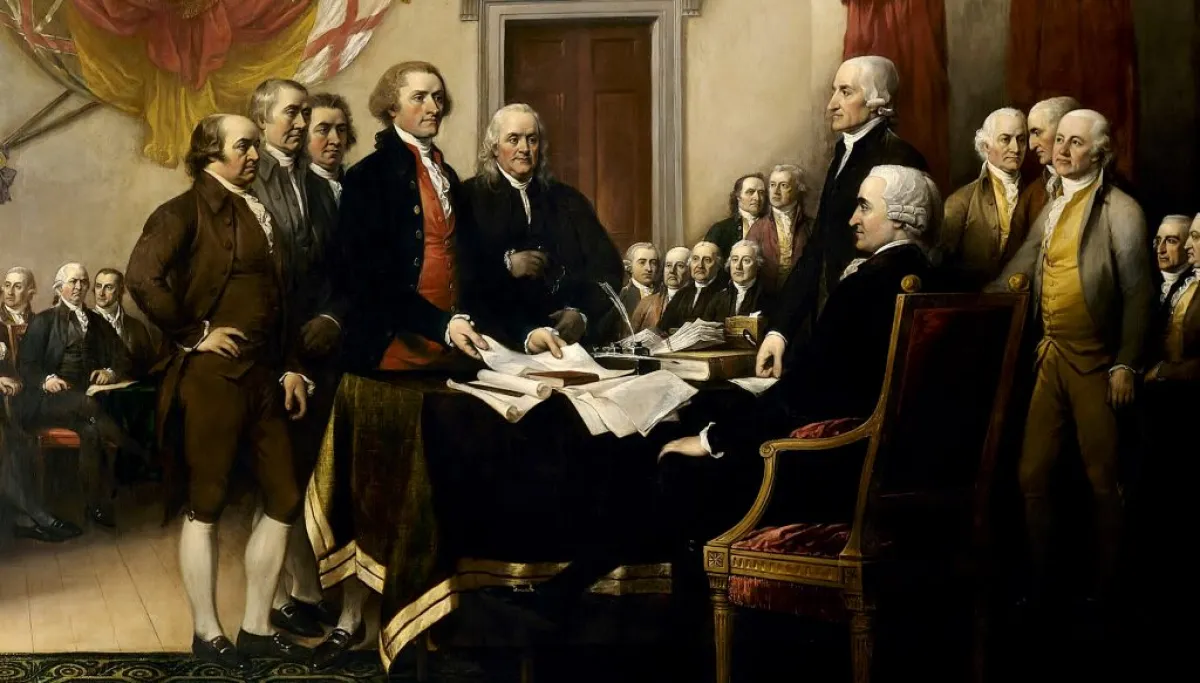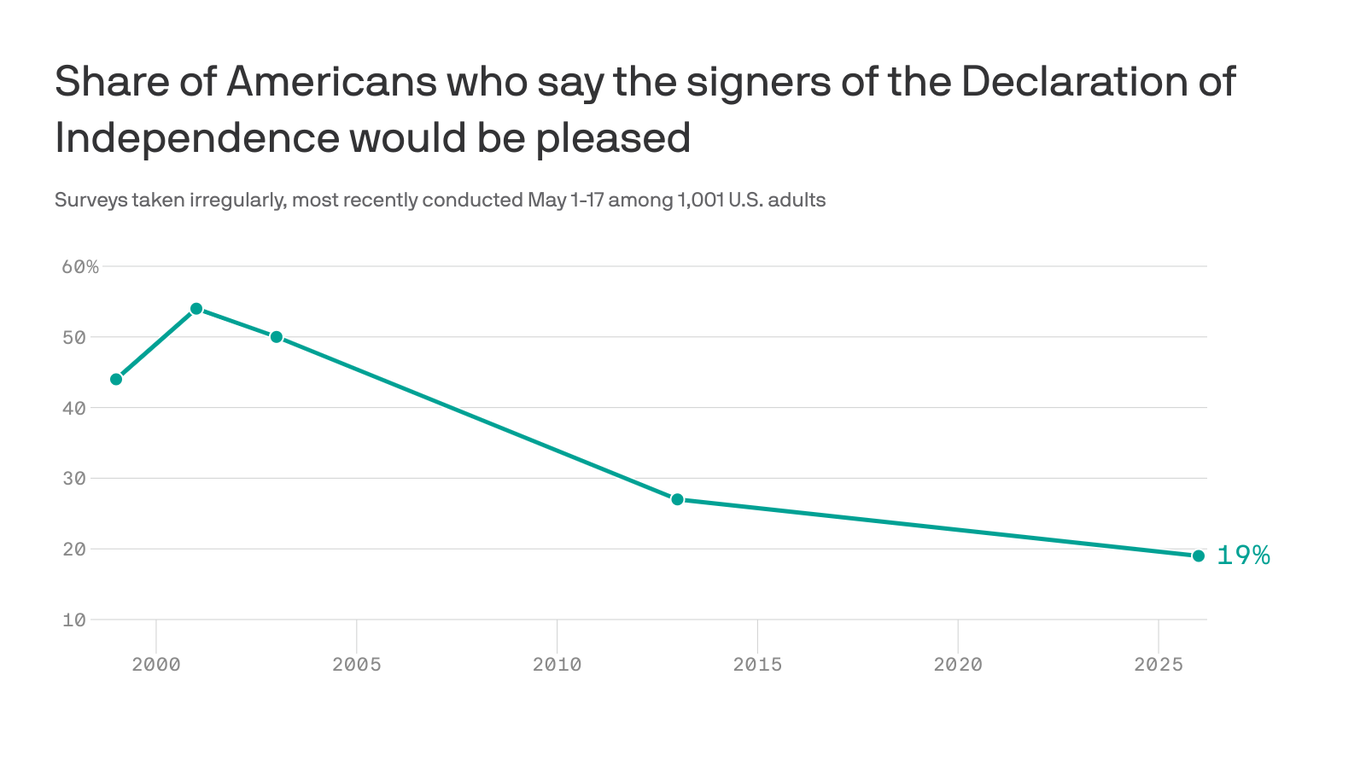
The year 2026 marks the 250th anniversary of the signing of the Declaration of Independence. As we reflect on our nation’s founding ideals, many are asking whether we are living up to the promises set forth in the declaration and the Constitution.This is noble and necessary self-reflection. And the same self-reflection must be done for our public K-12 schools. Before debating test scores, curricula, or education budgets, it is vital for people to ask a more fundamental question: What did the founders believe to be the purpose of education?From the inception of the American experiment, education was not just about accruing knowledge or preparing for a career. It was essential to preserve the country and, more broadly, Western civilization.
COMPARING 1998 AND TODAY: AMERICANS STILL EMBRACE CORE FOUNDING PRINCIPLES DESPITE DIFFERENCES, NEW SURVEY FINDS
In 1810, President James Madison addressed Congress about the idea of a national university. Among its benefits, he proclaimed, would be “expanding the patriotism” of the nation.
Modern Americans probably can’t define the word “patriotism” — or worse, they incorrectly define it — meanwhile, Madison viewed it as essential. He knew this fledgling nation needed a citizenry with a deep, abiding love and devotion to its country to survive. Patriotism, rightly understood, creates more social harmony and commitment to the common good.