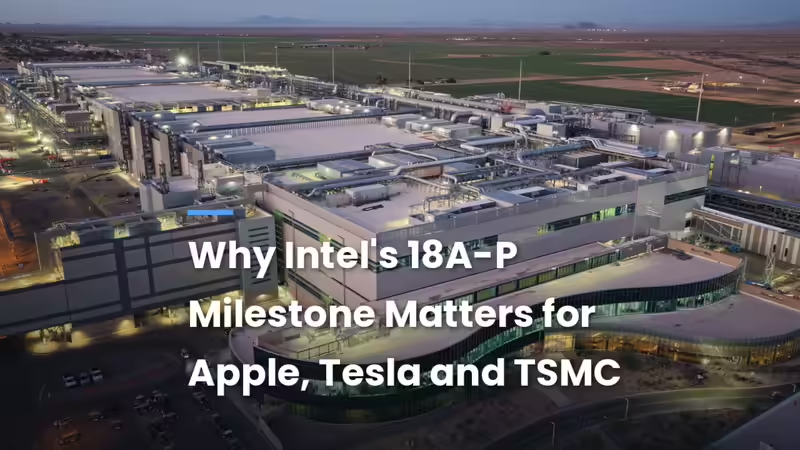
Intel said on Tuesday that the next iteration of its 18A manufacturing process, designated 18A-P, has entered risk production, the stage at which a chipmaker runs the process on real hardware to prove it works before committing to mass volumes.
The announcement is less about a single chip than about a promise Intel has spent years struggling to keep: that it can still build leading-edge silicon on schedule, on American soil, and sell that capability to other companies.
The figures Intel put on 18A-P are incremental rather than dramatic, which is what you would expect from a refined version of an existing node. Compared with the base 18A process, the company says 18A-P delivers 9% higher performance at the same power, or 18% lower power at the same speed, along with better thermals and more design flexibility.
Those are the trade-offs that matter to the customers Intel most wants, the ones deciding whether to trust it with their own designs.
That is the real audience here. Intel has poured money and credibility into turning its foundry arm into a credible rival to TSMC, with limited success and heavy losses, and 18A is the node meant to change the story.