Florida is the latest US state to wade into the increasingly crowded waters of e-bike regulation, with lawmakers advancing a bill that would impose a situational 10 mph (16 km/h) speed limit for e-bikes on shared-use paths. It’s a move that fits squarely into a broader national trend, as states and cities across the country reconsider how electric bikes fit into public spaces that were never designed with fast, motor-assisted travel in mind.
[Update June 16, 2026: The Florida Senate and House have passed the bill, which has now been sent to the Governor to be signed into law.]
The proposed Florida legislation isn’t a blanket crackdown on e-bikes, nor does it rewrite the familiar three-class system like we’ve seen in harsher crackdowns such as the recently created New Jersey law. Instead, it zeroes in on where and how e-bikes are used, particularly on sidewalks and multi-use paths where speed differences between users can quickly become a safety issue.
What the bill proposes
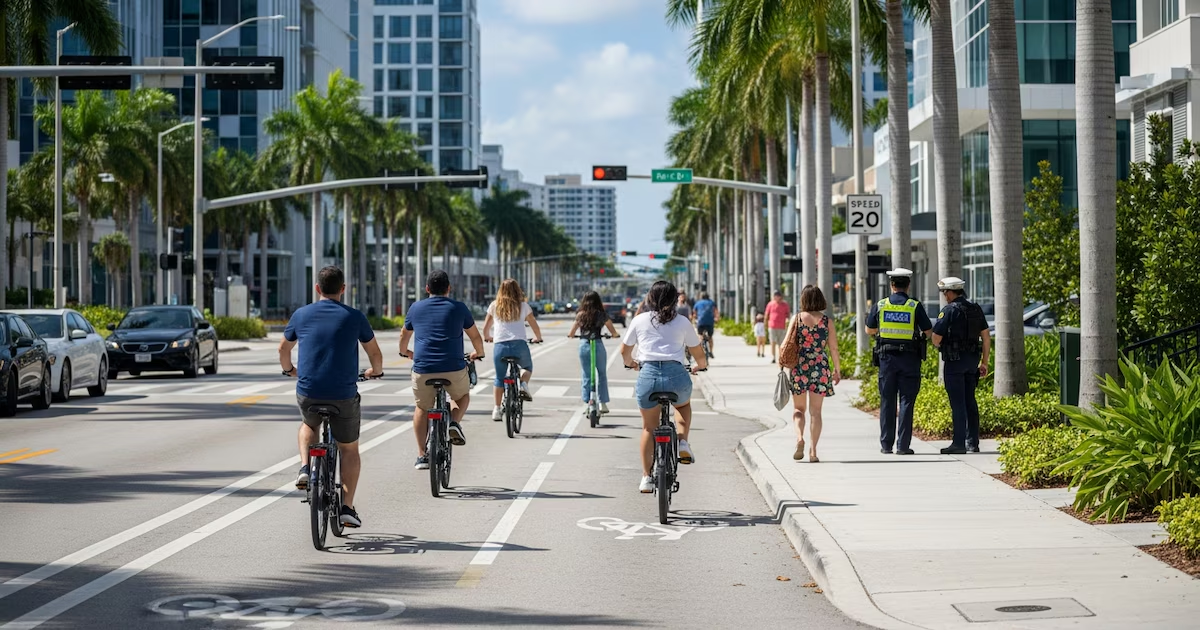
At the center of the bill is a requirement that e-bike riders slow to 10 mph (16 km/h) or less when operating on shared-use paths or sidewalks that are occupied by pedestrians. Riders would be required to drop to these speeds when operating within 50 feet (15 meters) of pedestrians. In practice, this means that even an e-bike capable of much higher speeds would need to crawl along at near jogging pace when mixing closely with walkers, runners, or slower mobility devices. Riders would also be required to yield to pedestrians on these paths and to give an audible signal, such as a verbal warning or a bike bell, before passing.