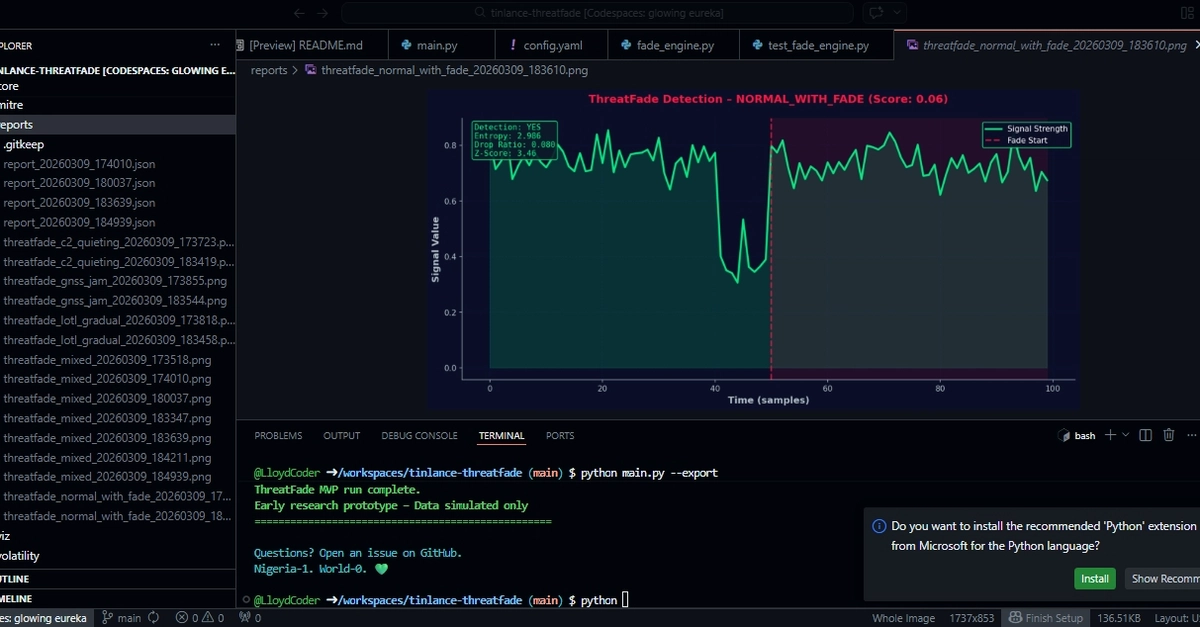
This is the story of ThreatFade — a detection engine I built and validated against real C2 malware traffic. The core idea is that adversaries who go quiet are just as detectable as adversaries who shout, if you're measuring the right thing.
The problem nobody talks about
Every detection rule I've ever seen is built around presence. Something happens — a malicious domain resolves, a known signature matches, a payload crosses the wire — and the alert fires.
But sophisticated C2 frameworks don't always announce themselves. They go quiet on purpose.
This technique has a name in the research community: C2 fade. An implant beacons home on a schedule, then deliberately suppresses its signal for a period of time. The timing pattern changes. The entropy drops. From the outside, the connection looks like it's doing nothing. From the inside, the attacker is buying time — waiting for defenders to stop watching before resuming operations.