Wednesday 17 June 2026 7:26 am
| Updated:
Wednesday 17 June 2026 7:27 am
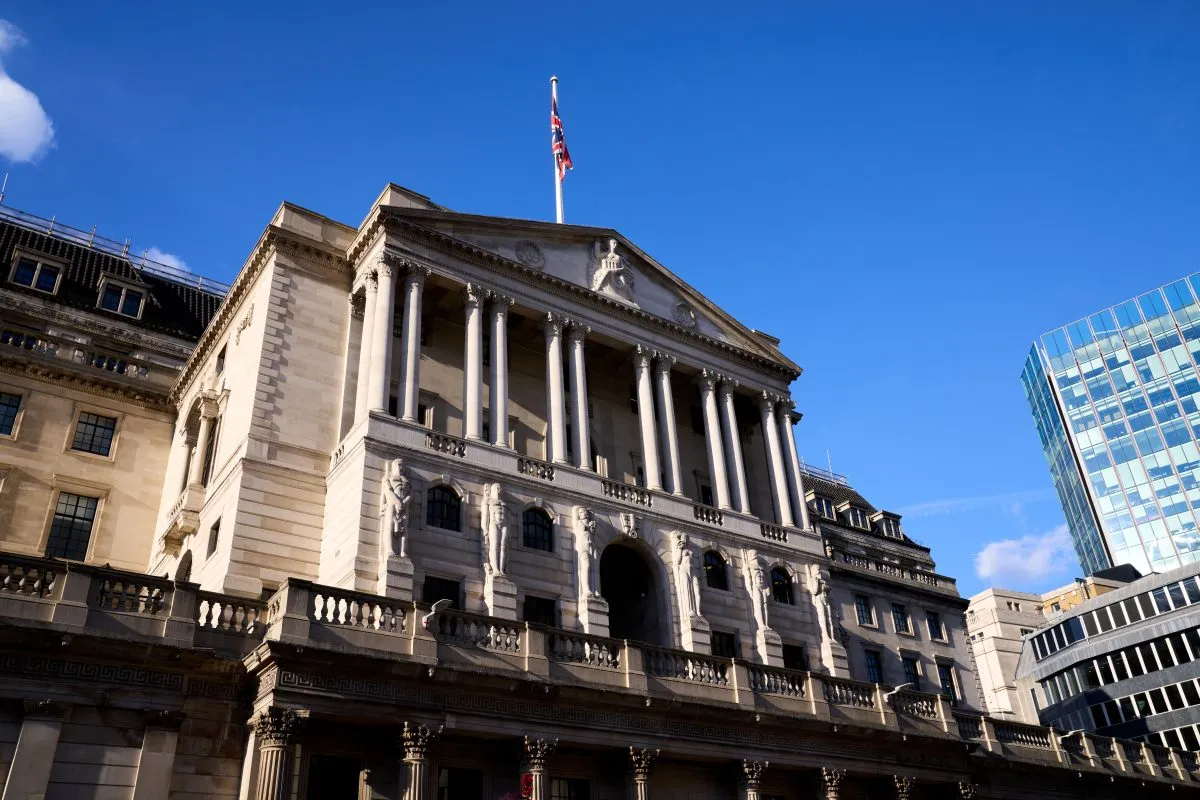
The Bank of England faces a challenge in managing inflation.
Inflation has stayed below three per cent although economists are predicting further price increases later this year. The Office for National Statistics said inflation in the year to May was lower than economists expected with the consumer prices index (CPI) showing a reading of 2.8 per cent.Core inflation, which strips volatile energy and food prices, was 2.6 per cent while services inflation, closely monitored by Bank of England rate-setters for evidence of wage pressures, jumped from 3.2 per cent to 3.7 per cent. “The main upward movement came from transport with airfares, vehicle taxes and petrol prices all pushing up inflation,” Grant Fitzner, chief economist at the ONS, said. “These were offset by lower food prices, with decreases in inflation seen across a range of meat, dairy and vegetable items compared to last month as well as the cost of domestic heating oil, which fell back after climbing in recent months.”Economists have said inflation could be near four per cent later this year and at the beginning of 2027. The Bank has warned that inflation could get to six per cent in the worst case scenario. The future of price rises largely depends on whether the Strait of Hormuz fully re-opens following the peace deal between the US and Iran, and behaviours across businesses. Capital Economics chief UK economist Paul Dales said inflation would rise over the next nine months though a recent fall in the oil price means it may not exceed four per cent. He said recent data showed that higher energy costs “don’t yet seem to be feeding into other items”, as shown by easing food price inflation. Andrew Griffith, the shadow business secretary, warned that higher business costs of as much as nine per cent “means either higher prices are coming to the high street, more firms closing with the loss of jobs, or both”. Inflation risks put Bank of England in spotlightShould tensions flare again across the Middle East, analysts warn the upward pressure on prices could intensify. The Bank’s Monetary Policy Committee faces a headache due to a weakened labour market and sky-high inflation expectations. Luke Bartholomew, deputy chief Economist, at Aberdeen said: “With inflation coming in softer than expected again, the pressure on the Bank of England to hike rates this year will continue to fade, although there may still be a couple of policymakers who vote for a rate increase tomorrow. “Despite energy prices having fallen recently, there is more inflationary pressure to come for the UK.”It will lean on its scenario cases, with two results of the Iran war suggesting that interest rates would not have to rise. In the worst case, however, interest rates could jump back up to the previous high of 5.25 per cent. This would mainly be due to “second round effects”, where high wage pressures spill into higher prices for consumers, and vice-versa.Economists on City AM’s Shadow MPC called for the Bank to hold interest rates as tightening policy too aggressively could risk choking off growth while evidence of wage growth pressures building remained unclear. Two out of nine economists on the Shadow MPC said interest rates should be hiked due to the price risks faced by the UK economy over the coming months. Economists also warned that the Bank faces a challenge in retaining credibility among the public over its ability to maintain price stability if inflation jumps higher than expected.Rachel Reeves said: ”While the war in the Middle East pushes prices up globally, we have got the right economic plan and inflation has held steady.”