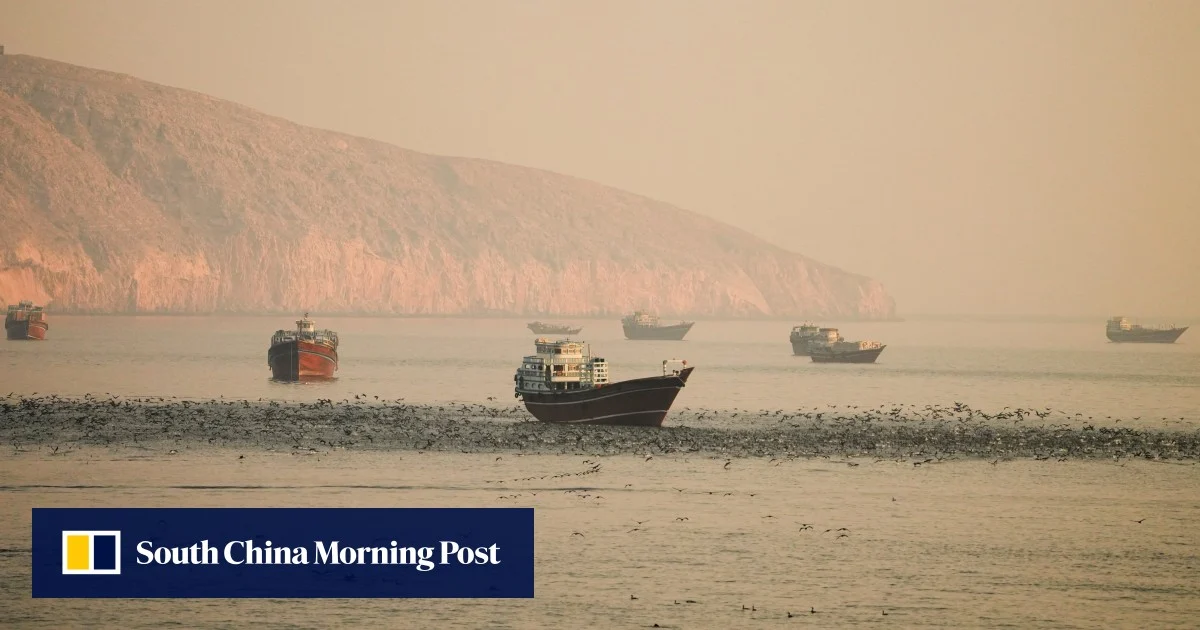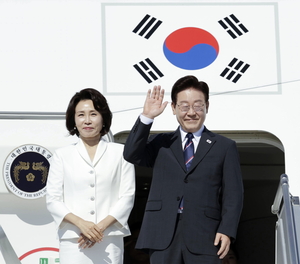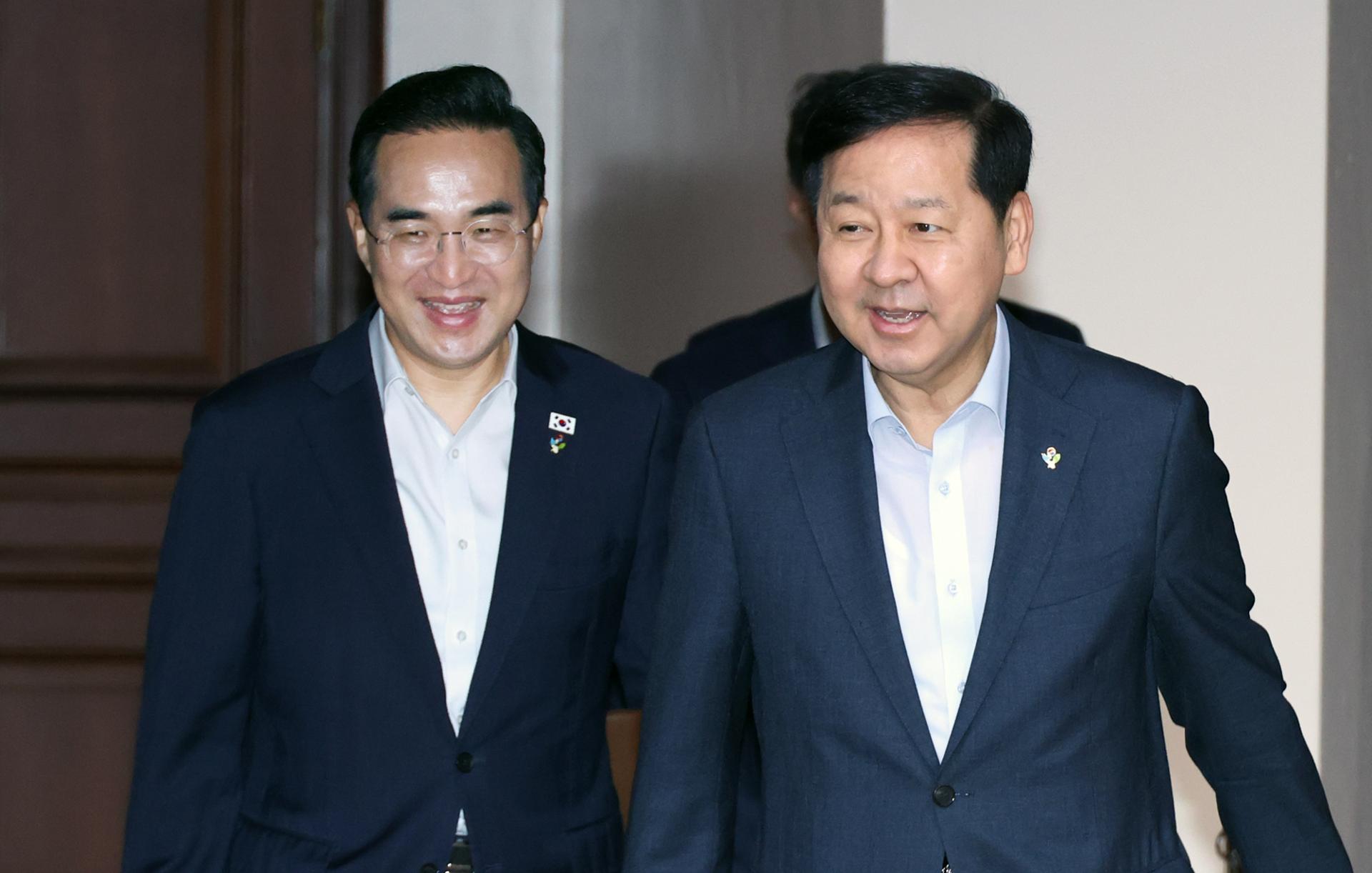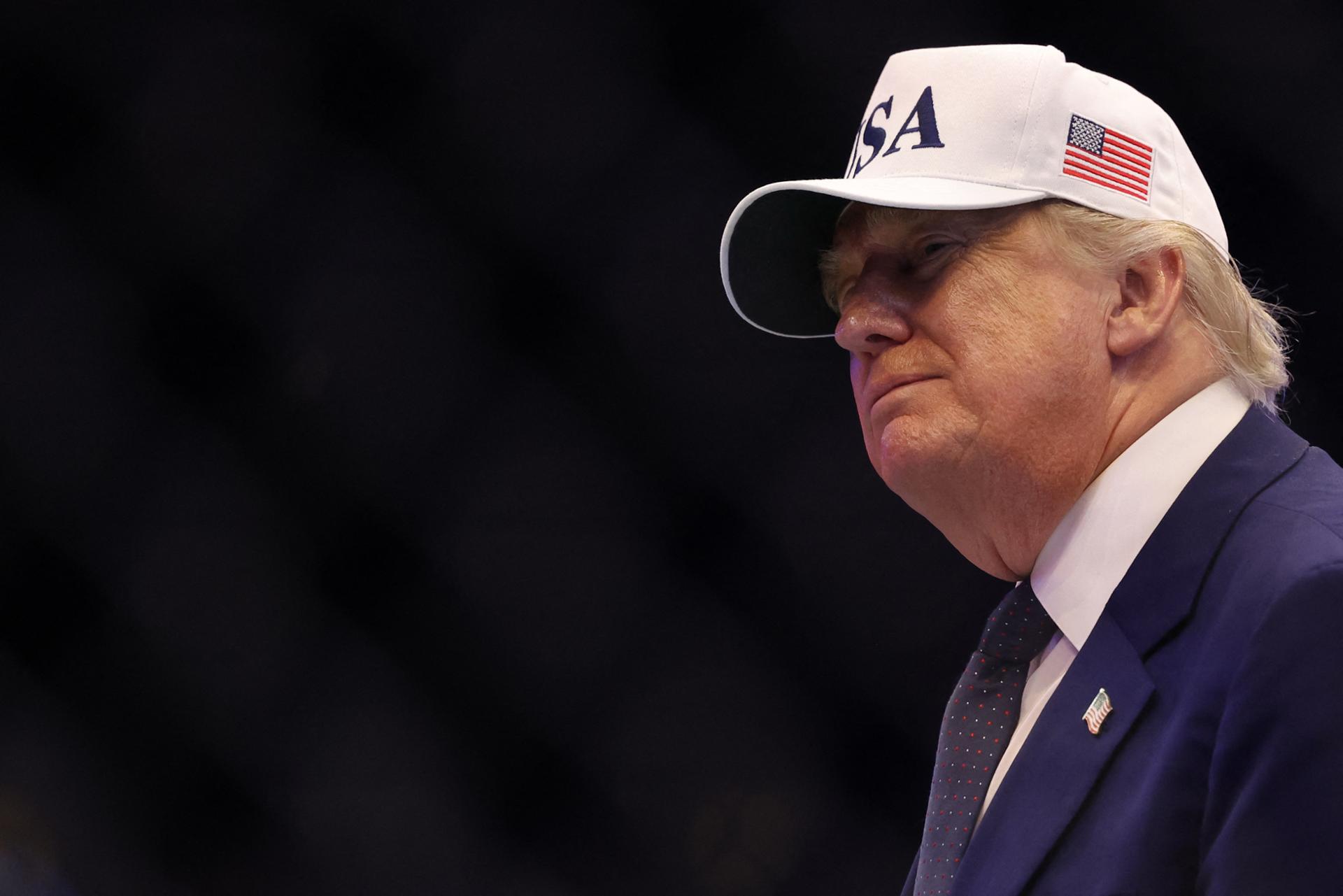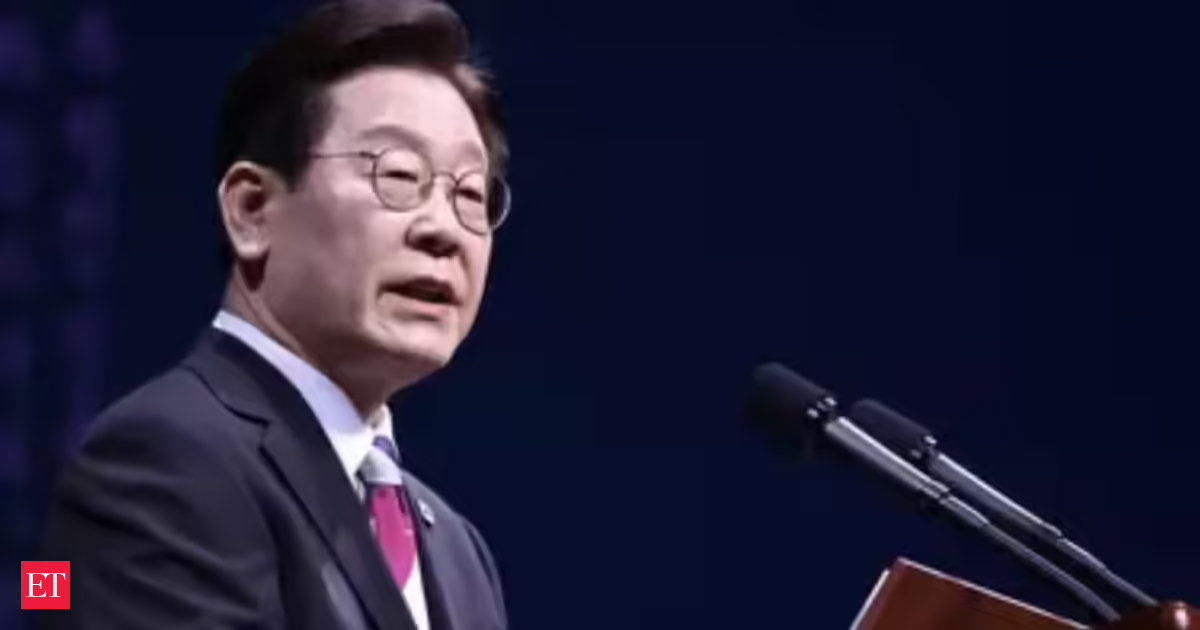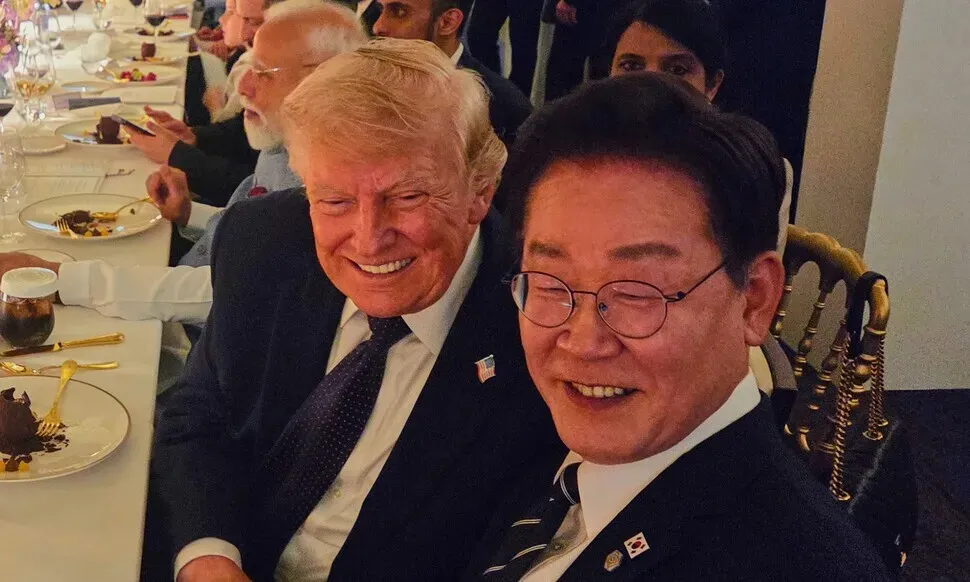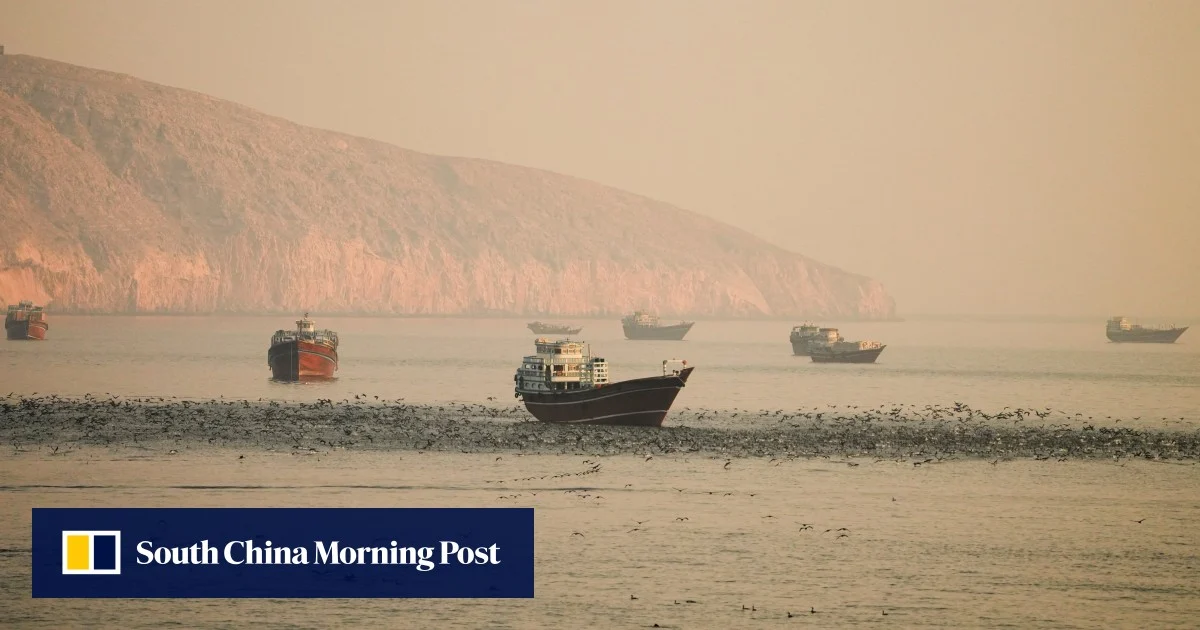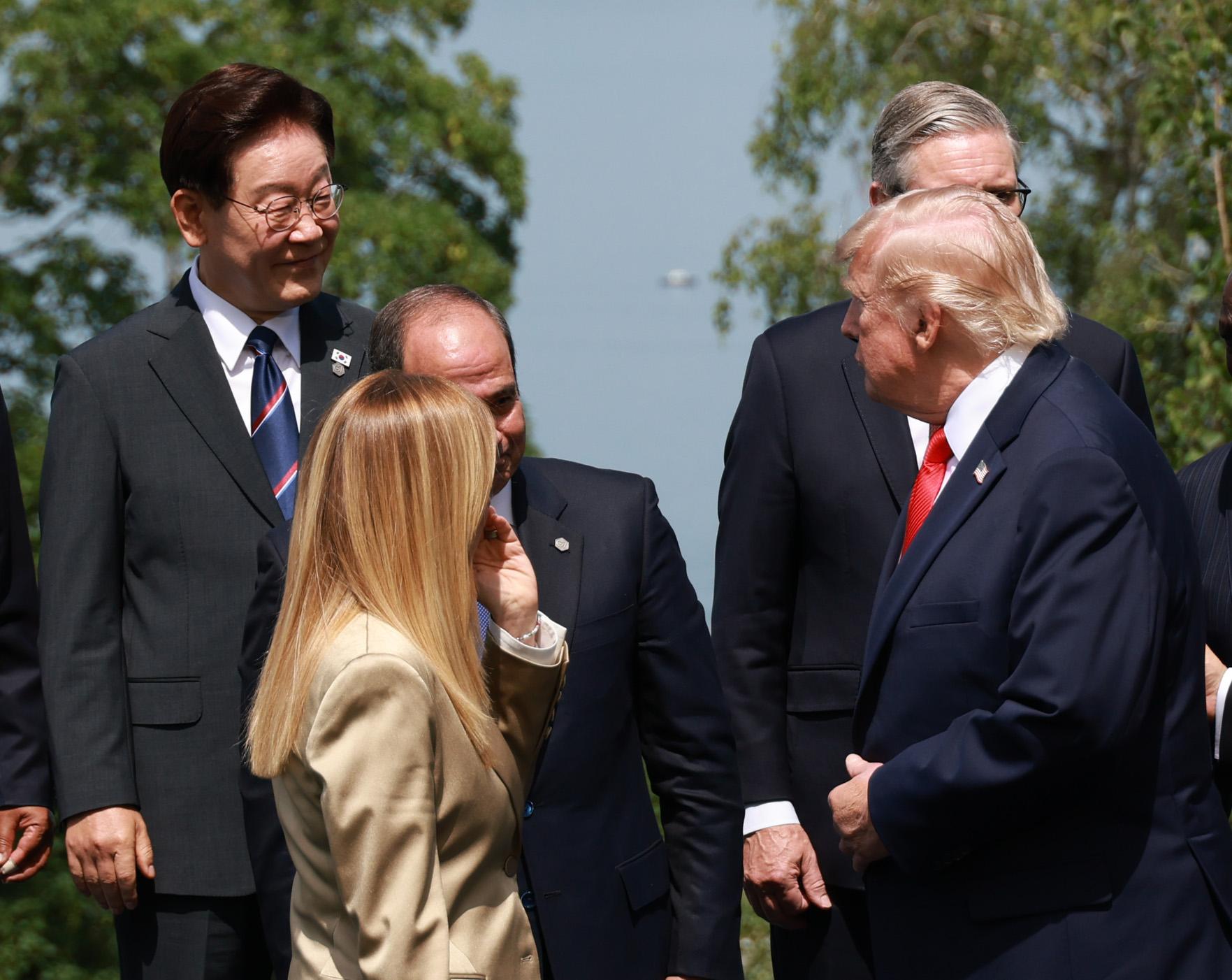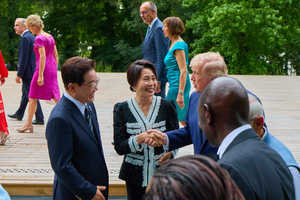
South Korean President Lee Jae Myung (first from left) and First Lady Kim Hea Kyung speak with US President Donald Trump ahead of the official dinner at the Group of Seven summit in Evian-les-Bains, France, on Tuesday. (Pool photo via Yonhap) The US-Iran ceasefire agreement is set to ease economic pressure on South Korea, but observers say the deal could present Seoul with a new set of challenges ranging from military contributions to pressure to participate in a multibillion-dollar reconstruction initiative.US President Donald Trump said this week that the Strait of Hormuz would be "completely open" from Friday, as Washington and Tehran prepared to formally sign a ceasefire memorandum of understanding in Geneva. US officials have described the agreement as one that would reopen the strategic waterway in exchange for the lifting of a US naval blockade on Iran.For South Korea, the ceasefire could help restore safe passage through the Strait of Hormuz, where 24 South Korean-linked vessels remain stranded after months of disruption, and eventually pave the way for the return of some US military assets redeployed from the Korean Peninsula to the Middle East.But analysts warn that the end of the conflict may also bring new demands from Washington, including requests for greater allied contributions to postwar stabilization efforts in the Gulf.Yu Ji-hoon, a research fellow at the Korea Institute for Defense Analyses and former professor of military strategy at the Republic of Korea Naval Academy, said Washington could ask Seoul to participate in efforts to stabilize the Strait of Hormuz, potentially including mine-clearing operations."South Korea should express in principle its willingness to participate, considering both alliance cooperation and the broader public interest of maintaining stable international sea lanes," Yu said.He argued that Seoul should frame any participation as part of a broader international effort to guarantee freedom of navigation, energy security and global economic stability rather than as support for a particular country's interests.At the same time, Yu cautioned against making premature commitments regarding the deployment of minesweeping vessels."Rather than directly saying that it will dispatch minesweeping vessels, South Korea would be better advised to state that it will actively participate in international efforts to stabilize the Strait of Hormuz after the war," he said.According to Yu, mine clearance is a highly complex and dangerous mission that requires detailed intelligence on mine types, deployment patterns, underwater conditions and operational risks. He said any South Korean contribution would be more effective as part of a multinational or combined force rather than through an independent deployment.The Trump administration could also seek financial and economic support from allies as part of postwar reconstruction efforts.The Financial Times reported that Washington is considering allowing the creation of a $300 billion investment fund for Iran if Tehran adheres to the ceasefire agreement and reaches a broader settlement that includes restrictions on its nuclear program.According to the report, the proposed fund would not be financed by governments but by private companies seeking investment opportunities in Iran. A senior US official told the newspaper that there was interest from businesses in Europe, Asia — including South Korea and Japan — and the US.The proposal has sparked debate over whether allies and private companies could end up bearing part of the cost of rebuilding Iran after a conflict led by Washington.Park Won-gon, a professor of North Korean studies at Ewha Womans University, says that the US may be looking for more than a way to fund recovery projects."The Trump administration spent enormous resources fighting this war and will likely try to recover some of those costs from its allies," Park said."There is a strong possibility that Trump will aggressively press the issue at the G7 summit."Park added that Seoul should focus less on seeking additional benefits from Trump and more on limiting potential losses."Rather than pursuing a strategy aimed at coming away with extra benefits, South Korea needs a strategy focused on minimizing damage. Unfortunately, I do not see such a strategy from the Lee administration," he said.The South Korean government has taken a cautious approach toward reports of a reconstruction fund and possible participation by Korean companies.Foreign Ministry spokesperson Park Il said Seoul was closely monitoring developments but stressed that discussions are preliminary."We understand that the reconstruction fund is an issue being raised within the overall framework of negotiations between the United States and Iran," Park said."We will have to wait and see the outcome of the negotiations for specific details."He added that "South Korea will play a constructive role in the reconstruction process in the Middle East."
US-Iran cease-fire raises new questions for Seoul
The US-Iran ceasefire agreement is set to ease economic pressure on South Korea, but observers say the deal could present Seoul with a new set of challenges ran
754 words~3 min read