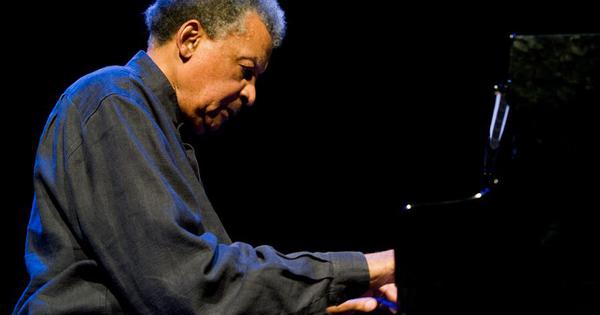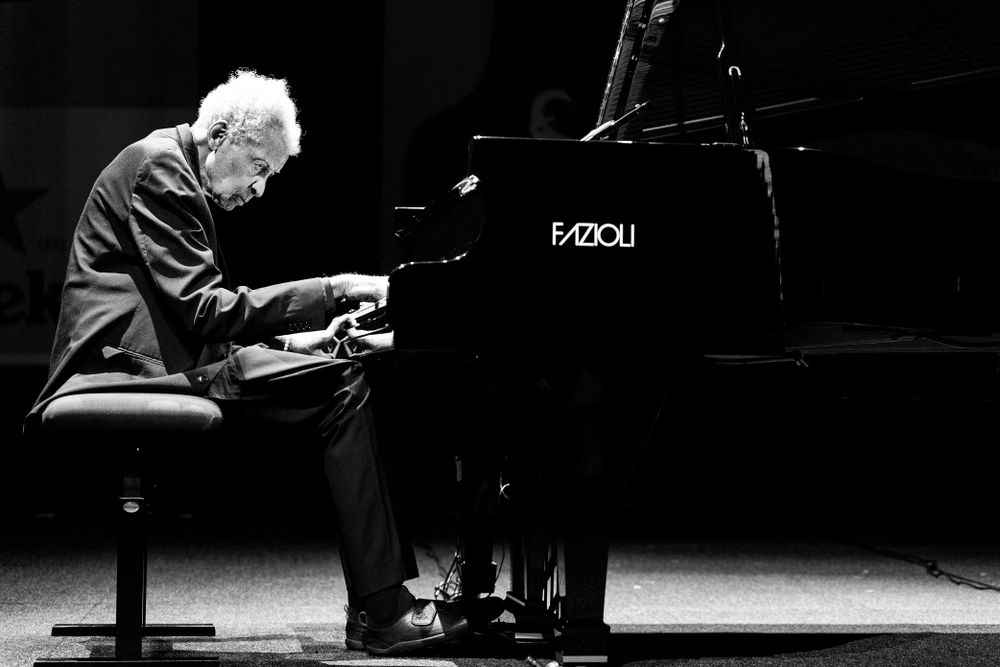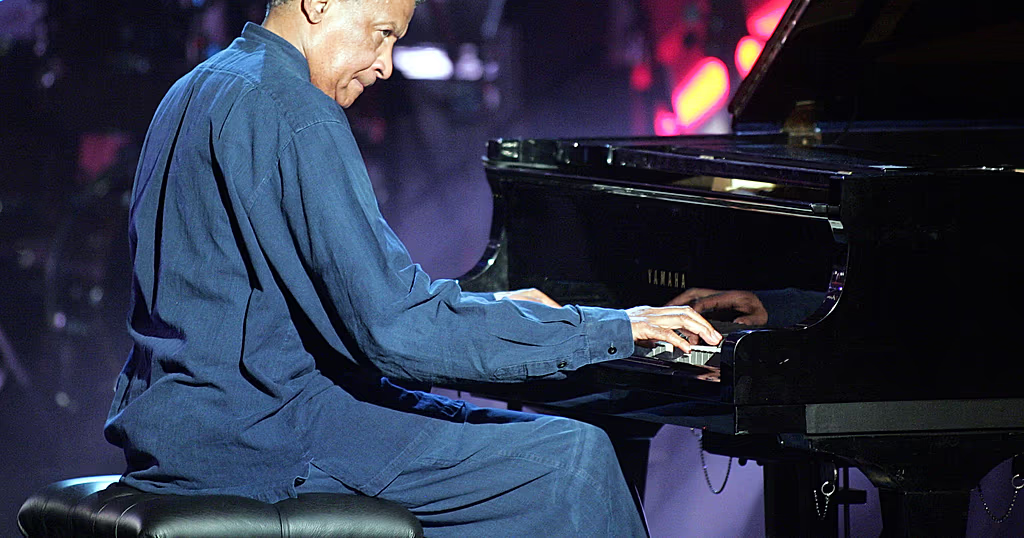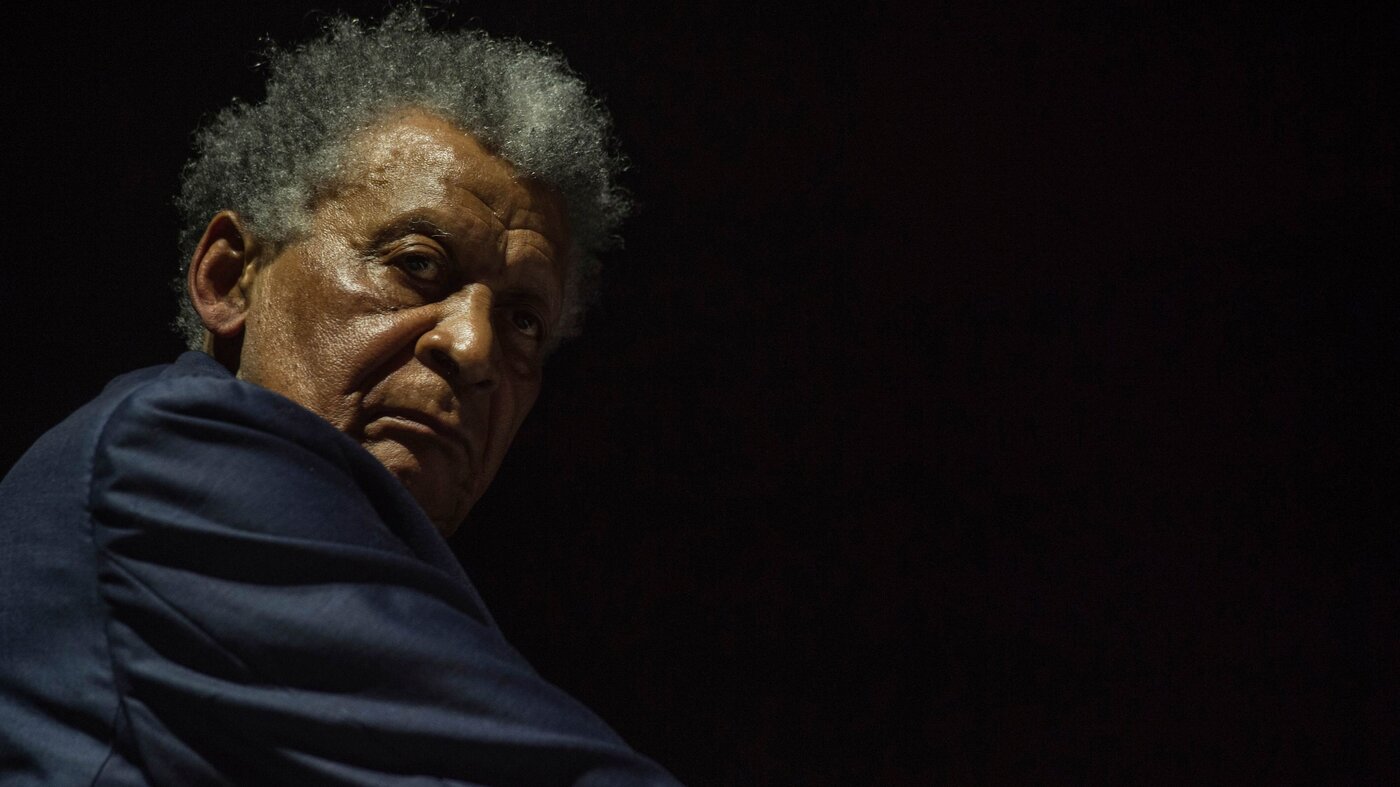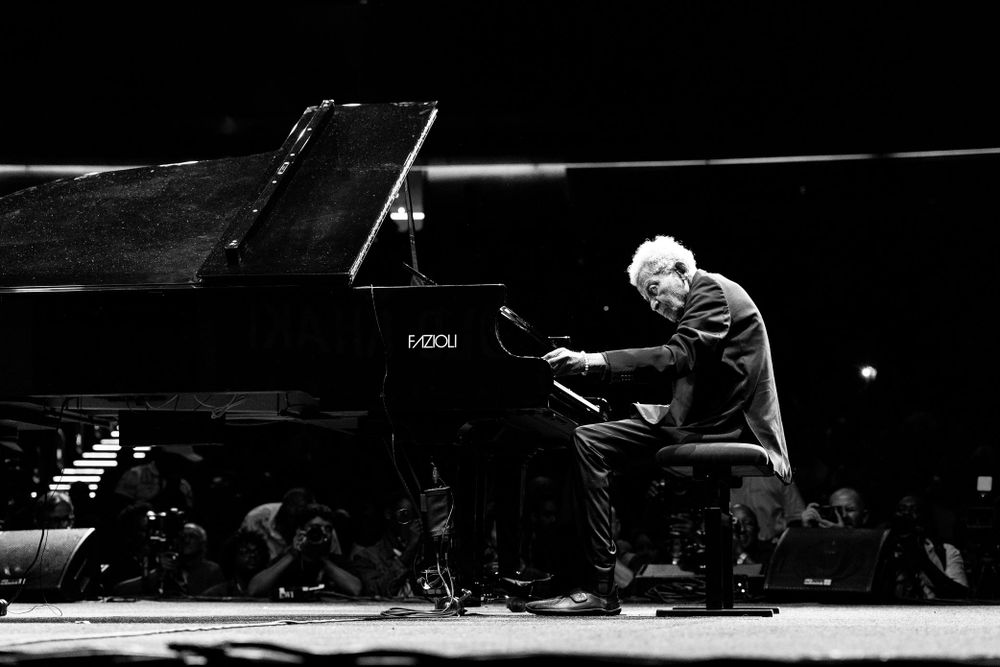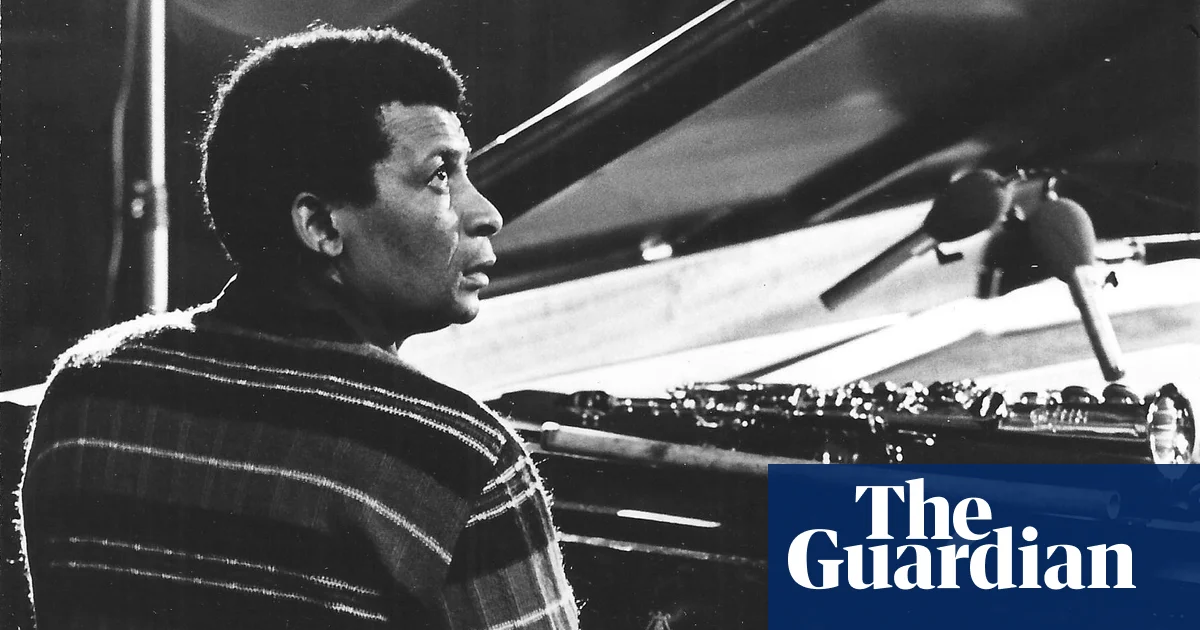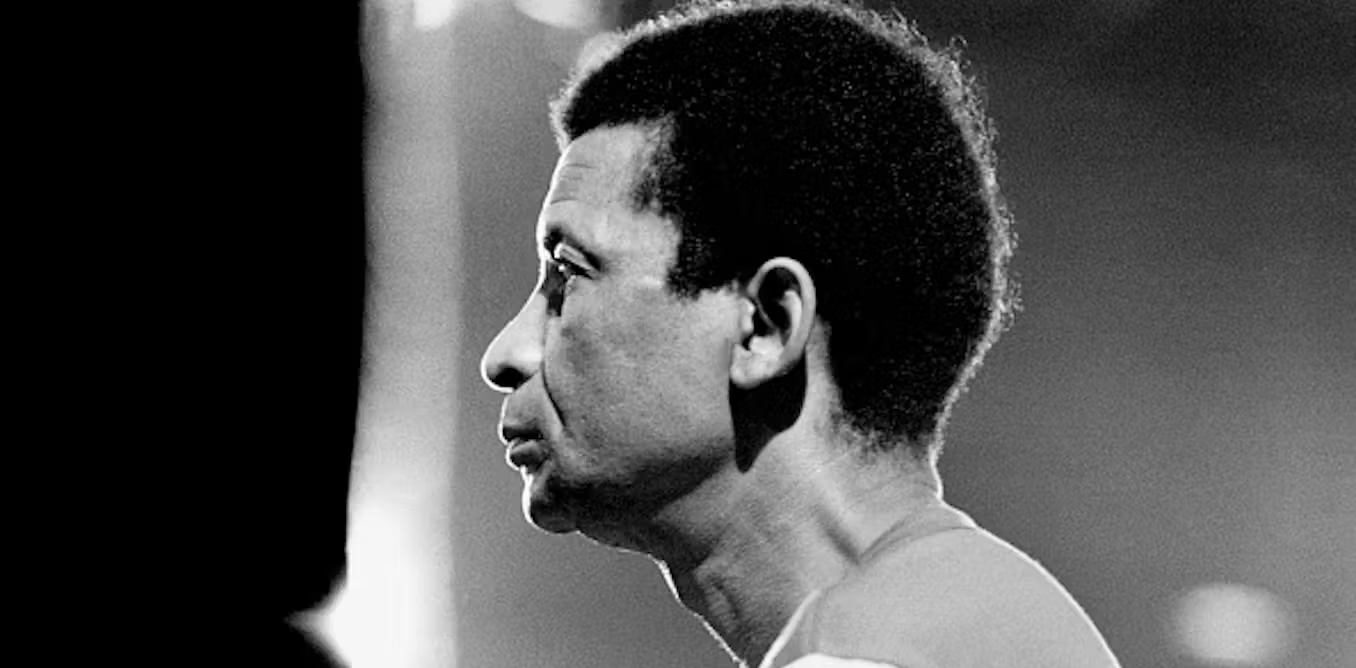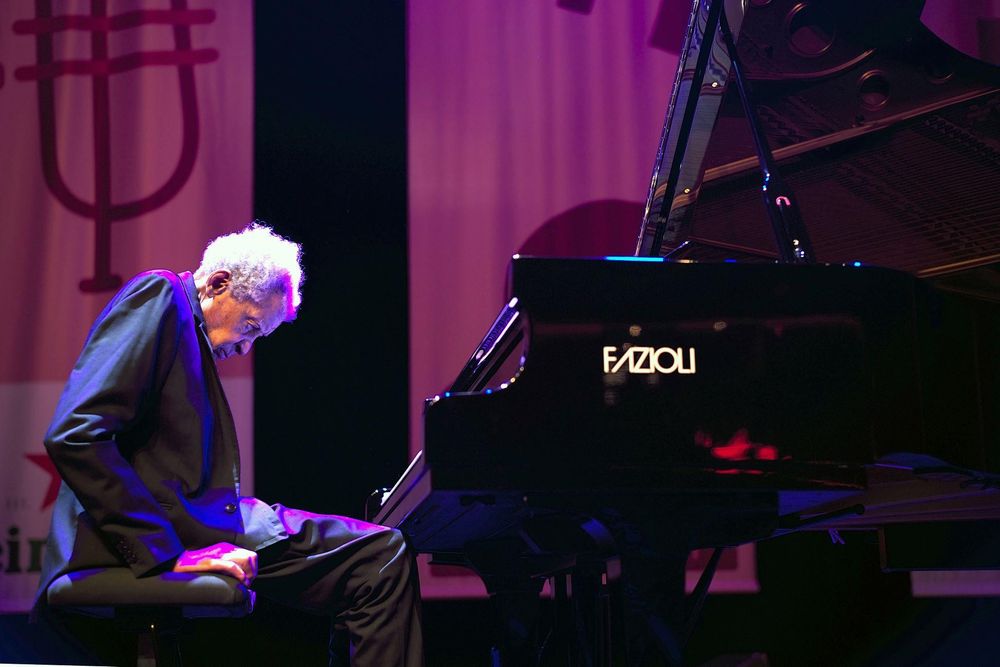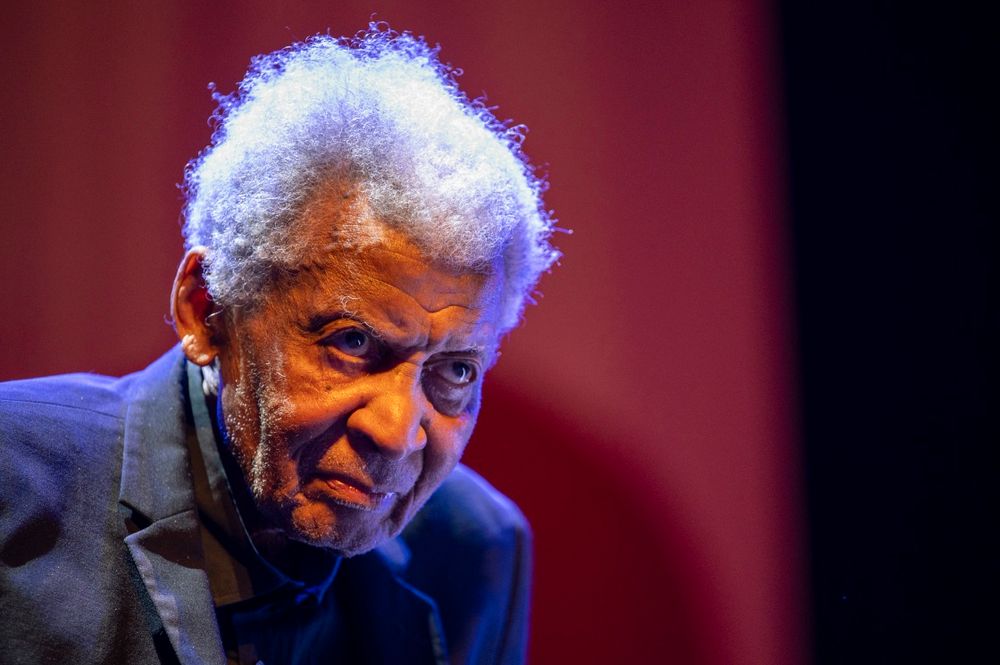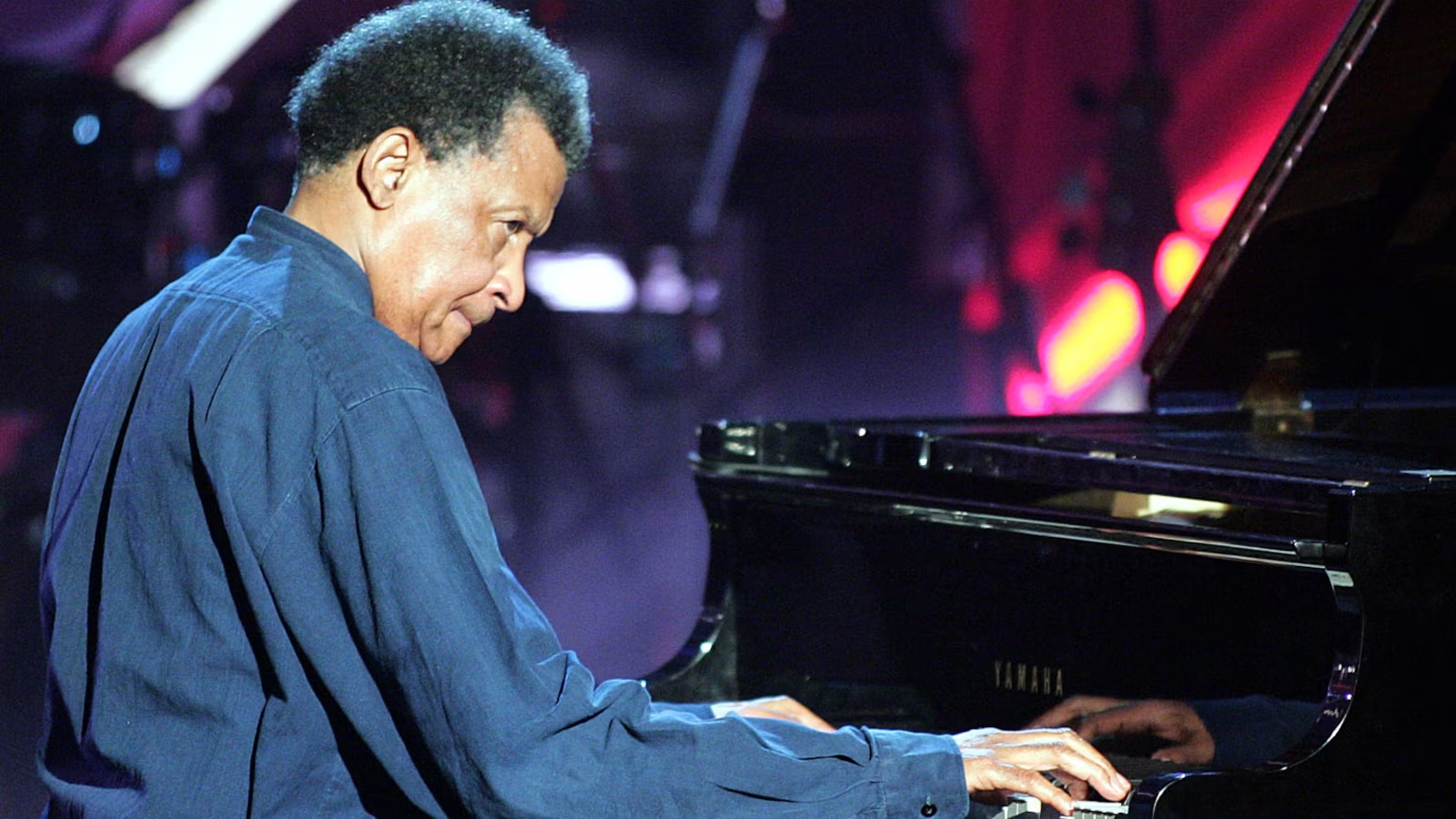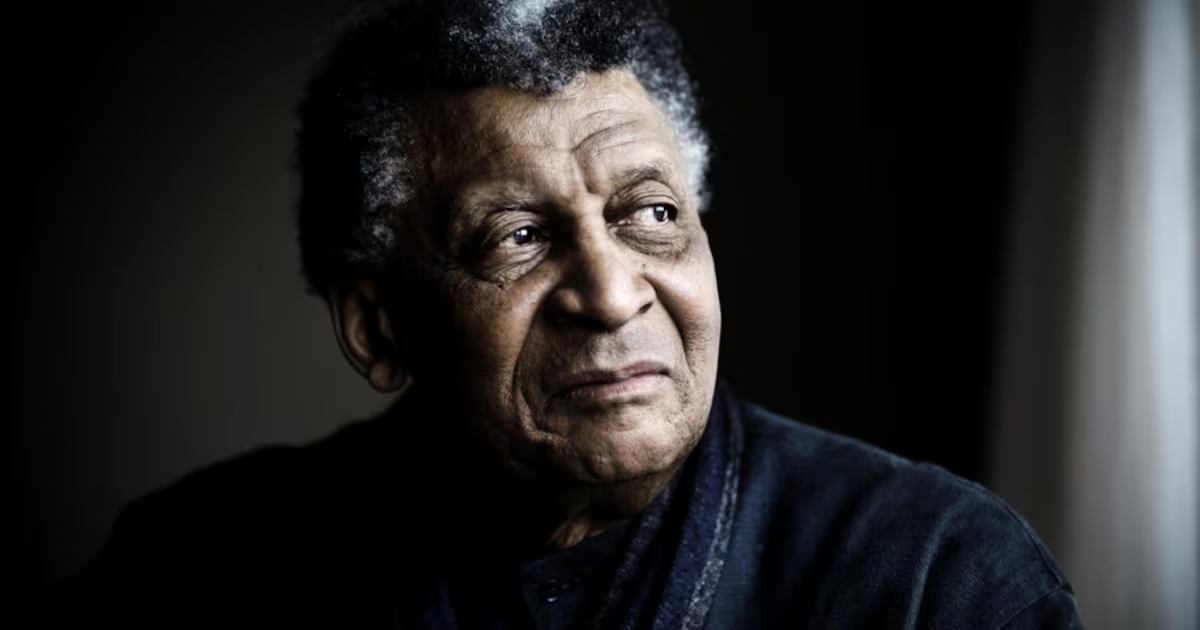
The piano musical genius and anti-apartheid activist Abdullah Ibrahim died in Germany on Monday.Born in Cape Town, a melting pot of cultural influences, on October 9 1934 and christened Adolph Johannes Brand, the young “Dollar” Brand, as he became known, was exposed to American jazz, township jive, Cape Malay music and classical music. Out of this blend he developed his distinctive style: the harmonies and musical vocabulary that are inimitably his own.Abdullah Ibrahim in Gaborone 1982. Picture: (Alf Kumalo Family Trust/ BAHA) Abdullah Ibrahim began his lifelong love of music when he started piano lessons aged seven. He started to play professionally at 15, with local groups such as the Tuxedo Slickers, with whom he also recorded. In 1958 the Dollar Brand Trio was formed and a year later his pioneering septet, the Jazz Epistles, launched, with trumpeter Hugh Masekela, saxophonist Kippie Moeketsi, trombonist Jonas Gwangwa, bassist Johnny Gertze and drummer Makaya Ntshoko. Together they recorded the first jazz album by South African musicians. In 1959 Ibrahim met vocalist Sathima Bea Benjamin and first performed with her. They married six years later.Apartheid laws These were difficult times in which to sustain musical development in South Africa. The tragic Sharpeville massacre in 1960 saw increased defiance from South African citizens, with mixed-race bands and audiences challenging the strict apartheid laws. Typical of the government of the time, it closed several clubs and endlessly harassed the musicians. Finding it increasingly difficult to live and play music freely in the country, some members of The Jazz Epistles travelled to England with the musical King Kong and stayed in exile. (Brandan Reynolds) Dollar Brand and Sathima Bea Benjamin soon followed, leaving in 1962. They were later joined by Gertze and Ntshoko and accepted a three-year contract to perform at the Club Africana in Zürich. A year later, Benjamin convinced Duke Ellington to listen to The Jazz Epistles play, which resulted in a recording session in Paris and invitations to perform at European festivals and on TV and radio over the next two years.Newport Jazz Festival Ibrahim and Sathima, now married, moved to New York in 1965. A year later Ibrahim caught a lucky break after he played at the Newport Jazz Festival and Carnegie Hall — he was asked to substitute as leader of the Ellington Orchestra in five concerts. Thereafter he toured for six months with the Elvin Jones Quartet. While in New York, he was also the recipient of a Rockefeller Foundation grant to attend the Juilliard School of Music. During his time in the Big Apple he also met and interacted with many enlightened musicians, including Don Cherry, Ornette Coleman, John Coltrane, Pharoah Sanders, Cecil Taylor and Archie Shepp.For Ibrahim 1968 was a turning point. He returned to Cape Town in a bid to find spiritual harmony and converted to Islam. He changed his name to Abdullah Ibrahim and later, in 1970, he made the pilgrimage to Mecca. Abdullah Ibrahim performs at the Jazzaldia Festival in San Sebastian, Spain, on July 25 2017. Picture: Reuters/ (Vincent West) He spent a few years in Swaziland, where he founded a music school, returning with his young family to Cape Town in 1973. He continued to tour internationally with his own large and small groups. His recording, Mannenberg – ‘Is Where it’s Happening’, in 1974 became an unofficial anthem for black South Africans. However, it wasn’t long before he and his family left for the US and settled in New York again. While there he launched the Ekapa record company in 1981 to manage his affairs. The 1980s were a mishmash of artistic projects abroad — Garth Fagan’s ballet Prelude (first performed in 1981), the Kalahari Liberation Opera (Vienna, 1982), and in 1983 a musical, Cape Town, South Africa. In 1988, he played at the concert in Central Park commemorating Nelson Mandela’s 70th birthday.Ibrahim comes homeIn 1990 Mandela, now a free man, invited Ibrahim to come home to South Africa. He did and performed memorably at Mandela’s inauguration in 1994.In addition to receiving many awards and honorary doctorates, Ibrahim was the subject of several documentaries and featured in the 2002 production Amandla: A Revolution in Four-Part Harmony. He also composed scores for film. For more than 25 years he toured the world, appearing at major concert halls, clubs and festivals, and giving sell-out performances, either as a solo artist or with other renowned artists. His collaborations with classical orchestras resulted in acclaimed recordings.Celebrating his 70th birthday in 2004, that year he released two CDs: the compilation A Celebration, and Re: Brahim, Abdullah Ibrahim remixed. His discography runs to more than 100 album credits.When not touring, he divided his time between Cape Town and New York. He also began a South African production company, Masingita (Miracle), and established a music academy, M7, offering courses in seven disciplines for young people. In 2006, he spearheaded the historic creation (backed by the South African arts and culture ministry) of the Cape Town Jazz Orchestra, an 18-piece big band, which further strengthened the standing of SA music on the global stage.In December 2009 he received the Order of Ikhamanga (Silver) from the government for his contribution to the arts and putting South Africa on the international map with his fight against racism and apartheid.In 2020 the emperor of Japan awarded him the Order of the Rising Sun (Gold) for his achievements in music.With the pandemic limiting international interaction during the early part of the 2020s, the pianist and composer was unable to share his music globally as he had been doing for nearly six decades. Instead he shared the song structure of The Balance for those interested in learning his compositional techniques through the piano.
Abdullah Ibrahim — jazz maestro and a voice for the oppressed in SA
Pioneering musician composed, performed globally and received major honours
947 words~4 min read