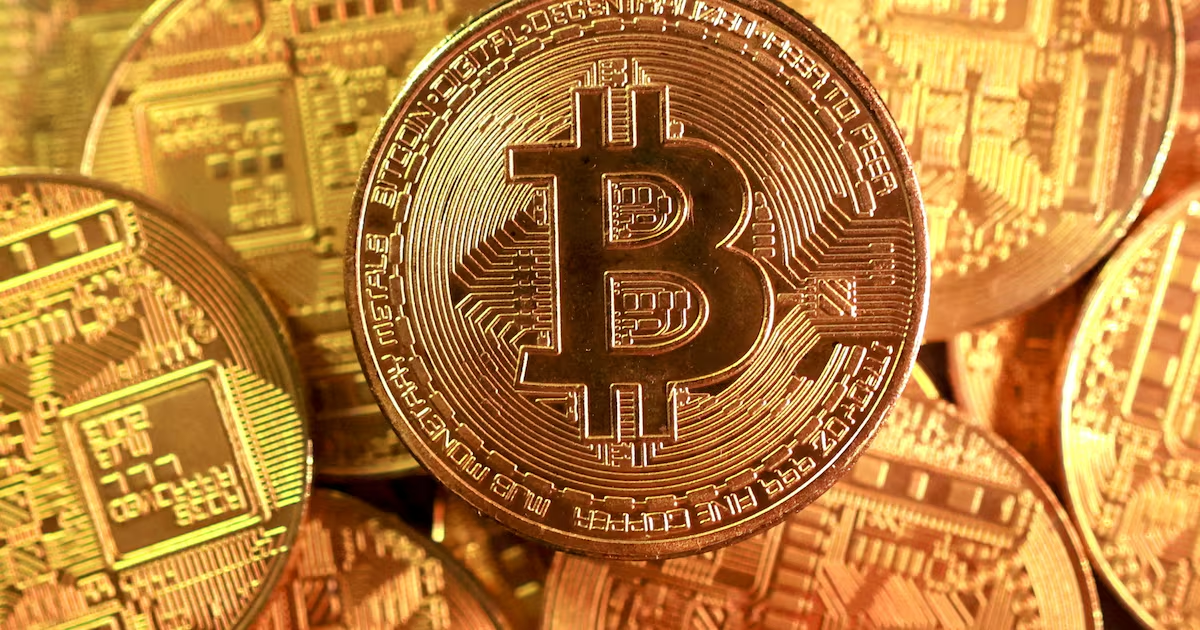
The next serious bitcoin buyers may not look like crypto natives. They may look like sovereign wealth funds. That matters because sovereign capital does not usually behave like retail money, hedge fund money or leveraged trader money. It tends to move slowly, disclose late and hold for longer. These funds are not chasing the latest chart pattern. They are managing national reserves, oil wealth, pension assets and long-term purchasing power. The early evidence is already visible. Abu Dhabi is the clearest case. Mubadala and Abu Dhabi Investment Council-linked entities have built meaningful exposure to BlackRock’s iShares Bitcoin Trust, better known as Ibit. The notable point is not only the size of the position; it is the pattern. Repeated additions suggest this is not a one-off punt. It looks more like a structured allocation through a regulated exchange traded fund (ETF) wrapper. That distinction matters. For a sovereign fund, the ETF solves the hard problems. It removes direct custody headaches, simplifies reporting and makes the position easier to explain to risk committees. Bitcoin may still be volatile, but Ibit makes it look more like a conventional institutional allocation. Norway is the more unusual case. Its Government Pension Fund Global, managed by Norges Bank Investment Management, does not appear to own bitcoin directly under its mandate. Yet it has indirect exposure through equity holdings in companies such as Strategy, Coinbase, Mara, Block and Metaplanet. In other words, one of the world’s largest sovereign funds can inherit bitcoin exposure through index mechanics without ever making a direct bitcoin decision. That is the quiet power of bitcoin treasury companies. As they enter major equity benchmarks, passive capital becomes part of the bitcoin story. Singapore is more cautious. GIC appears more comfortable with crypto infrastructure than direct bitcoin, while Temasek remains shaped by its FTX loss. That does not mean Singapore is out of the digital-asset race. It means its likely route is tokenised assets, custody, exchange infrastructure and regulated settlement systems rather than spot bitcoin exposure. That is the quiet power of bitcoin treasury companies. As they enter major equity benchmarks, passive capital becomes part of the bitcoin story. Kazakhstan is different again. Its move towards a formal national crypto reserve reflects the logic of an energy- and mining-linked state. Countries that understand bitcoin mining may find it easier to understand bitcoin as a reserve asset. Saudi Arabia is the giant watching from the side. Its Public Investment Fund has the scale to move the market, but direct bitcoin exposure would carry political weight. Oil is priced in dollars. A public bitcoin allocation could be read as a hedge against the dollar system itself. For now, the more plausible route may be indirect exposure through Strategy, Coinbase or other crypto-linked equities. Luxembourg may be small by comparison, but its signal matters in Europe. A modest bitcoin ETF allocation inside a regulated framework gives other conservative allocators a precedent. The broader lesson is simple. Sovereign adoption does not begin with dramatic announcements. It begins with small allocations, peer watching, mandate language and regulated wrappers. The first mover reduces political risk for the second. The second makes the third look less reckless. If sovereign funds move from test exposure to 0.5%, 1% or 2% allocations, the impact on bitcoin would be significant. These are not fast traders. They are potential long-term holders. Their real effect would be less about daily inflows and more about supply absorption. That is why the sovereign bitcoin story deserves attention. It should not come as a surprise if and when bitcoin’s next supply shock comes from national wealth funds since the queue is already forming. The sovereign bitcoin race has already started. The market may notice only once the filings stop looking small. • Muchena is founder of Proudly Associated and author of ‘Artificial Intelligence Applied’ and ‘Tokenized Trillions’.
HEATH MUCHENA | Bitcoin is becoming a sovereign wealth question
Major capital pools in Norway and Singapore's Temasek are looking at cryptocurrency
638 words~3 min read